
Price alone settles nothing. A cheap charger with a verifiable safety listing for your market, installed on a proper circuit by a licensed electrician, is a defensible purchase. An expensive charger with no checkable listing, on a worn outlet and an undersized circuit, is not safe at any price. Safety has two halves — the unit’s evidence and the installation it lands on — and price matters only when it has eaten into one of them.
Key Takeaways
- Price is not a safety variable: a listed budget unit outranks an unlisted premium unit on the evidence that counts.
- The installation is the other half: a continuous load needs a sized circuit, a sound outlet, an inspected install.
- Cheapness may show in cable, controls and warranty — never in the listing or the protective design.
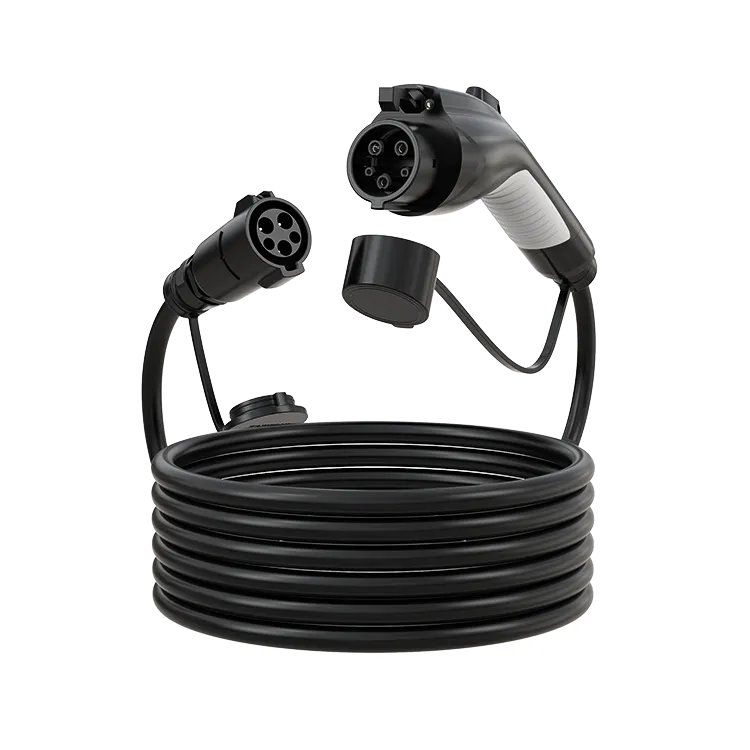
First Half: What the Unit Itself Must Prove
The unit’s half is evidence, not price. A recognized testing laboratory lists the exact model after testing it against the applicable safety standard, and that listing is what an inspector, an insurer and you can point to. The system itself is set out in UL and ETL Listing for EV Chargers. The practical test is the same for any unit: its mark traces to a real laboratory and the exact model on the box — not a sibling, not a bare logo.
Where the money goes inside a properly priced charger is a value question; the safety verdict is narrower. The listing is its test — a budget unit that has it stands on the same evidence as a premium unit that has it.
Second Half: The Installation It Lands On
An EV charger is not a kettle: it draws full rated current for hours, most nights, for years. The U.S. National Electrical Code treats EV charging as a continuous load and sizes the breaker at 125% of charger current (32 A on a 40 A breaker, 40 A on a 50 A). That duty is unforgiving of the bargain end of an installation:
- The outlet is part of the system. On a plug-in unit, the receptacle carries the same load. A worn or bargain outlet is the classic weak point — an installation cost, not a charger cost.
- The circuit must be sized for the unit. A charger set above its circuit is an installation fault, whatever it cost.
- Inspection is the independent check. A permitted install ends with someone other than the seller signing the work off — which is why our guide to whether home EV chargers are safe treats installation as half the answer, and why installing a Level 2 charger yourself carries conditions.

Where Cheapness May Show — and Where It Must Never Show
| Where a low price may legitimately show | What it costs you |
|---|---|
| Shorter cable, plainer enclosure, simpler controls | Convenience and features — an economics question, not a safety one |
| Shorter warranty, thinner support | Risk you carry yourself if the unit fails early |
| Where it must never show | Why |
| No listing, or a mark that cannot be traced to a laboratory file for the exact model | Its safety was never independently examined; an inspector has nothing to accept |
| A protective design that exists on paper only | Protection is what the tested design and installed circuit contain, not what a sales page says; see whether an EV charger needs GFCI protection |
The EVDANCE Position
Judge EVDANCE units by the same two halves. The EV-ACT5006T wall charger (up to 48 A, NACS, 25 ft cable, IP65/IP66) is published with ETL, FCC and CE stated on its page; the EV-AC04001U portable (40 A, SAE J1772, IP66, 25 ft) is published with its specifications stated. EVDANCE is a named manufacturer — Shenzhen, founded 2011 — with a stated 3-year warranty behind the range. And keep the total in view: U.S. DOE figures put mainstream home charging equipment at $380–$690, with installation a separate and often larger cost. The charger is the small part of the bill — the half that carries the current deserves the same scrutiny as the half with the brand on it.
Frequently Asked Questions
A cheap charger was installed by my electrician without comment. Is it fine?
If the unit carries a listing your electrician could accept, and the circuit was sized and inspected for it, the evidence is in place. Keep the invoice and listing details for insurers and future buyers.
Is an expensive charger automatically safer?
No — price is not evidence. A premium unit with no traceable listing fails the first half exactly as a cheap unlisted unit does.
Does a cheap charger cost more to run?
It can — an economics question, not a safety one. ENERGY STAR certified chargers use about 40% less standby energy: a small nightly difference the price tag never shows.
Related Reading
- Are Home EV Chargers Safe?
- UL and ETL Listing for EV Chargers: How NRTL Certification Works
- EV Charger Certifications Explained: CE, UKCA, UL, ETL, CB and What Buyers Should Ask For

