
No official like-for-like rate exists, so published data cannot honestly tell you whether an electric car or a petrol car is more likely to catch fire. Fire statistics record vehicle fires by cause and situation, not as a clean rate per powertrain. The precise figures quoted online, in either direction, are built by stitching those categories together. What you can judge is which fire risks each car type has, and how each is controlled.
Key Takeaways
- No official like-for-like fire rate for EVs versus petrol cars exists; exact multiples quoted online are stitched from mismatched categories.
- The two fleets burn in different ways: petrol cars add fuel-system fires, EVs add traction-battery events, and both share electrical and crash fires.
- Risk is judged per car and per installation: condition, recalls, certified equipment and a code-sized circuit.

Why the Statistics Cannot Settle the Question
Fire services record incidents, not marketing categories. A vehicle fire is logged with a cause and a set of circumstances, and the published tables group those records in ways that cut across the EV-versus-petrol question:
- The powertrain split is not published. Cause codes such as electrical fault, collision damage or fuel-system failure are reported for vehicles as a whole, so a traction-battery fire and a petrol fuel-line fire land in the same totals.
- The situation is not separated consistently. Fires while driving, while parked and while charging are not broken out the same way in every dataset, yet each situation points at a different risk.
- The denominators differ. A rate per vehicle, per mile driven and per year on the road give three different answers, and the two fleets differ in age mix and use, so a raw count bakes those differences into the result.
- Countries record differently. Definitions and reporting thresholds vary, so international figures cannot be added together or compared.
That is why the NFPA, which publishes US fire data and the National Electrical Code, offers no headline rate for this comparison. Any exact multiple you see has been assembled from mismatched parts.
Two Fleets, Two Different Fire Menus
The useful comparison is not a rate. It is the list of ways each car can burn, because the lists are genuinely different:
| Fire route | Petrol car | Electric car |
|---|---|---|
| Fuel system | Yes — leaking fuel, lines and fittings are a classic ignition route | No fuel system exists |
| Traction battery | No traction battery fitted | A damaged or faulty pack can enter thermal runaway, which is why battery condition and recalls matter |
| Electrical faults | Yes — wiring, accessories and the 12-volt system | Yes — the same 12-volt and wiring risks apply |
| Crash damage | Yes — severe impacts can rupture fuel lines and wiring | Yes — severe impacts can damage the pack and wiring |
| Refuelling or charging equipment | Fuel handling at the pump | Home or public charging equipment, covered below |
The Risks You Can Actually Control
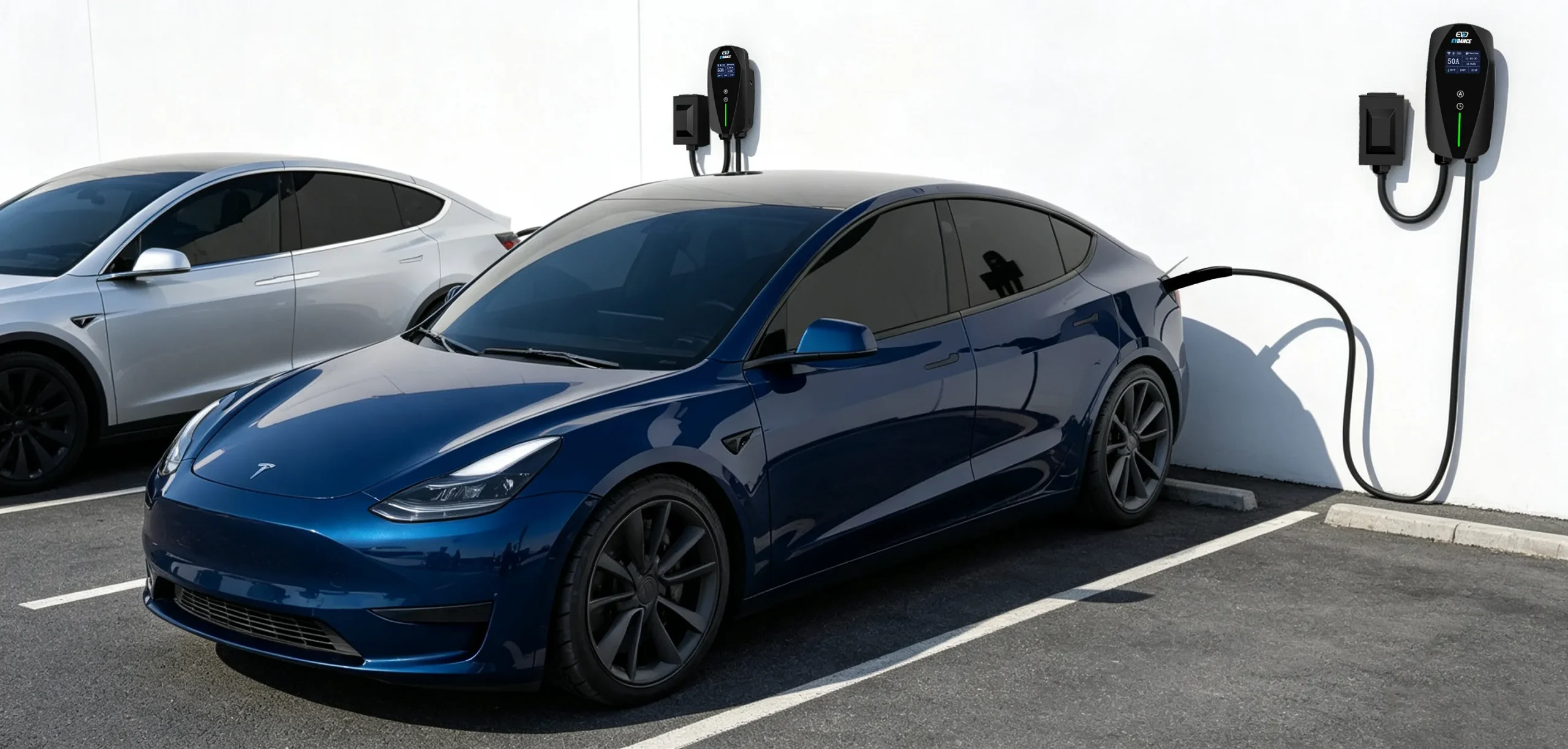
Insurers, inspectors and fire services do not work from a global rate either. They assess the car and the installation in front of them. On the charging side, the controls are concrete: safety-certified equipment, a correctly sized and inspected circuit, and gear kept in good condition. Our guide to whether home EV chargers are safe covers the protective features built into certified chargers, and our explainer on whether a NEMA 14-50 outlet is a fire hazard covers the outlet events that sit behind many “charger fire” stories. On the car side, the controls are condition and recalls: a battery-damaged car should be inspected before it is charged again, whichever fuel it uses.
Charging Equipment Is the Part You Choose
You cannot pick your car’s fire statistics, but you do pick the charger. EVDANCE has manufactured chargers in Shenzhen since 2011, with a 3-year standard warranty. The EV-ACT5006T 48A Level 2 wall charger carries ETL, FCC and CE certification, and the EV-ACS4005T 40A portable charger is IP66-sealed. Certification by a recognised testing laboratory is the same evidence an inspector looks for, as the OSHA NRTL programme explains.
Frequently Asked Questions
Do EVs catch fire while charging?
Some recorded vehicle fires happen while a car is parked or charging, but published data does not separate those incidents into a rate. The part you control is the equipment: a certified charger on a correctly installed circuit.
Why do headlines say EVs are many times less likely, or more likely, to burn?
Those multiples are assembled from different datasets with different denominators — per vehicle in one, per mile in another, crash fires included in one and excluded in another. Because no official like-for-like rate exists, treat any exact multiple as unsupported.
Should fire risk decide which car I buy?
Judge the managed risks instead: the model’s recall history, the car’s condition, and, for an EV, a certified charging setup. Those are checkable. A headline rate is not.
Related Reading
- Are Home EV Chargers Safe?
- Is a NEMA 14-50 Outlet a Fire Hazard for EV Charging?
- Portable EV Charger Safety Guide 2026: NEC Rules, Extension Cords, and What to Avoid
- Should an EV Charger Be Inside or Outside the Garage?

