
Yes — a car with a NACS port can charge at a CCS1 fast charger through a NACS-to-CCS1 DC adapter, but only where the car’s maker approves that adapter for that car. The adapter is a DC part, completely different from the AC adapter used at home, and approval matters more than plug shape: an unapproved adapter is a risk the maker has not signed off.
Key Takeaways
- A NACS car can use a CCS1 fast charger through a NACS-to-CCS1 DC adapter — where the automaker approves it.
- DC adapters and home AC adapters are different parts; neither substitutes for the other.
- NEVI corridor stations keep CCS1 plugs in service, so the bridge stays useful on road trips.
- Approval first, ratings second: check the maker’s list before you buy or travel.

Why a NACS Car Meets CCS1 Plugs
North America is partway through a connector transition. NACS — standardized by SAE as J3400 — is arriving on new cars, as whether the Tesla charger is NACS explains, but a large installed base of DC fast chargers still carries the CCS1 plug. Federal corridor funding keeps that base in place: under the NEVI standards (23 CFR Part 680), corridor DC ports use CCS1 connectors, deliver at least 150 kW per port and stay open around the clock with contactless payment. For years, a NACS car on a road trip will keep meeting CCS1 cables — the adapter is the bridge for those stops.
The DC Adapter Is Not the Home Adapter
| AC adapter | DC adapter | |
|---|---|---|
| Used for | Home and public Level 2 charging | DC fast charging on the road |
| Typical job | Lets a NACS car use a J1772 charger, or a J1772 car use a NACS charger | Lets a NACS car use a CCS1 fast charger |
| Current involved | Tens of amps of AC | Hundreds of amps of DC — fast-charging current |
| Approval | Choose a listed, correctly rated part | Only where the automaker approves it — check before you rely on it |
Neither part works in the other’s job. The full safety picture — ratings, condition checks, why approval matters — is in are EV charging adapters safe, and whether EV chargers are universal maps how the standards fit together.
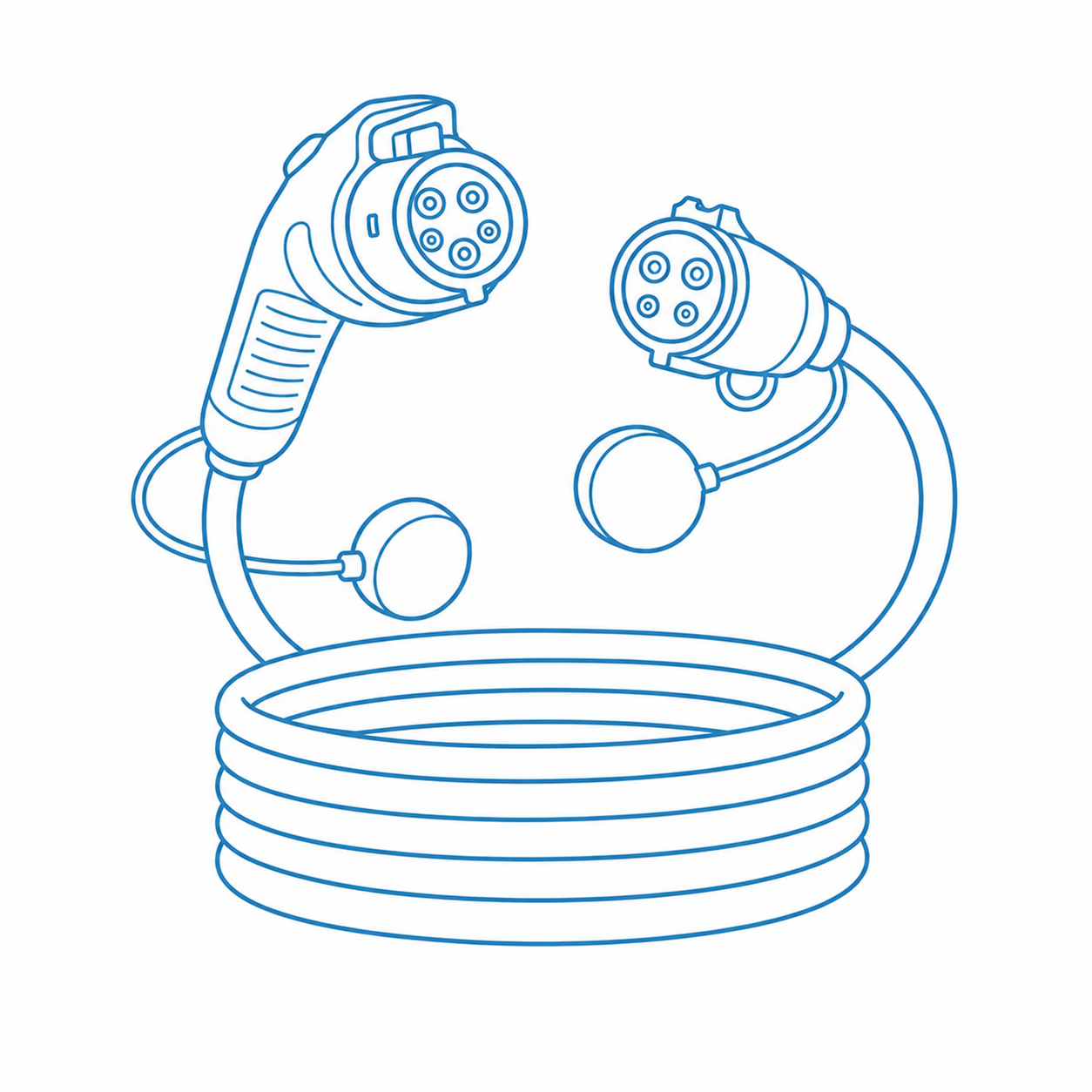
Approval Decides, Not the Plug Shape
A DC adapter that physically fits is not automatically one you should use. Fast charging pushes very high current through the connection, and the car, the adapter and the station have to manage heat and communication together. That is why these parts are sold for use only where the automaker approves, and why the maker’s approved list — in the manual, app or maker’s site — is the document that decides. Using an unapproved adapter can also affect warranty cover if something goes wrong. The reverse direction has its own rules, covered in can I use a Tesla charger for other cars.
DC Adapters From EVDANCE
The EVDANCE JT08 NACS-to-CCS1 DC adapter is rated up to 500 A / 1000 V with IP66 sealing, for use only where the automaker approves. The EVDANCE JT09 NACS-to-CCS1 DC adapter adds a handle, rated up to 500 A, also IP66. Either way, the sequence is the same: confirm approval first, then match the rating to your car.
Before a Trip: The Checks
- Check the approval list. Confirm your exact car and model year appear on the maker-approved list for the adapter.
- Check the station’s plug, not just its power. The U.S. DOE AFDC Station Locator lists connector types per station, so you can see before setting off which stops are CCS1 and which are native NACS.
- Bring your own adapter. The station’s cable ends in the station’s plug; the adapter is your equipment to carry, not something the site provides.
- Match ratings. The adapter passes only what it is rated for. If its rating sits below what the car and station could do together, the session runs at the lower figure.
Frequently Asked Questions
Can I use my home AC adapter at a fast charger instead?
No. AC and DC adapters are different parts built for different currents and different plugs. An AC adapter has no role at a DC fast charger, and a DC adapter has no role at home.
Will the adapter slow my fast charging down?
Only if its current rating is lower than what your car and the station would otherwise agree on. A correctly rated, approved adapter lets the session run normally — it is a bridge, not a throttle.
Does every NACS car have an approved DC adapter?
No. Approval is decided maker by maker, model by model, and some cars have none. If yours has no approved adapter, plan around native NACS stations — do not use an unapproved part.
Related Reading
- Is the Tesla Charger NACS? NACS, J3400 and Adapters Explained
- Are EV Charging Adapters Safe?
- Are EV Chargers Universal?
- Can I Use a Tesla Charger for Other Cars?

