
Yes — with one correction to the question. A portable charger left plugged in outdoors is not one object in the weather but three: the unit itself, the plug-and-socket joint, and the connector parked between sessions. The charger’s IP rating covers only the first of the three. The other two are installation and habit questions.
Key Takeaways
- “Left plugged in outdoors” involves three ends: the rated unit, the plug-and-socket joint, and the parked connector.
- The unit’s IP66 rating covers rain, spray and dust on its own housing — never immersion, and never the wall socket behind the plug.
- An outdoor socket needs an in-use cover and condition checks — the installation’s end.
End One: The Unit — the Rating You Already Have
This is the end the product page answers: EVDANCE’s portable chargers state IP66 — dust-tight, sealed against powerful water jets. Rain, spray and road grit sit inside that promise. Our guide to whether portable chargers are waterproof works through what the rating does and does not mean.
Two boundaries matter. Immersion is a different, higher test: a charger sitting in standing water is outside the promise, whatever the digits say. And the IP code is silent on sun and temperature — the manual’s operating range governs those. Our comparison of IP54, IP65 and IP66 sets the scale out.

End Two: The Plug and Socket — the End the Rating Does Not Reach
The charger’s seal ends at its own housing; no part of its rating extends up the cable to the building’s socket behind the plug. One left plugged in makes that socket a full-time outdoor fitting, to be finished like one:
| At the socket end | What permanent connection changes | What finishes it |
|---|---|---|
| Weather cover | A flap that closes only when the socket is empty protects an empty socket, not yours | An in-use cover that closes over a plug in place, fitted by an electrician |
| Standing water | The joint now sits in every storm, not just on charging evenings | Placement clear of pooling, the cable routed out of the puddle line — as our guide to installing a home EV charger outside discusses |
| Socket condition | The socket becomes a full-time outdoor fitting under load | A firm plug grip, no warmth or discolouration; a worn socket is an electrician’s replacement |
End Three: The Connector Between Sessions
The last end is the one drivers think about least: the car connector, parked for the rest of the day. On wet ground, its open face collects grit and standing water; left in the car for days after a session, it sits exposed at the inlet instead of in its designed parked state. The fix costs nothing: dock it in a holder or keep it capped, off the ground, with the cable routed away from tyre tracks.
Plugged In Is Not Charging
Between sessions, a plugged-in charger sits energised and waiting — not charging, but not off either. Any charger in that state draws a small standby amount; ENERGY STAR notes certified chargers use 40% less energy in standby than conventional models — a background draw, not a second appliance. When sessions run is decided by the car’s schedule, not by the plug being in.
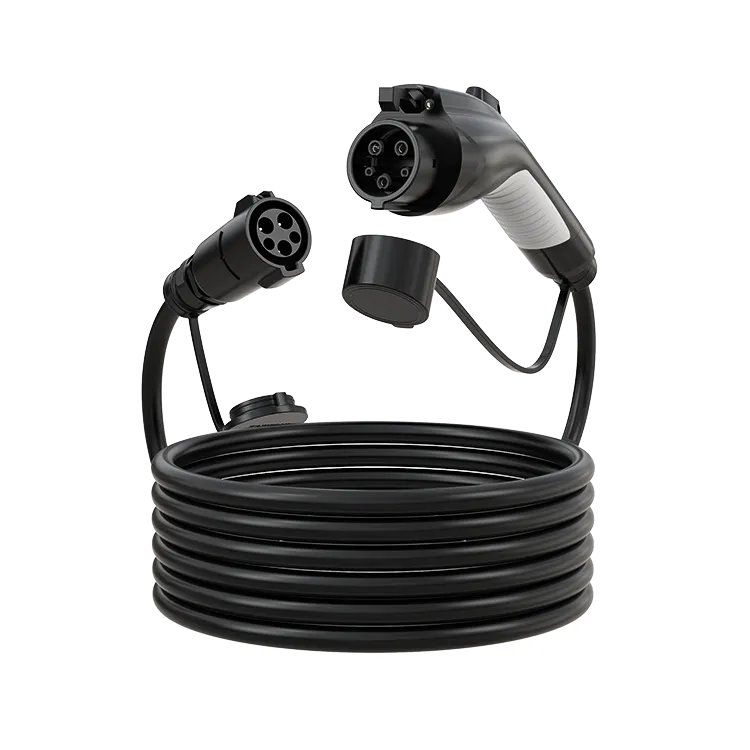
For daily life, the plugged-in wait is the designed state; owners away for weeks often unplug. Its maintenance is a seasonal look at the socket cover’s seal and the connector’s cap. The two EVDANCE portables most often left this way are the EV-ACS3210T (32 A NACS portable, about 7.7 kW, NEMA 14-50P, adjustable 10–32 A in six steps, IP66) and the EV-AC04001U (40 A J1772 portable, 9.6 kW, NEMA 14-50P, IP66, 25 ft cable). Both ratings cover the unit; neither reaches your wall socket.
Frequently Asked Questions
Will rain reach the socket while the charger is plugged in?
Only the socket’s own in-use cover stands there. If it has none that works with a plug in place, that end is unfinished — an electrician’s job, whatever the charger’s rating says.
Can I leave it plugged in through winter?
The unit’s rating covers rain and dust in any season; cold and heat follow the manual’s stated temperature range, which the IP code does not cover. Dock the connector, keep the joint out of standing water, check the seals seasonally.
Does leaving it plugged in waste electricity?
A waiting charger draws standby power — small, continuous, and 40% lower on ENERGY STAR certified models than conventional ones. Owners away for long stretches often unplug; daily users leave it connected, as designed.
Related Reading
- Are Portable EV Chargers Waterproof? IP Ratings Explained for Drivers
- Can a Home EV Charger Be Installed Outside?
- Can You Charge an Electric Car in the Rain?

