
Yes. A portable EV charger is a charger, not a travel accessory: it is built for the same continuous charging duty as a wallbox, and daily use does not wear out its electronics. What daily use does wear is mechanical — the wall plug and socket it feeds from, the cable where it bends, and the connector that mates with the car every day. Each shows early signs long before it becomes a safety problem.
Key Takeaways
- A portable charger is built and listed for continuous charging duty; daily use does not wear out its electronics.
- Daily wear is mechanical and lands in three places: the wall plug and socket, the cable’s flex points, and the car connector.
- Each wear point shows early signs — looseness, warmth, discolouration, jacket damage, stiff seating — visible without tools.
The Unit Itself Is Built for the Duty
Home charging is a continuous load: hours at a steady current, night after night. The National Electrical Code treats it that way, sizing the breaker at 125% of the charger’s current, and a portable’s stated rating is a continuous rating of the same kind. The difference from a wallbox is packaging — power arrives through a plug instead of a hard-wired joint — not a lighter class of electronics. The safety evidence for a unit is its listing — the certification marks its page and documentation state. Our portable EV charger safety guide covers the installation rules around that duty, including why extension cords are not a workaround.

Where Daily Wear Actually Lands
| Interface | What daily duty does to it | Early signs to catch | The response |
|---|---|---|---|
| Wall plug and socket | Hours of continuous current plus plug cycles; the contacts loosen over the years | The plug sits loose; warmth or discolouration at the socket face after a session | Stop using that socket and have an electrician replace it — under this duty a socket is a consumable part |
| Cable flex points | Bending concentrates where the cable leaves the control box and the connector; tight coiling and tyres add damage | A scuffed or cracked jacket, a section that stays kinked or feels stiff | Take the unit out of service and contact the maker — a damaged jacket ends the unit’s weather protection |
| Car connector | A mating cycle every day, plus grit if it lives uncapped between sessions | Gritty or stiff seating, a latch that feels worn | Keep it docked or capped; if it no longer seats cleanly, that is a service conversation, not force |
The socket row deserves emphasis: a domestic socket was not designed around a nightly continuous load, and its condition — not its type — decides whether it stays safe in that role. Why wear at that joint matters is covered in our article on whether a NEMA 14-50 outlet is a fire hazard.
The Check Rhythm That Catches It
None of this needs tools — a portable has no owner servicing. It needs a rhythm:
- About weekly, after a session: check the wall plug and socket face while warmth is still readable: firm fit, no discolouration.
- Monthly: run your eyes along the cable, flex points first; dock the connector capped and off the ground.
- When a sign appears, that interface leaves service until a professional has seen it; one worn interface does not condemn the unit — a socket is replaced without touching the charger.
When Daily Use Argues for a Wallbox
The honest case for upgrading is not safety; it is an interface count. A hard-wired wallbox deletes the wall-plug interface entirely, along with the fetch-and-coil routine — our comparison of hard-wired versus plug-in chargers works through the trade. A socket that keeps wearing, or a routine that becomes friction, is the trigger; healthy interfaces make the portable a legitimate end state, not a stopgap.
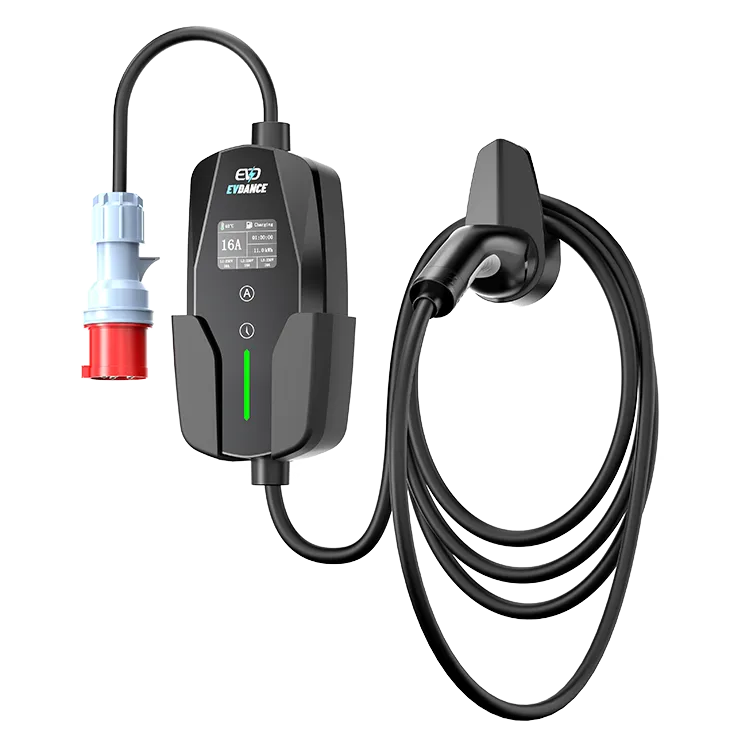
Two EVDANCE portables cover both socket worlds: the EV-ACS3210E (32 A Type 2 portable, single-phase about 7 kW, IP66) for Type 2 markets, and the ACS1605PE (11 kW three-phase portable, CEE 5-pin plug, Type 2, 7.6 m cable, IP66) for three-phase sites. Both carry the 3-year standard warranty, and both ask the same of their owner: watch the three interfaces.
Frequently Asked Questions
Does charging every day shorten a portable charger’s life compared with a wallbox?
Not its electronics — both are built for continuous duty. The difference is interfaces: the portable’s plug joint and flexing cable are inspection items a hard-wired installation lacks.
Should I unplug the portable from the wall between sessions?
No — leaving it in is the kinder pattern for the socket (fewer plug cycles) and keeps the unit ready. The car-side connector is the end that moves.
My socket is old. Can I still charge daily?
Condition decides, not age: a firm plug fit, no heat signs after a session. Anything worn gets replaced by an electrician before daily duty begins.
Related Reading
- Portable EV Charger Safety Guide 2026: NEC Rules, Extension Cords, and What to Avoid
- Do Portable EV Chargers Work? How Speed Depends on the Outlet
- Is a NEMA 14-50 Outlet a Fire Hazard for EV Charging?

