
Yes. A Tesla charges on the EV-AC04001U through the car-side J1772-to-NACS AC adapter — the small adapter many NACS cars are delivered with. The pairing is standard and the charger delivers its full 40 A — so when a session will not start, the cause is almost never the pairing. It is one of a short list of checks, most at the adapter’s two joints. Our general explainer on whether a Tesla can use J1772 chargers covers the pairing itself; this page is about the days it does not work.
Key Takeaways
- A Tesla charges on the EV-AC04001U through the car-side J1772-to-NACS adapter — an AC-only, one-direction part.
- When a session won’t start, work the chain: unit power, adapter joint at the charger, joint at the car, car settings, adapter condition.
- The session runs at the lowest of the charger’s 40 A, the adapter’s rating and the car’s acceptance.
- The adapter is the car maker’s part — its rating, condition and approval decide whether the pairing is sound.
The Pairing, in One Minute
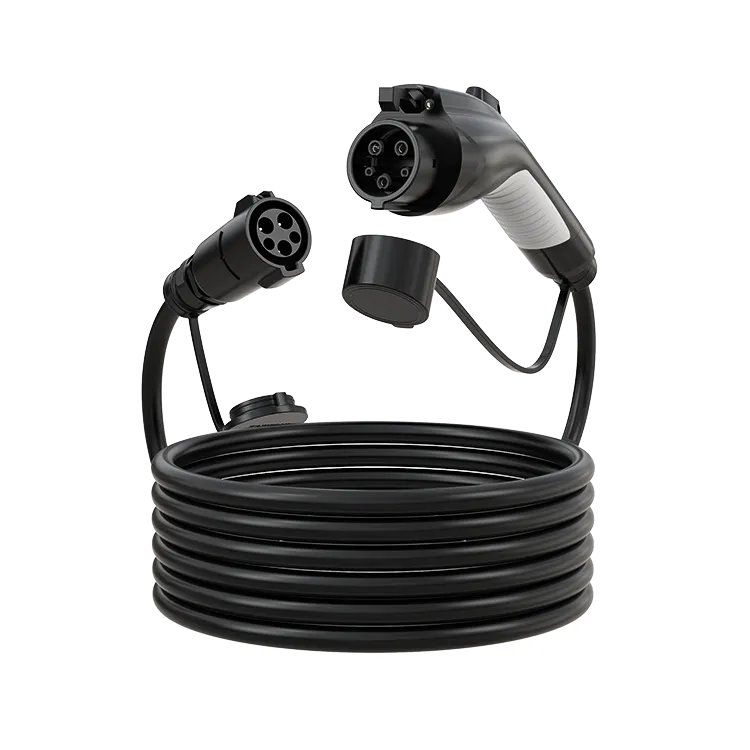
The direction matters. This charger ends in a J1772 plug; the car has a NACS inlet; the adapter bridges J1772 plug to NACS inlet, for AC charging only. That adapter is the car maker’s part and the car maker’s approval question — supplied with many NACS cars, or bought to the car maker’s specification. It is the opposite direction from a NACS-to-J1772 adapter such as the JT02, and one part never serves both directions. The adapter converts nothing: the session runs at the lowest of three numbers — this charger’s 40 A output, the adapter’s own current rating, and what the car’s onboard charger accepts.
When a Session Won’t Start: Work the Chain
Check from the wall toward the car, in this order:
- Power at the unit. Confirm the charger’s plug is fully home in the NEMA 14-50 outlet and the unit shows power. A plug that has crept part-way out is a common silent failure.
- The adapter joint at the charger. Seat the adapter onto the J1772 connector first, pushed fully on until the connector’s latch engages. A half-seated adapter is the classic no-start in this setup.
- The joint at the car. Take the adapter and connector into the car’s port as one piece. If it does not start, remove the whole assembly and reseat it once, firmly.
- The car’s own settings. Check that charging is not paused or scheduled for later in the car, and that the charge limit sits above the battery’s current level.
- The adapter itself. Look at its pins and body. A damaged adapter, or one rated below the 40 A this charger delivers, is a replace item, not a part to nurse along. Our checks on whether EV charging adapters are safe set out what to look for.
- Isolate the side. If nothing starts it, try the car on another AC charger, or another car on this unit. That swap tells you whether the fault follows the car, the adapter or the charger.
| Symptom | Likely point | Check |
|---|---|---|
| Charger shows no power at all | The outlet end | Plug fully seated in the 14-50; breaker not tripped |
| Unit has power, car does nothing | The adapter joint at the charger | Adapter pushed fully onto the J1772 connector, latch engaged |
| Session starts, then stops within a minute | The joint at the car, or car settings | Reseat the assembly as one piece; check schedule and charge limit |
| Charges, but slower than expected | The lowest link in the chain | Adapter rating versus the charger’s 40 A; the car’s own acceptance limit |

The EV-AC04001U in This Setup
The EVDANCE EV-AC04001U is a 40 A J1772 portable charger: 9.6 kW, a NEMA 14-50P plug, an IP66 enclosure and a 25 ft cable. In a J1772 household, where another car uses the same unit natively, it is a straightforward shared charger. A Tesla-only household that wants no adapter in the chain at all would look at a native NACS unit instead, such as the EV-ACS4005T portable.
Frequently Asked Questions
Does the adapter slow a Tesla down on this charger?
Only if its current rating is below what the charger delivers. A correctly rated adapter passes the session through untouched; the car’s onboard charger sets the speed, exactly as on a native NACS charger.
Can the adapter stay on the charger’s connector between sessions?
At home, many owners leave it seated so the routine is one motion. Keep the joint clean and dry, and check the adapter’s own protection rating rather than assuming it matches the charger’s IP66.
Does this adapter setup work for DC fast charging?
No. This adapter family is AC only, for Level 1 and Level 2. DC fast charging across standards uses a different, dedicated adapter, only where the automaker approves it.
Related Reading
- Can a Tesla Use J1772 Chargers?
- Are EV Charging Adapters Safe?
- What Is J1772? The North American EV Plug Explained

