
“Installing” the EV-AC04001U involves no wiring: it is a plug-in charger, so installation means siting the unit by its NEMA 14-50 outlet, proving the outlet’s circuit is a 50 A circuit, and running a check routine before the first session. It matters more for this unit than for most: the EV-AC04001U delivers a fixed 40 A with no lower setting to fall back on, so the checks, not a dial, carry the safety story.
Key Takeaways
- Installing this plug-in charger means siting, circuit proof and a check routine — no wiring for the owner.
- Fixed 40 A needs a true 50 A circuit (the 125% rule) — no lower setting to fall back on.
- A 14-50 face does not prove a 50 A breaker — verify at the panel, or have an electrician confirm.
- The routine is short: plug grip, outlet face, latch and pins, cable jacket, first-session warmth, breaker behaviour.
What Installation Means for a Plug-In Unit
- Site it within honest reach of the car. The unit lives next to its outlet, and its 25 ft cable runs from there. Route the cable to the port with slack, off the main walking route.
- Support the unit; do not hang it by its plug. The plug is a connection, not a bracket — rest the unit’s weight on a surface or support, so the plug sits in the outlet unstressed.
- If the outlet does not exist yet, that part is an installation. A new 14-50 circuit is a licensed electrician’s job, with the permit and inspection your local rules require. Our guide to what a NEMA 14-50 outlet is covers the outlet itself; plugging in afterwards is the only part you do yourself.
The One Circuit Fact: Fixed 40 A Needs a True 50 A Circuit
EV charging is a continuous load under the National Electrical Code, so the breaker is sized at 125% of the charger’s current: 40 A of charging belongs on a 50 A breaker. Adjustable portables can step down to meet a smaller circuit; this unit cannot. That makes this check a gate:
| What the outlet’s circuit turns out to be | Verdict for this charger |
|---|---|
| A 50 A breaker feeding the outlet | Run it — the circuit the unit is built for, at the full 40 A / 9.6 kW |
| A 40 A breaker (or smaller) behind a 14-50 face | Do not run it on this circuit — the face shows the shape, not the circuit. Options: an electrician’s upgrade, or an adjustable charger |
| Unknown — no panel label, unclear history | Treat as unconfirmed — an electrician verifies the breaker and wiring first |
The full sizing chart is in our guide to what size breaker an EV charger needs. One rule travels with it: never fit a bigger breaker to existing wire.
The Safety Check Routine
Run these before the first session, then as a short periodic routine — no tools needed.
| Check | Where | What good looks like | If it fails |
|---|---|---|---|
| Plug grip | The charger’s plug in the receptacle | Seats fully, holds firm, no sag or creep | Loose fit: stop and have the receptacle assessed |
| Receptacle face | The outlet itself | No discolouration, cracks or heat marks | Any heat sign: do not charge on it; electrician first |
| Connector latch and pins | The J1772 connector | Latch clicks onto the car; pins straight and clean | Damage or a latch that will not engage: stop using it |
| Cable jacket | Along the cable’s full run | No cuts, crush points or exposed inner layers | Damage: the cable is retired, not taped |
| First-session warmth | Plug and outlet after the first long session | Warm is normal under load; hot is not | Too hot to hold comfortably: stop, electrician checks the outlet |
| Breaker behaviour | The panel, across the first sessions | No trips during normal sessions | Repeated trips are circuit information, not a nuisance — electrician |
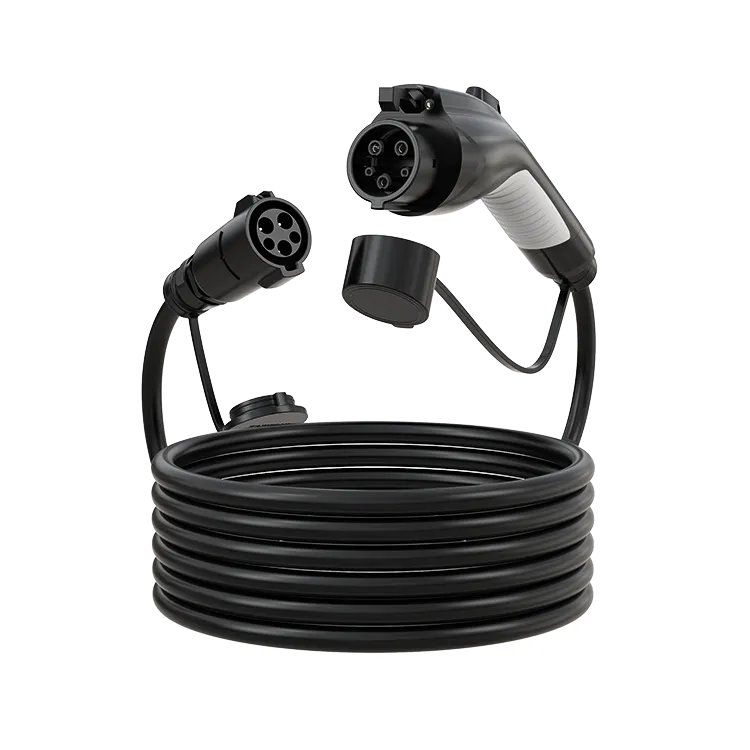
The hazard background behind the heat checks is set out in our guide to whether a NEMA 14-50 outlet is a fire hazard. The EV-AC04001U itself: a 40 A J1772 portable, 9.6 kW, NEMA 14-50P, IP66, 25 ft cable, under EVDANCE’s 3-year standard warranty.

Frequently Asked Questions
Can I install the EV-AC04001U myself?
The plugging-in part, yes. Anything behind the outlet face — new circuit, replacement receptacle, panel work — belongs to a licensed electrician.
My outlet is on a 40 A breaker. Can I just try it?
No. This unit has no lower setting to step down to, so a 40 A circuit would be overloaded. Either an electrician upgrades the circuit to 50 A, or the right tool is a charger with adjustable current.
How often should I repeat the checks?
In full before the first session; after that, a quick visual pass whenever you plug in, and the full routine again after anything changes — new outlet, moved unit, tripped breaker.
Related Reading
- What Size Breaker Do I Need for an EV Charger?
- Is a NEMA 14-50 Outlet a Fire Hazard for EV Charging?
- What Is a NEMA 14-50 Outlet? A Guide for EV Owners

