
No. Car makers do not offer charging-port conversions, and no approved kit changes an EV’s inlet from one standard to another. The inlet is only the visible end of the car’s charging system: the electronics behind it speak one standard’s language, so swapping the socket alone changes nothing. A damaged port is a different job — a dealer replaces it like for like.
Key Takeaways
- No car maker offers a charging-port conversion, and no approved kit changes an EV’s inlet standard.
- The standard lives in the car’s charge electronics and software, not in the socket — a swap of metalwork changes nothing.
- Repair is different: a dealer can replace a damaged inlet like for like, as an assembly.
- The working options are approved adapters, connector-filtered trip planning, and choosing the standard when you next change cars.
The Port Is Only the Front Door
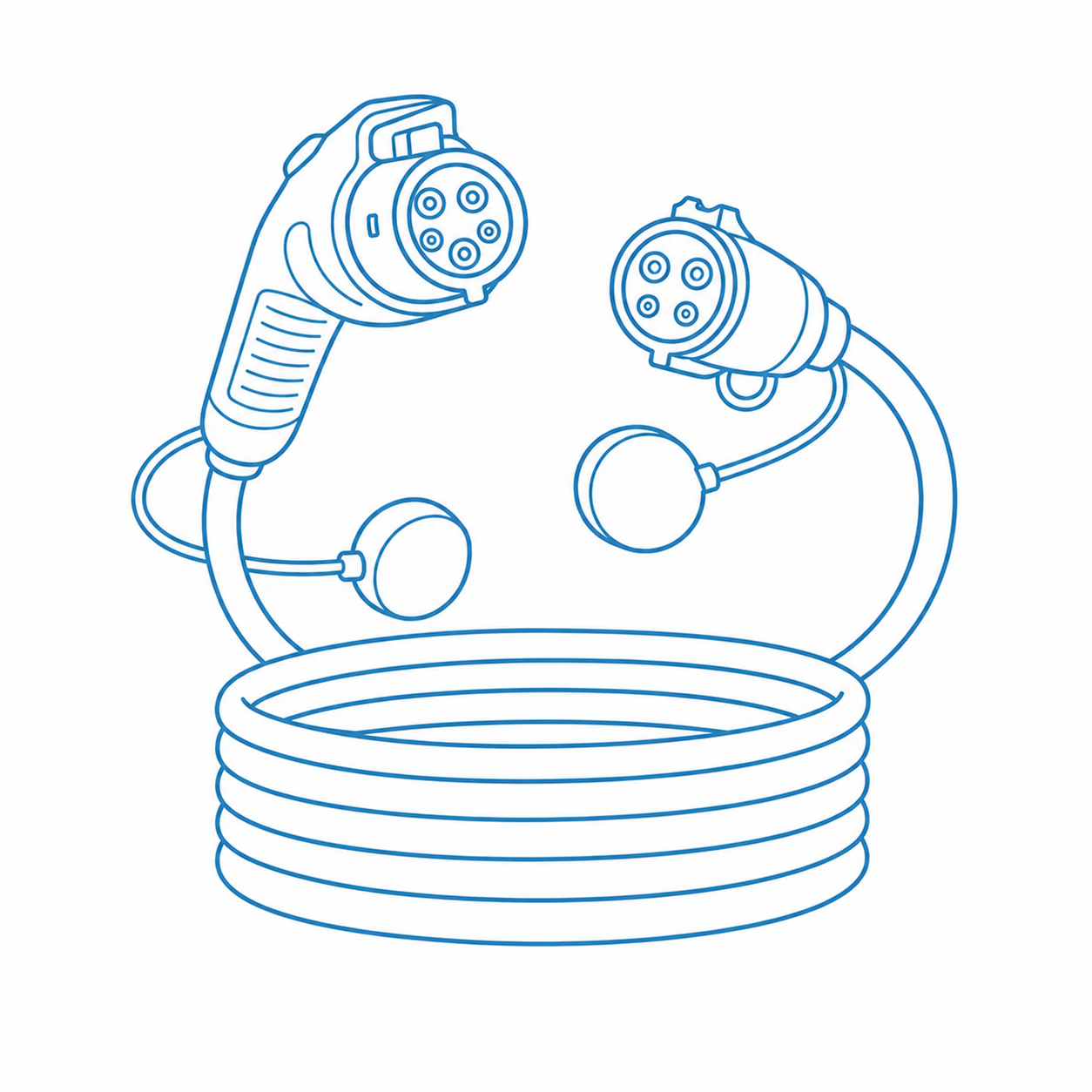
What you see behind the flap is an inlet: pins, a latch and wiring that lead into the car. Behind it sit the parts that actually run a session — the onboard charger that converts AC power for the battery, the DC charge path on fast-charge models, and the control electronics that negotiate with the station before any current flows. That negotiation follows the car’s built-in standard, whether that is J1772 and CCS, CHAdeMO or NACS. The standard lives in the car’s electronics, not in the shape of the hole.
Why a Socket Swap Changes Nothing
A conversion would have to replace far more than the inlet. Each row below is a reason the job becomes re-engineering the car.
| Layer | Why it blocks a simple swap |
|---|---|
| Inlet and wiring | Pin layout, latch and high-current wiring differ between standards, including separate AC and DC paths on some cars. |
| Charge electronics | The car speaks one protocol. Another standard’s station cannot hold the safety conversation with electronics built for a different system. |
| Software and safety systems | Charge control, locking and fault handling are programmed and tested as one system. |
| Certification and warranty | The car was certified as built. Re-engineering its highest-current connection puts that certification — and the maker’s warranty position — in doubt. |
This is also why adapters only exist where the two sides already share a communication approach: the adapter changes the metalwork, not the language.
Changing Is Not Repairing
Owners often ask after damage, and damage has a normal route. A bent pin, cracked housing or broken latch is a dealer job: the inlet is replaced as an assembly, with the same standard the car was built with. That repair changes nothing about which chargers the car can use. Conversion is the opposite request — same car, different standard — and it is the one makers do not sell. Specialist firms occasionally advertise full conversions. Treat those as engineering projects, not accessories: they are not maker-approved, and they sit in the highest-current connection the car has.

What Drivers Do Instead
- Use an approved adapter where one exists. AC adapters work because AC signalling is common and simple. DC adapters exist only for combinations that share a communication approach, and only where the automaker approves them — our guide to whether EV charging adapters are safe sets out the checks.
- Plan around the connector you have. The U.S. DOE Station Locator can be filtered by connector, so a CHAdeMO or CCS driver can map stops that fit the car as built.
- Count the port when you change cars. The moment to change standards is when you change vehicles — the connector comparison in Type 2 vs J1772 vs NACS shows what each market uses.
EVDANCE’s adapter range follows the same rule: the JT02 NACS-to-J1772 adapter covers AC charging up to 80 A, and the JT08 and JT09 NACS-to-CCS1 DC adapters are for use only where the automaker approves them. None of them converts a car — they bridge combinations that already speak the same language.
Frequently Asked Questions
Can a dealer convert my CHAdeMO car to CCS?
No. Dealers replace a damaged inlet with the same standard the car was built with. The CCS conversation runs through the car’s own electronics, which a socket change does not replace, so no dealer conversion exists.
I moved to another country. Can I swap my inlet for the local standard?
The same answer applies: the inlet is part of a certified system, not a travel plug. Drivers use approved AC adapters where they exist, charge at home on the local supply, and treat the port as fixed for the life of the car.
Would a conversion kit affect my warranty?
Very likely, yes. Replacing part of the car’s charging system with unapproved hardware gives the maker grounds to refuse related warranty claims, and the work is outside the car’s certification. If warranty cover matters to you, that alone settles the question.
Related Reading
- Are EV Charging Adapters Safe?
- Does J1772 Work With CCS? CCS Connectors Explained
- Is the Tesla Charger NACS? NACS, J3400 and Adapters Explained
- Type 2 vs J1772 vs NACS: Which EV Charger Connector Does Your Market Need?

