
Yes. A certified adapter used within its rating is built for outdoor charging, and ordinary rain does not change that. What decides the question is the adapter’s IP rating, a connection latched fully home, and contacts that are dry when you mate them. Standing water and damaged seals are the real limits — not weather you would happily stand in yourself.
Key Takeaways
- Ordinary rain is fine for a certified adapter used within its IP rating.
- Dry contact faces and a fully latched connection matter more than the weather.
- Standing water, flooding and damaged seals are the real limits.
- DC adapters need your automaker’s approval, in every weather.
What the IP Rating on an Adapter Means
The two digits after IP grade sealing: the first covers dust, the second water. An IP65 adapter is dust-tight and shrugs off water jets; IP66 raises the water side to powerful jets. The full scale for chargers themselves is compared in our guide to IP ratings for EV chargers, and the same reading applies to an adapter. Two cautions keep the rating honest. It describes the adapter as tested, in good condition — a cracked housing or a perished seal quietly cancels it. And it describes the unit, while in use the thing that matters is the mated connection: adapter, connector and car inlet latched together as one sealed system.
Rain Is Not the Same as Water Trouble
| Situation | Verdict |
|---|---|
| Ordinary rain during a session | Fine for a rated, certified adapter, fully latched |
| Plugging in with wet contact faces | Wipe the faces dry first; trapped water between contacts is the avoidable risk |
| Standing water or a flooded bay | Do not charge there; move to a dry bay or wait it out |
| Cracked housing, torn seal, corroded pins | Stop using the adapter; its rating no longer applies |
| Adapter left connected in the rain after charging | Unplug and stow it dry; a rating is about exposure in use, not storage |
The Checks That Matter More Than the Weather
Rain makes drivers notice adapters, but the checks that keep an adapter safe are the dry-day ones. The rating must match the session — an AC adapter is never a DC fast-charging adapter. For DC adapters, your automaker’s approval is a condition of use, not a preference. The latch must click home on both sides. Those checks, and the adapters to avoid, are set out in our guide to whether EV charging adapters are safe. How the NACS connector itself works is explained in our NACS and J3400 explainer. Weather adds one habit to that list: a two-second wipe of the contact faces before you plug in.
The EVDANCE Adapters and Their Ratings
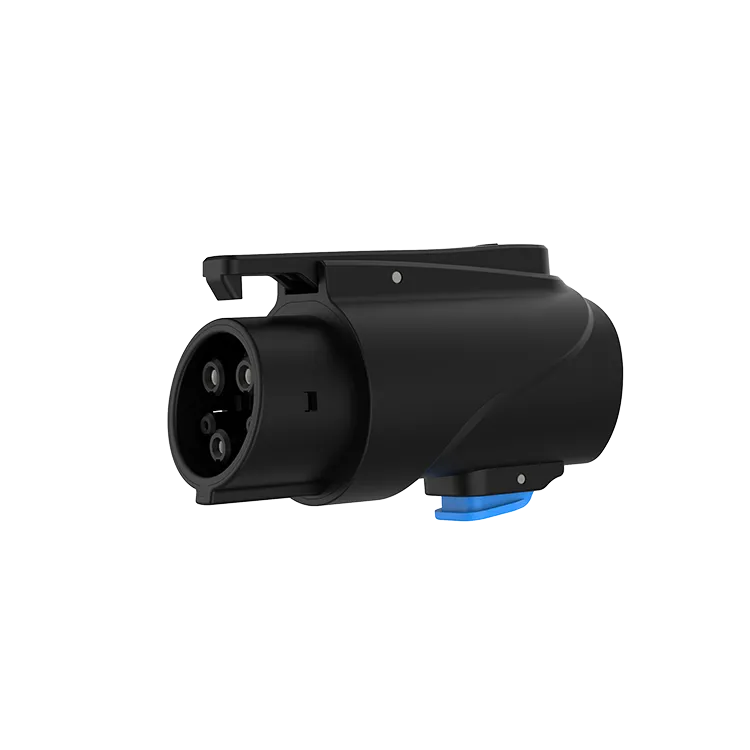
The EVDANCE JT02 adapter converts NACS to J1772 for AC charging, is rated up to 80 A, and carries IP65. For DC fast charging, the EVDANCE JT08 adapter and the EVDANCE JT09 adapter with handle convert NACS to CCS1 at up to 500 A and 1,000 V, both rated IP66 — and, like every DC adapter, they are only for vehicles the automaker approves for them. Rain performance follows those ratings: the DC pair carries the stronger sealing of the three.

Frequently Asked Questions
Can I plug in while it is already raining?
Yes. Keep the contact faces as dry as you reasonably can while you connect — shield them with your hand, wipe them once, latch fully — and then let the session run. The risky moment is the connection, not the session.
What about snow and ice?
The same rating logic applies, with one addition: clear ice and packed snow from the connector and inlet before mating, because a connector that cannot latch fully is not sealed, whatever the label says.
My adapter has no IP marking. Can I use it in the rain?
Treat an unmarked adapter as not rated for outdoor use, and be wary of it in any weather. Certified adapters from traceable makers carry their ratings on the unit, as our guide to waterproof portable chargers explains for the chargers themselves.
Related Reading
- Are EV Charging Adapters Safe?
- IP Ratings for EV Chargers: IP54, IP65 and IP66 Compared
- Are Portable EV Chargers Waterproof? IP Ratings Explained for Drivers
- Is the Tesla Charger NACS? NACS, J3400 and Adapters Explained

