
A charger budget is mostly not the charger. The money splits three ways — the unit itself, the installation scope, and any electrical work your panel needs first — and your use pattern decides which of the three deserves the spend. This guide names no model prices, deliberately: prices change and vary by market, but the cost drivers below do not.
Key Takeaways
- Budget splits into unit, installation scope and panel work — the unit is often the smallest of the three.
- Your use pattern decides where the money earns: commuters need fit, two-car homes need capacity planning, hosts need a fixed point.
- Power the car cannot accept, and installation a portable makes unnecessary, are the two classic wastes.
- Running cost is the same per kWh across home chargers; decide on hardware and installation.
The Three Cost Drivers
| Driver | Low end looks like | High end looks like |
|---|---|---|
| The unit | A portable matched to your car’s acceptance | A fixed wallbox, or a second unit for a second car |
| Installation scope | Plugging into an existing suitable outlet | A new dedicated circuit, especially a long run from the panel |
| Panel work | None — the load calculation clears the charger | Load work or a service upgrade, at an electrician’s quoted price |
For scale, U.S. DOE-cited figures put home charging equipment commonly in the $380–$690 range, with installation quoted per home on top — U.S. context, not a quote. The pattern is the point: the installation rows routinely outweigh the unit row, so choosing by the charger’s sticker alone misleads. Our breakdown of what affects installation cost covers the scope side.
Match the Spend to the Use
The nightly commuter, one car. The car sits for eight or more hours and needs a routine top-up. Almost any correctly matched charger finishes with hours to spare, so the budget earns most in unglamorous places: the panel check, a sound outlet, a settable current. Power beyond the car’s acceptance buys nothing here.
The two-car household. The second car changes the question from “which charger” to “how do two cars share the night”. The spend may be a second unit, or one charger plus a rota — either way capacity is decided first, because two chargers on paper are one load calculation in practice.
The host charging for guests or tenants. A fixed wallbox earns its installation cost here: it stays on the wall and does not walk away. Keep the accounting honest, though — a home charger’s session records are not a billing meter, and charging guests is an arrangement you make, not a feature a charger has.
False Economies
- Buying power the car cannot accept. The car’s onboard charger caps the session; a bigger unit behind a capped car adds cost and circuit load, not speed.
- Paying for a fixed installation where a portable serves. If a suitable outlet already exists where you park, a portable does the same job with no installation scope at all.
- Skipping the panel check to save the visit. Ordering first and calculating later is the most expensive order of operations — a charger that does not fit still has to be dealt with.
- Chasing running-cost differences between chargers. At the same delivered energy, electricity costs the same: at the U.S. average residential price of 18.31 cents per kWh, 40 kWh costs about $7.33 whichever home charger delivers it. Our home charging cost guide covers the energy side.

The EVDANCE Range on a Budget Logic
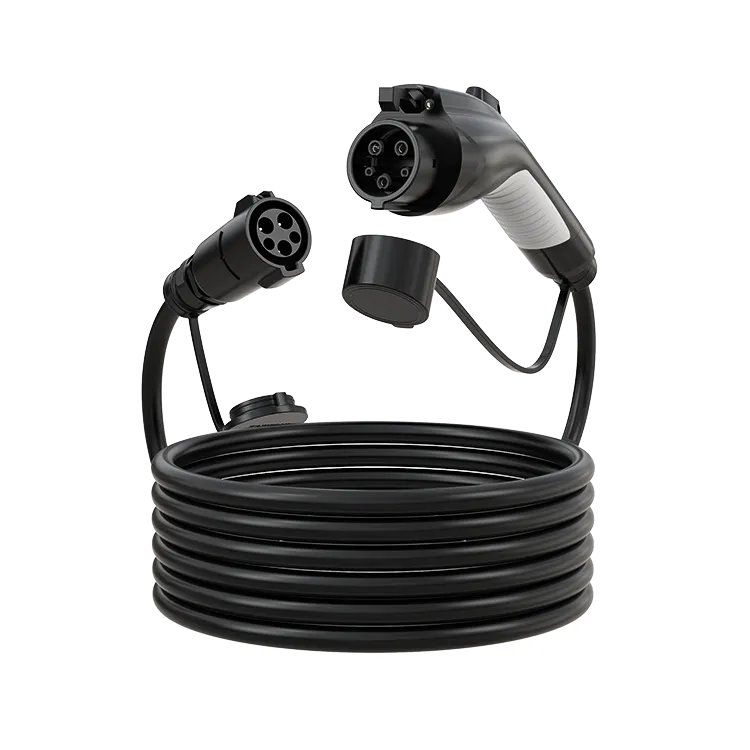
The range maps onto the drivers cleanly. The portables — the EV-ACS3210T at about 7.7 kW with six current steps, the EV-ACS4005T at 9.6 kW with four steps, and the fixed-rate EV-AC04001U at 9.6 kW for J1772 cars — keep installation scope near zero where a suitable NEMA 14-50 outlet exists. The EV-ACT5006T wallbox at 48 A and 11.5 kW adds a real installation: worth it when the car accepts the power and the point is permanent. Every EVDANCE charger carries a 3-year standard warranty, so the warranty line does not separate them. Our portable charger buying guide goes deeper.
Frequently Asked Questions
What is the cheapest honest way to start home charging?
A portable matched to your car, plugged into an existing suitable outlet — after an electrician confirms the panel can carry it. If the outlet or capacity does not exist, the honest budget includes creating them.
Should I spend more for a faster charger?
Only when your car accepts the higher power and your parking window is short enough for the difference to show. On an overnight routine with a car that caps lower, it returns nothing.
Do more expensive chargers cost less to run?
No. Running cost follows the energy delivered and your electricity tariff. Chargers of the same class deliver a kWh at effectively the same cost; spend decisions belong on hardware, installation and fit.
Related Reading
- What Affects EV Charger Installation Cost? 8 Factors to Check
- How Much Does It Cost to Install a NEMA 14-50 Outlet?
- Portable EV Charger Buying Guide 2026: Specs, Costs, and When to Choose One Over a Wallbox
- How Much Does It Cost to Charge an Electric Car at Home?

