
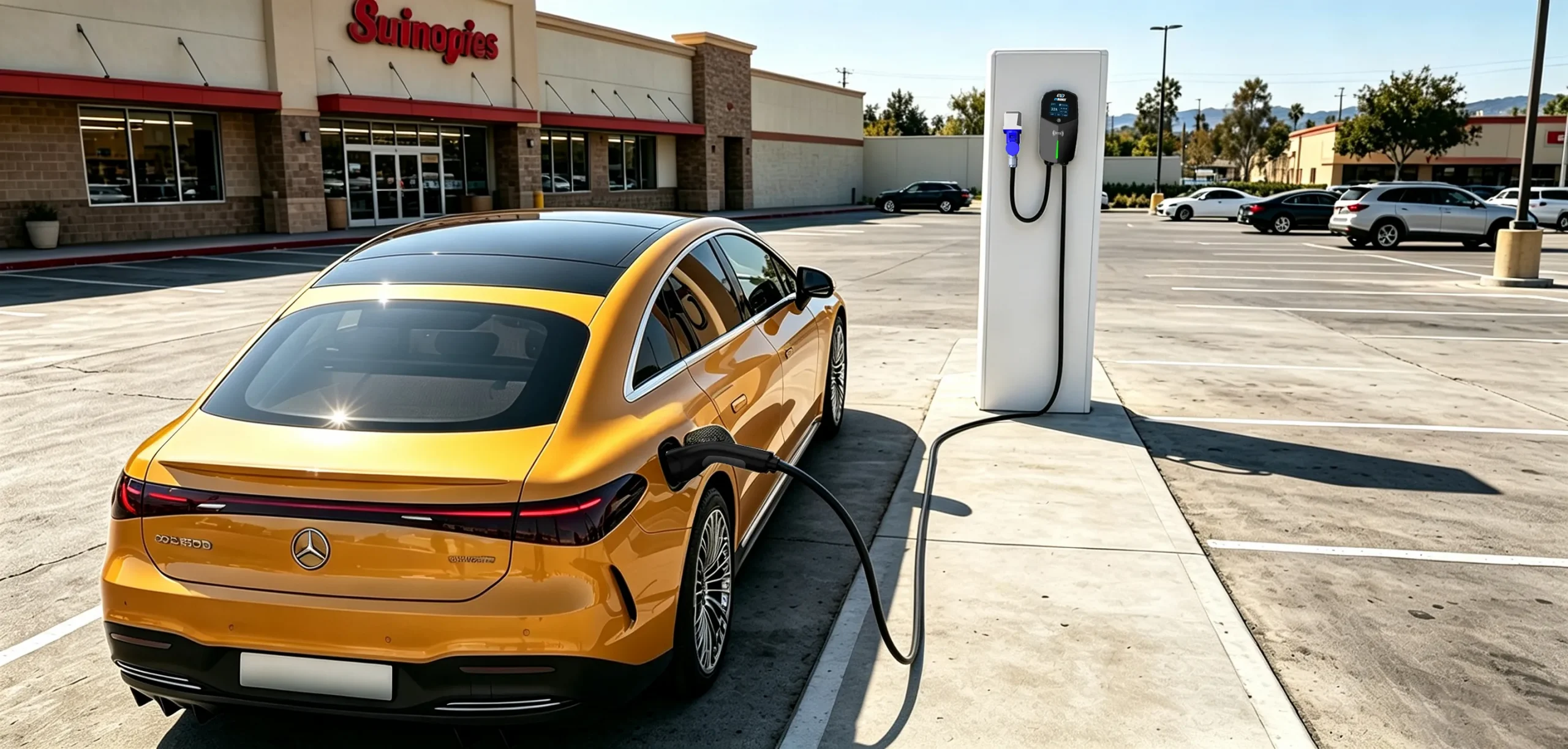
There is no verified universal figure that proves EV chargers increase foot traffic for retail stores, and any percentage quoted without a source should be treated as sales talk. What charging reliably does is create a dwell window: a driver parks, plugs in, and has time on their hands in front of your store. Whether that parked time becomes store visits depends on your format and where the chargers sit — and the only honest way to know is to measure it on your own site.
Key Takeaways
- No sourced universal figure shows chargers lift retail foot traffic — anyone quoting one owes you the source.
- Charging creates a dwell window; format, placement, price and visibility decide whether it converts to visits.
- Measure on your own site: baseline first, session logs, matched footfall windows, a till question, a full season.
- Managed AC hardware with session records is what makes the measurement possible at all.
Why the Claim Sounds Plausible
The mechanism is real. A Level 2 session runs at the pace the U.S. DOT describes — roughly 10–20 miles of range per hour — so a useful top-up takes a while, and the driver is on foot for most of it. A driver with time to fill browses, eats, or runs the errand they were putting off. Our guide to EV charging for restaurants and retail works through how hosts use that dwell time. But a plausible mechanism is not a measurement: stores differ too much for one number to describe them all.
What Decides Whether Drivers Walk In
| Factor | Why it decides the outcome |
|---|---|
| Store format | A café, gym or supermarket can absorb a charging-length visit. A drive-through or a shop people use for five minutes cannot — the dwell window goes to waste. |
| Charger placement | Bays beside the entrance put a walking driver past your door. Bays at the far corner of the car park put them on their phone instead. |
| Price and terms | Free-with-purchase charging gives a reason to come inside. A session priced like a fuel stop gives a reason to stay in the car. |
| Visibility | Drivers find chargers through apps and station maps. A charger nobody can find in a listing serves only drivers who already knew your store. |
| Bay management | Bays blocked by non-charging cars, or held by one car all day, produce no visits at all. |
How to Measure It on Your Own Site
- Take a baseline first. Record footfall and sales for the same hours and days before the chargers go in. Without a “before”, every “after” number is a guess.
- Count sessions, not chargers. Your session log shows how many drivers plugged in, when, and for how long — the pool any footfall effect must come from.
- Match the windows. Compare till and door counts during charging hours against your baseline, on matched days — a wet Saturday against a sunny one proves nothing.
- Ask at the till. One question — “did you charge while you shopped?” — separates charging visitors from everyone else better than any estimate.
- Give it a season. Driver habits build slowly as listings spread; judge over months, not the first fortnight.
Hardware for Retail Destination Charging
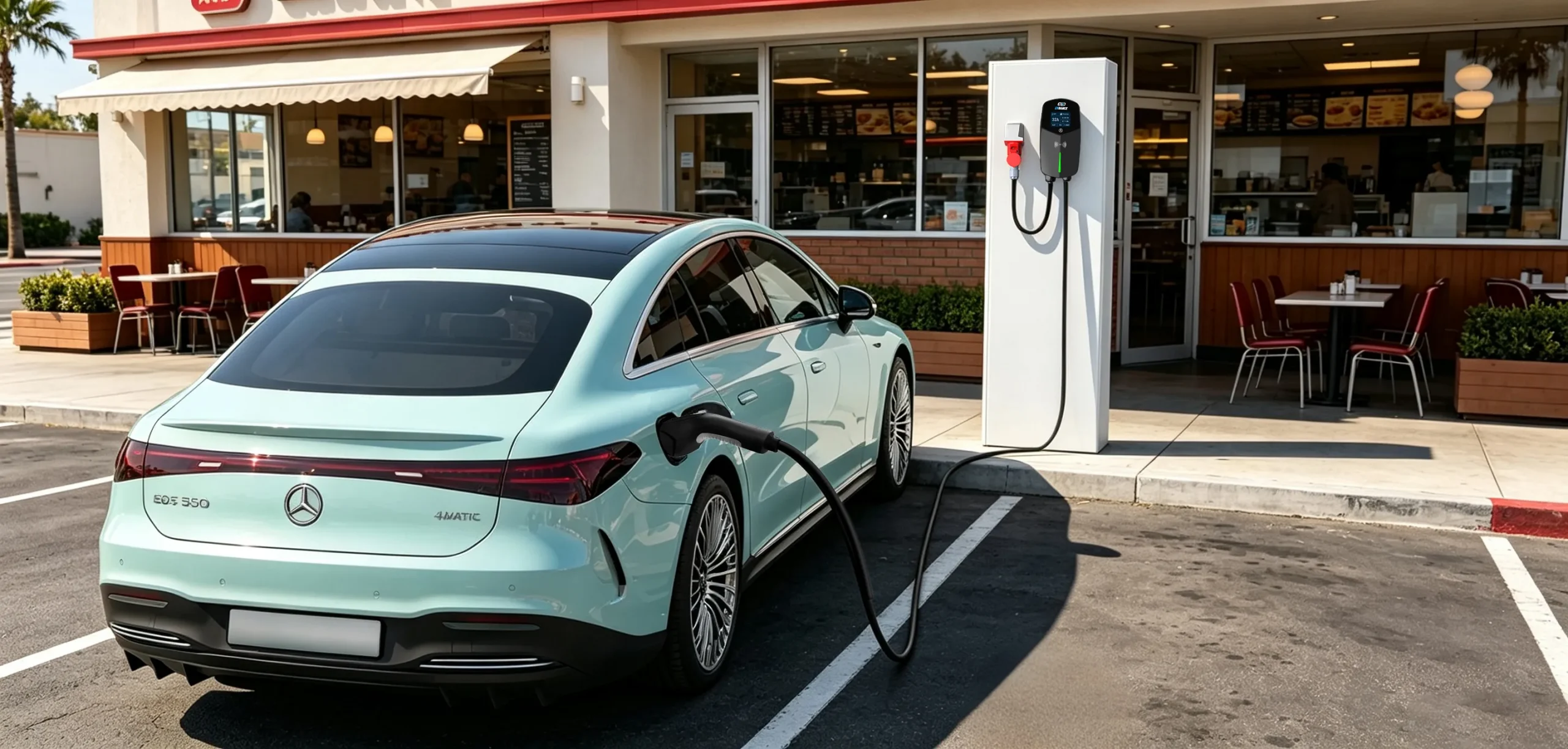
Retail sites usually run managed AC hardware: access control, session records and a platform the operator reads the measurement data from. The EV-AC03201T dual-connector AC station fits that shape — two Type 2 connectors sharing up to 43 kW (22 kW per connector), OCPP 1.6J, RFID access, IP54. For a single wall bay, the EV-ACT3204PE 22 kW wallbox (tethered Type 2 cable, RFID and app, IP66, CE) does the same job at smaller scale. The full range is on our commercial charging page.
Frequently Asked Questions
Can I quote a footfall increase in my business case?
Not honestly, unless it comes from your own measured pilot. Build the case on session revenue, bay costs from our guide to whether a charging station business is profitable, and the dwell mechanism — then treat any footfall gain as upside you verify, not a promise you underwrite.
Does free charging bring more drivers in than paid charging?
It changes who comes and why, but “more” is still your site’s answer. Free charging is a marketing cost per session; paid charging filters for drivers who value the location. Test one model for a season and read your own data.
Where should retail chargers go to help the store most?
Visible from the entrance, signed from the car park, and listed in the apps drivers use — the planning steps in how to open an EV charging station cover siting in order.
Related Reading
- EV Charging for Restaurants and Retail: Turning Dwell Time Into Visits
- How to Open an EV Charging Station: Step by Step
- Is an EV Charging Station Business Profitable?
- Where to Find EV Charging Stations: Maps, Apps and Tips

