
Yes, EV tires often wear faster than tires on a similar petrol car. The battery pack makes the car heavy, and the motor delivers its full pulling power the instant you press the pedal, so the tread works harder in both cases. There is no single wear figure, though — driving style, tire choice and basic care move the result more than the powertrain does.
Key Takeaways
- EV tires can wear faster because of battery weight and instant torque, but there is no fixed wear penalty.
- Driving style, pressures and rotation decide more than the powertrain does.
- EV-specific tires are optional; correct size and load rating are not.
- Regenerative braking saves brake pads and puts more of the slowing work through the driven tires.

Why an EV Works Its Tires Harder
Weight. The battery is the heaviest single component in an electric car, and it never gets left behind. A heavier car presses its tires into the road with more force, so the tread wears faster under power, under braking and in corners.
Instant torque. A petrol engine builds power gradually as revs climb. An electric motor gives strong torque from a standstill, which is why EVs feel quick off the line — and why a heavy right foot scrubs tread.
Regenerative braking. When an EV slows, the motor does much of the braking and sends energy back to the battery. That saves the brake pads, but the slowing force still passes through the driven tires. On a single-motor car, one axle does both the driving and most of the slowing, so its tires carry a double load.
| Factor | What it does to the tread | What you can do |
|---|---|---|
| Battery weight | More load on every tire, all of the time | Keep pressures at the maker’s figure and use tires with the right load rating |
| Instant torque | Hard starts scrub the tread, especially from rest | Accelerate progressively instead of using full power at every light |
| Regenerative braking | Braking force concentrated on the driven axle | Rotate the tires on the carmaker’s schedule so wear evens out |
| Wrong pressures | Under-inflation wears the shoulders; over-inflation wears the centre | Check pressures monthly, against the figure on the door placard |
What Matters More Than the Powertrain
Plenty of petrol cars wear tires quickly too, and plenty of EVs do not. The biggest variables are the ones drivers control: fast cornering, rough surfaces and under-inflated tires shorten any set’s life, whatever powers the car. Tire design matters as well. Many makers now sell EV-specific tires — stronger construction for the weight, tread compounds for grip from rest, low rolling resistance to protect range. They are an option, not a requirement: a standard tire of the correct size and load rating is safe to use. And tire wear is only one running cost among several, as our comparison of charging an electric car versus buying gas shows.
Making a Set of EV Tires Last
- Check pressures monthly and before long trips, using the figure on the driver’s door placard — not the number on the tire sidewall.
- Rotate the tires on the carmaker’s schedule, so the driven axle does not wear its pair out first.
- Pull away gently. The torque is always there; the tread pays when you use all of it, every time.
- Get the alignment checked if wear is uneven or the car pulls to one side.
- When you replace tires, match the size and load rating the carmaker specifies; consider an EV-specific set for a quieter ride and better range.
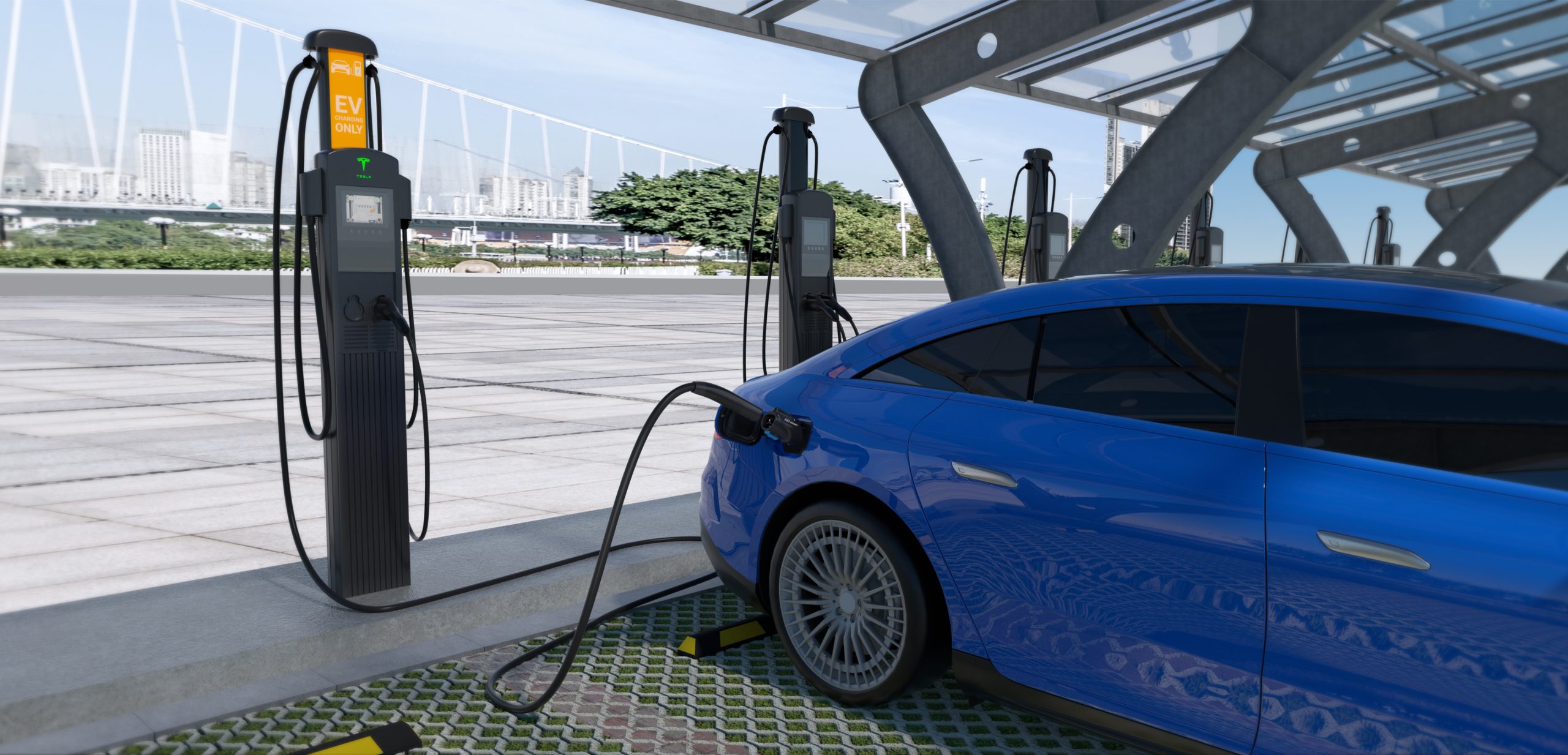
Checks That Fit Around Home Charging
A car that charges at home is a car you walk around every day, which makes the monthly pressure check easy to keep. While it charges, the EV-AC04001U 40A J1772 portable charger (9.6 kW, NEMA 14-50P, IP66, 25 ft cable) or the EV-ACS3210T 32A NACS portable charger (about 7.7 kW, adjustable from 10 to 32 A) does the refuelling for you.
Frequently Asked Questions
How much faster do EV tires wear out?
There is no standard figure, and carmakers do not publish one. Wear depends on the car’s weight, the tire design and how the car is driven. Driven gently and kept at the right pressure, an EV’s tires can last as long as a petrol car’s.
Do I have to buy special EV tires?
No. Any tire of the correct size and load rating is fine. EV-specific tires are designed for the weight and instant torque, and are usually quieter and better for range, so they are worth considering when the original set wears out.
Does regenerative braking wear the tires?
It wears the brake pads less, but the slowing force passes through the driven tires instead of being shared by four sets of brakes. That is one more reason to rotate the tires on schedule.
Related Reading
- Is Charging an Electric Car Cheaper Than Gas?
- Cold-Weather EV Charging: What Happens to Chargers and Cables Below Freezing
- Commercial EV Charger Maintenance Checklist
- Level 1 vs Level 2 vs DC Fast Charging: A Practical Comparison

