
Sometimes — and the honest answer stops there. What is in the box has varied by model, by market and by build date, and it has changed over time, so no fixed list can tell you what your car came with. What settles it is the paperwork for your exact car: the order and delivery documents, checked against what is actually in the car.
Key Takeaways
- Inclusion varies by model, market and build date — the delivery documents for your exact car are what settle it.
- The adapter in question is a J1772-to-NACS AC adapter: J1772 charging for a NACS car, nothing to do with DC fast charging.
- On a used car, physically check: small adapters go missing between owners.
- Buying separately means matching direction and rating; EVDANCE’s JT02 points the opposite way and is not the Tesla owner’s part.
The Adapter People Usually Mean
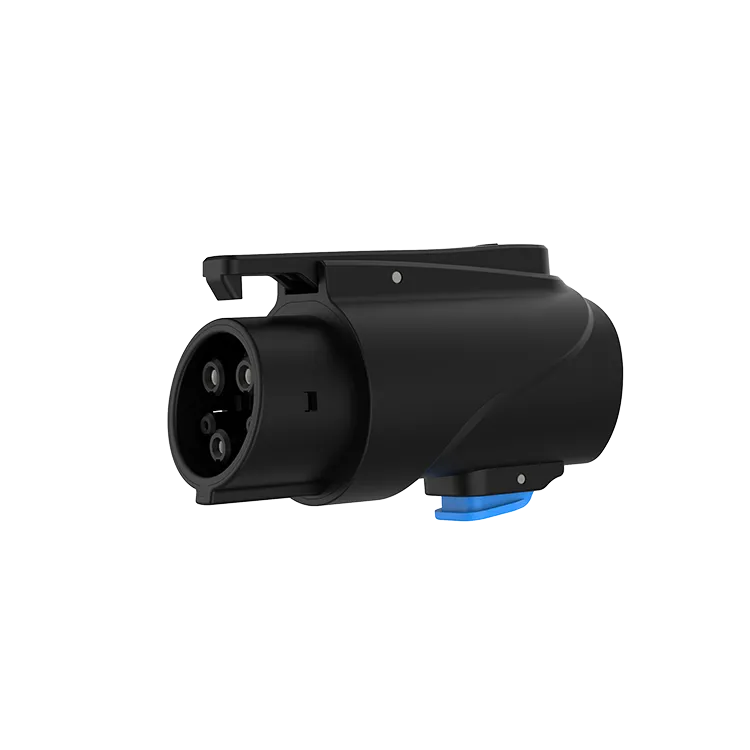
One adapter does most of the work in this question: a J1772-to-NACS AC adapter. A car with a NACS inlet uses it to charge from J1772 plugs — the established North American AC connector on public Level 2 posts, workplace chargers and many home wallboxes, as set out in whether a Tesla can use J1772 chargers. It is an AC part only: it adds no DC fast charging, changes nothing about Supercharger access, and converts no power — it changes the shape of the connection so the car’s inlet can accept the plug. This small AC piece is almost always the one buyers mean — which is why its presence or absence matters on the first road trip.
How to Check What Your Car Includes
| Where to check | What it settles |
|---|---|
| The order and delivery documents for your car | What the maker listed as included equipment for that model, market and build — the baseline claim |
| The car itself — charge kit, storage compartments, cable bag | What is physically there now; small adapters are borrowed, lost and left behind, especially by previous owners |
| The maker’s current support pages for your model and market | What the maker says the car ships with today, and the part it sells if yours is missing |
| The seller, for a used car | Whether the adapter is part of your sale at all — ask before completion, not after |
Work down the table in order. The documents tell you what should be present; the car tells you what is; the maker’s pages tell you the remedy if the two disagree. On a used car, treat the physical check as the only one that counts — an adapter listed in a three-year-old delivery sheet may be sitting in the first owner’s garage.
If Yours Did Not Come With One
Buying the adapter separately is routine, and two things decide whether you buy the right one. First, direction: a NACS-inlet car charging at J1772 posts needs the J1772-to-NACS direction; the mirror-image part is a different product and does not work backwards. Second, ratings: the session runs at the lowest of the charger’s output, the car’s acceptance and the adapter’s rating, so match the rating to the AC charging you actually do. Beyond that, the buying discipline is the same as for any adapter — covered in whether EV charging adapters are safe.
The Opposite Direction: EVDANCE’s JT02
EVDANCE’s adapter serves the other journey. The JT02 is a NACS-to-J1772 AC adapter, rated up to 80 A with an IP65 enclosure: it lets a car with a J1772 inlet charge at NACS AC points such as destination chargers and home wallboxes. A Tesla owner does not use it on their own car — it points the wrong way. If your gap is charging a NACS car at home instead, the fix is a charger that already ends in a NACS plug, such as the EV-ACS4005T 40 A NACS portable charger, at 9.6 kW from a NEMA 14-50P outlet — no adapter in the chain at all.

Frequently Asked Questions
Does the adapter let a Tesla use DC fast chargers?
No. The adapter in this question is an AC part: it connects a NACS inlet to J1772 AC charging. DC fast charging is a separate path — a Tesla uses its maker’s DC network natively, and no AC adapter adds DC capability to any car.
My used Tesla came without an adapter. Is that a problem?
Only an inconvenience. Check the delivery documents to see whether one was ever listed, then buy the J1772-to-NACS direction if you need J1772 charging, matched to your car’s AC rating. Verify any adapter a seller does include by its markings, not by its shape alone.
Should I keep the adapter in the car?
Yes. It is small, and its whole value appears away from home — the workplace post or public charger that turns out to be J1772. Stored dry with the charging cable, it is there the one time per trip you need it.
Related Reading
- Can a Tesla Use J1772 Chargers?
- Are EV Charging Adapters Safe?
- Is the Tesla Charger NACS? NACS, J3400 and Adapters Explained

