
Two things about V2G and battery wear are true at once. Exporting energy is battery use — every kilowatt-hour sent out counts toward the pack’s lifetime throughput, exactly as driving does. And the size of the effect on battery life is not settled: it depends on how much energy moves, how deeply the battery cycles, and which car it is. The useful skill is not picking a side. It is reading any wear claim — alarming or reassuring — for what it actually measured.
Key Takeaways
- Exporting through V2G is battery use measured in throughput — that much is settled; the lifetime effect depends on pattern, depth and car.
- Judge any wear claim by what was cycled, how much energy moved, between which charge levels, at what temperature, and whether it was measured or modelled.
- For your car, the maker’s battery warranty — not a headline — decides whether V2G use is covered.
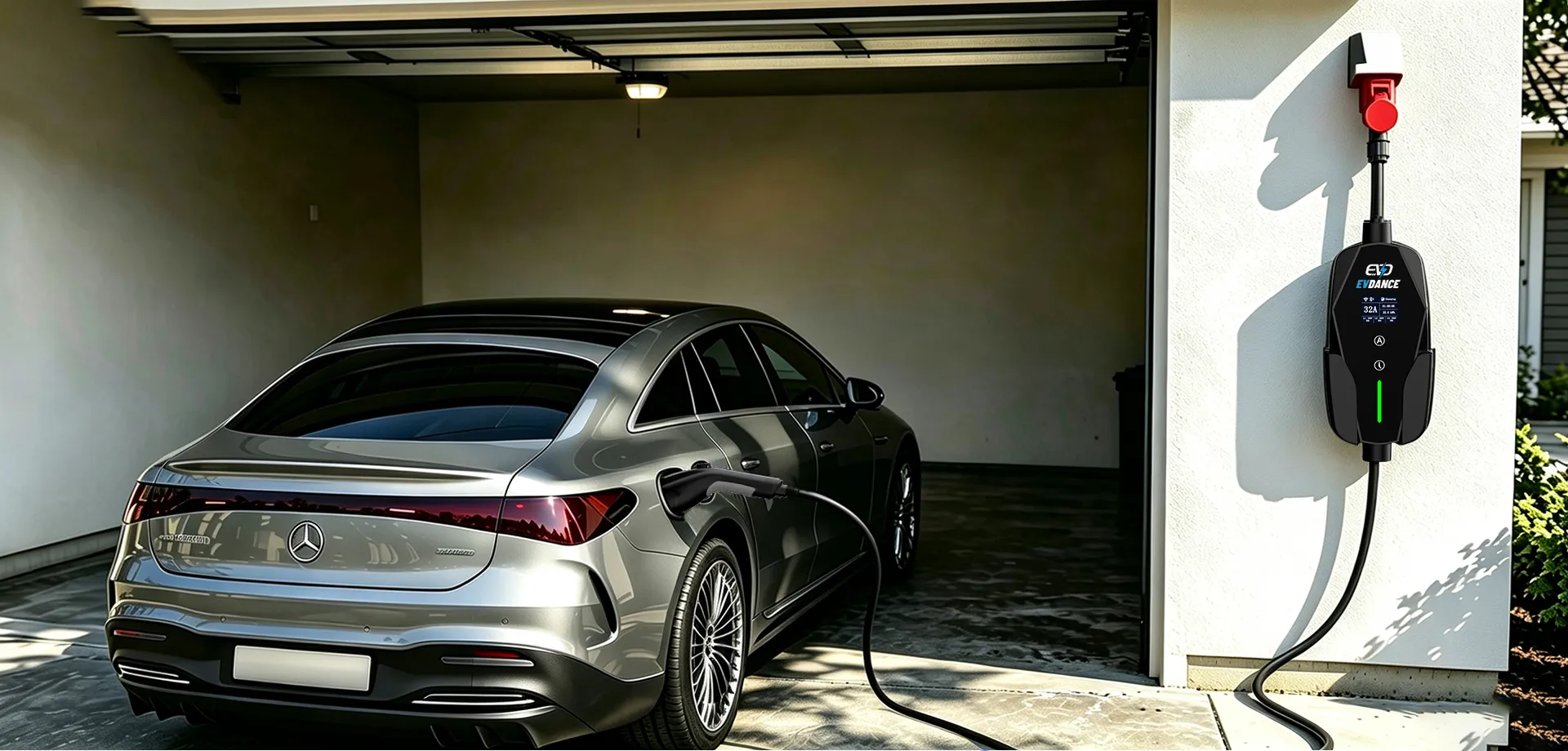
- EVDANCE chargers are one-way units; they refill a car and never export from it.

Why Honest Studies Disagree
Most conflicting headlines come from different experiments, not from anyone lying. A laboratory study cycles cells or packs on a fixed pattern — often deep, frequent discharges chosen to produce wear quickly. A field study follows real cars in a programme, where exports are usually shallow, occasional and managed. Chemistries differ, lab temperatures are controlled and street ones are not, and reports count wear per session or per kilowatt-hour. Each result can be accurate for its pattern and misleading for yours. The U.S. DOE’s V2X collaboration brought car makers and utilities together partly because this evidence is still being built, car by car.
A Checklist for Any V2G Wear Claim
| Question to ask | Why it matters |
|---|---|
| What was actually cycled — cells on a bench, a pack, or whole cars? | Bench results isolate chemistry; only whole cars include the battery management that limits real use. |
| How much energy moved, relative to the pack? | Wear follows throughput. A claim without an energy figure is describing sessions, not use. |
| Between which charge levels did it cycle? | Deep swings stress a pack more than shallow ones in a middle band. The window is most of the story. |
| At what temperature, and charged back how fast? | Heat and fast recharging stack extra stress on top of the export itself. |
| Measured, or modelled? | A capacity test on a used pack is evidence; a projection is an estimate. |
A claim answering most of these is worth taking seriously, in either direction. One answering none is marketing or alarm, whatever its tone.
The Two Headline Failure Modes
- The worst case read as typical. A lab pattern of daily deep exports shows real wear; the headline quietly drops the pattern. Occasional shallow programme events are a different experiment.
- The programme read as a guarantee. A well-managed scheme cycling gently shows little wear, and marketing quietly drops the management. The shallow window and export caps did the work — check your offer actually includes them.
For scale, FuelEconomy.gov puts typical EV battery life at 12–15 years in moderate climates and 8–12 years in severe ones — the frame all wear claims sit inside; context, not a verdict on V2G.

The Document That Decides for Your Car
Whatever studies say in general, one document decides for your car: the maker’s battery warranty. Whether bidirectional use is contemplated, limited or excluded for your exact model is written in its terms. Read that position before enrolling, and get anything unclear confirmed by the maker in writing. See is bidirectional charging worth it? for the weighing-up, and which EVs can do bidirectional charging for the eligible cars.
Charging Back Up Afterwards
Plainly: EVDANCE sells no bidirectional charger, and no EVDANCE unit exports power. Its chargers work in one direction — putting energy back in: after any discharge use, the EV-ACS4005T 40A NACS portable charger (9.6 kW, NEMA 14-50P, 16/24/32/40 A adjustable, IP66) or the EV-ACT5006T 48A Level 2 wall charger refills the car at home, with fixed options on our residential charging page. Charging back gently is also the kindest pattern for the pack — one more reason pattern beats label.
Frequently Asked Questions
So is V2G safe for my battery, yes or no?
There is no honest universal answer. Exporting is use, managed shallow use is light use, deep daily export is heavy use. Your pattern, your car and your warranty terms decide — hence the checklist instead of a verdict.
Does occasional programme export still count as wear?
Yes, as use — a small amount of throughput, counted as driving is counted. Small is not zero, but it is not on its own a reason to avoid a programme whose terms suit you.
Can I check my battery’s health myself?
Only roughly. Dashboard figures are maker estimates; a proper state-of-health measurement is a maker or dealer diagnostic — another reason warranty wording, read in advance, beats measurements taken afterwards.
Related Reading
- Bidirectional Charging Explained: V2L, V2H and V2G
- Is Bidirectional Charging Worth It?
- Which EVs Can Do Bidirectional Charging?
- When Will Vehicle-to-Home Be Available?

