
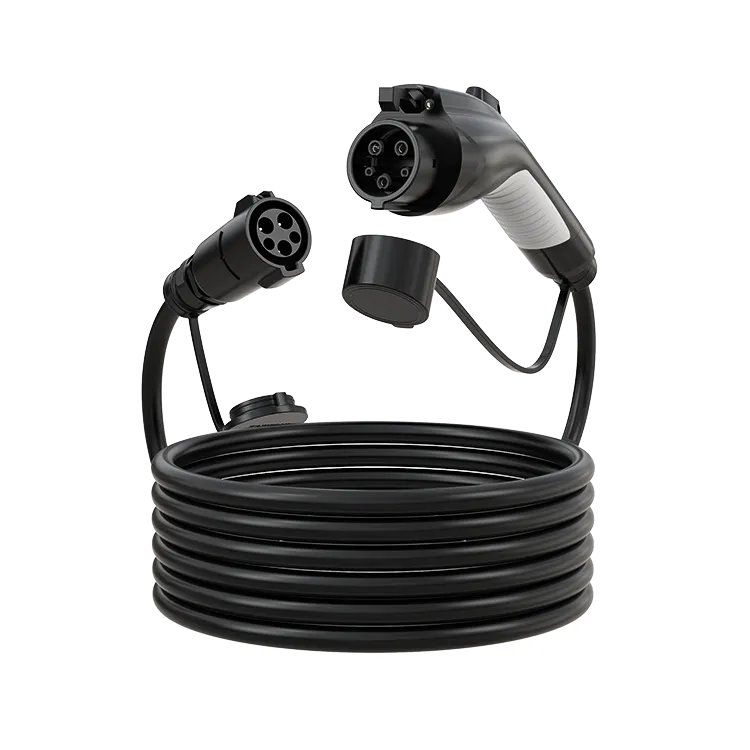
For most J1772-equipped cars, a good daily plan is to plug in every evening, set a charge limit for everyday driving, and schedule charging for off-peak hours. A 40 A J1772 portable charger such as the EV-AC04001U delivers about 9.6 kW on a 14-50 outlet, so it replaces a typical day’s driving in one to three hours. The rest of the night is spare capacity.
Key Takeaways
- A nightly routine with a charge limit suits most drivers.
- At 40 A, a typical day’s driving is replaced in one to three hours.
- Schedule charging for off-peak hours to save money.
Why a Routine Beats Waiting for Low Battery
Many new owners treat an EV like a petrol car and wait until the battery is low. That works, but a nightly routine is easier. You leave every morning with a predictable range, and short sessions at home are gentler and quieter than relying on fast public charging. Many automakers recommend an everyday limit below 100%, then charging to full before a long trip. Check your owner’s manual for the limit it suggests.
Example Daily Plans
These examples use typical consumption of about 0.3 kWh per mile. Your car may use more or less.
| Daily driving | Energy used | Time at 40 A (9.6 kW) | Time on Level 1 (about 1.4 kW) |
|---|---|---|---|
| 20 miles | about 6 kWh | under 1 hour | about 4.3 hours |
| 40 miles | about 12 kWh | about 1.3 hours | about 8.6 hours |
| 80 miles | about 24 kWh | about 2.5 hours | about 17 hours |
| 150 miles | about 45 kWh | about 4.7 hours | more than a day |
The Level 1 column shows why a 240 V charger changes the routine. On a standard outlet, a long driving day cannot be replaced overnight; at 40 A, even a 150-mile day fits comfortably into a night.
Setting Up the Schedule
Most cars let you set a charging schedule in the infotainment screen or app. Choose a start time after your utility’s peak period ends, or a departure time so charging finishes just before you leave. The charger simply supplies power when the car asks for it. Our guide on smart charging and time-of-use tariffs explains how rates work, and charging to 80% every night covers daily limits.
Using the U.S. Average as a Cost Check
At the U.S. average residential price of 18.31 cents per kWh (EIA, July 2026), a 12 kWh daily top-up costs about $2.20. Off-peak rates can be lower. Your own bill shows your actual rate.
Which Cars Use J1772?
Many non-Tesla EVs and plug-in hybrids sold in North America use the J1772 connector for AC charging, though some newer models are moving to NACS. Check the inlet on your car. Read what J1772 is if you are unsure.
The EV-AC04001U is a 40 A J1772 portable charger with a NEMA 14-50P plug, IP66 protection and a 3-year warranty. It suits owners who want Level 2 speed without a hard-wired wall unit.
Frequently Asked Questions
Should I charge my EV every night?
Many owners do. Plugging in nightly with a sensible charge limit is convenient and keeps range predictable.
How long does a daily top-up take on 40 A?
For a typical 40-mile day, around 1.3 hours. Longer days take proportionally longer.
Do I need to charge to 100%?
Usually not for daily driving. Follow your manufacturer’s advice, and charge to full before long trips.
Related Reading
- Smart Charging and Time-of-Use Tariffs: How Scheduling Cuts EV Charging Costs
- Should I Charge My EV to 80% Every Night?
- What Is J1772? The North American EV Plug Explained
- Can You Leave an EV Charging Overnight?

