
Work it out from three numbers you already have: the miles you drive in a month, what your car uses per mile, and the price per kWh on your own bill. Multiply them together and you have the month. The EV-AC04001U‘s size does not enter the cost side at all — its 9.6 kW decides how long each session runs, not how much energy your miles take. The examples below use the EIA’s US average residential price of 18.31 cents per kWh; substitute your own rate.
Key Takeaways
- Monthly cost = your miles × your car’s consumption × your price per kWh. The charger is not an input.
- At the example inputs (0.30 kWh/mile, 18.31 ¢/kWh), 1,000 miles a month is about 300 kWh and $55.
- The EV-AC04001U’s 9.6 kW sets session length: that same month is roughly an hour of charging a night.
- When a bill surprises you, an input moved — miles, consumption or tariff — not the charger.
The Three-Input Worksheet
- Your monthly miles. Read them off the odometer, or take a typical week and multiply by 4.3. Use your real pattern — commuting and weekends — not your best week.
- Your car’s consumption. Most EVs report kWh per 100 miles on a trip screen; divide by 100, and prefer a wall-side reading where the car offers one. With no figure yet, use about 0.30 kWh per mile at the wall — the example our published cost guide uses, and the one in the rows below.
- Your price per kWh. From your own bill: total electricity cost divided by kWh used gives your all-in price, delivery included. On a time-of-use tariff, use the price of the hours you actually charge in.
The formula is the whole method: monthly cost ≈ miles × kWh per mile × price per kWh. Our guide to what home charging costs works the general case; the table adds this charger’s side — how long that energy takes to arrive.
| Example month (at 0.30 kWh per mile, at the wall) | Energy from the wall | Cost at 18.31 ¢/kWh | Session time at up to 9.6 kW |
|---|---|---|---|
| 600 miles | About 180 kWh | About $33 | About 19 hours across the month — roughly 40 minutes a night |
| 1,000 miles | About 300 kWh | About $55 | About 31 hours — roughly an hour a night |
| 1,400 miles | About 420 kWh | About $77 | About 44 hours — roughly an hour and a half a night |
Every figure there is a labelled example; your consumption and price move your rows up or down. The shape is the point: a month of home charging costs tens of dollars.
What the Charger Changes, and What It Cannot
A smaller charger delivering the same energy simply runs longer. Against a Level 1 cord, the month is the same energy arriving in much longer sessions; the one charger-side difference on record is efficiency: ENERGY STAR notes Level 2 is on average about 10% more efficient than Level 1. A connected charger also draws a small standby amount; ENERGY STAR certified chargers use 40% less in standby, and a model’s own figure is on its spec sheet.
What actually moves your number is the inputs, not the hardware: your tariff (a time-of-use rate can price overnight energy lower — see how scheduling against time-of-use tariffs works), your miles, and your consumption, which rises in cold weather. When a real bill surprises you, one of the three inputs moved.

Estimating With the EV-AC04001U
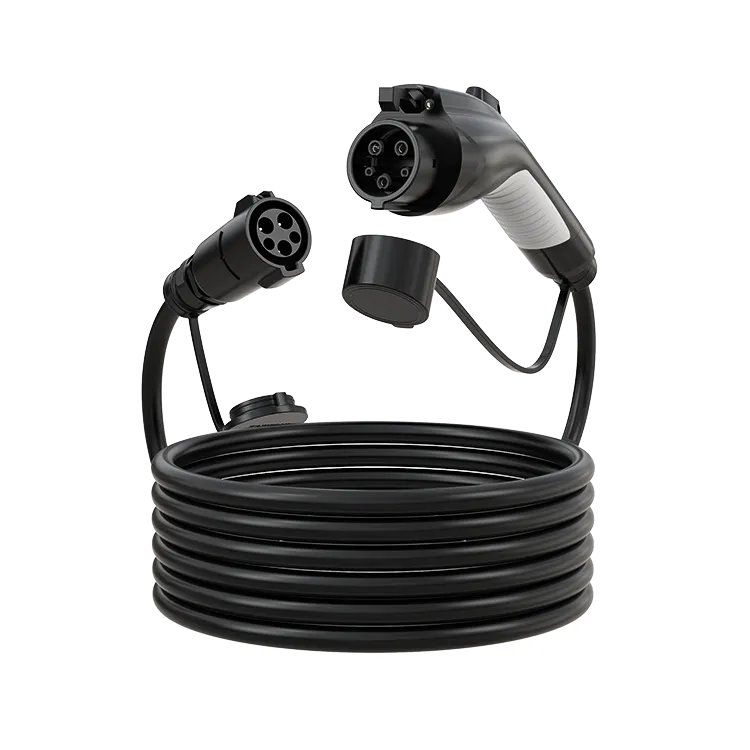
The EVDANCE EV-AC04001U is a 40 A J1772 portable charger — 9.6 kW, NEMA 14-50P, IP66 — with one fixed rate rather than selectable steps, so the estimate doubles as a schedule check. If your worksheet says 300 kWh a month, expect roughly 31 hours of session time — and for most households the overnight window fits that several times over. Drivers starting from a single charge can build up from how many kWh a charge takes and multiply by their price per kWh.
Frequently Asked Questions
Does a 40 A charger cost more per month than a smaller charger?
No: both deliver the energy your miles need, the 40 A unit in shorter sessions. The monthly kilowatt-hour total you are billed for is the same, apart from Level 2’s small efficiency edge over Level 1.
My bill rose more than the worksheet said. Why?
Check the inputs: more miles than your typical month, higher consumption in cold weather, a rate change, or other household loads sharing the same bill. The worksheet prices charging only.
Should I use the kWh figure my car displays?
The bill counts energy from the wall, which runs a little above what lands in the battery because of charging losses. Use a wall-side figure where you can — the 0.30 example is one — or add a small allowance to a battery-side reading.
Related Reading
- How Much Does It Cost to Charge an Electric Car at Home?
- How Many kWh Does It Take to Charge an EV?
- Smart Charging and Time-of-Use Tariffs: How Scheduling Cuts EV Charging Costs

