
Yes — for a small fleet of delivery vans with J1772 ports that return to one base and park overnight, portable 40 A charging works, and the reason is arithmetic. A van’s overnight job is to replace the energy its route used, divided by the hours it sits parked. The EV-AC04001U delivers up to 9.6 kW, so a van needing about 40 kWh is refilled in roughly four to five hours — well inside a normal overnight dwell. One unit charges one van per night; the checks are each van’s acceptance and an outlet at each spot.
Key Takeaways
- Overnight charging is energy divided by dwell: at 9.6 kW, most routes are replaced in about five hours.
- One portable unit serves one van per night — budget a unit per nightly van, plus a shelf spare.
- Check each van’s AC acceptance; the van, not the charger, sets the real rate.
- Simultaneous draw is a panel question for an electrician, not a charger feature.
The Overnight Arithmetic
Depot charging is decided by two numbers: the energy a van uses in a day, and how long it parks. Our guide to sizing AC chargers for vans at a depot runs that calculation for fixed posts; the same sums govern a portable. At full rate, the dwell window buys:
| Hours parked | Energy restored at 9.6 kW |
|---|---|
| 6 hours | Up to about 57 kWh |
| 8 hours | Up to about 76 kWh |
| 10 hours | Up to about 96 kWh |
| 12 hours | Up to about 115 kWh |
These are ceilings at full rate, before charging losses, and only if the van accepts the full 9.6 kW. As a labelled example: a van that used about 45 kWh on its route needs roughly five hours at full rate to put it back — an ordinary overnight park covers it with hours to spare. Vans returning nearly empty to a short dwell are the ones to plan around.
What One Portable per Van Changes
- The construction shrinks to outlets. Fixed posts are installed bay by bay; portable units plug in, so the electrician’s work is the receptacle row, not a charger per bay.
- A failure is a swap, not a repair visit. Keep one spare on the shelf: a dead charger then costs minutes, not a van-day.
- The charger follows the van. A replacement van with a J1772 port uses the same units — nothing is stranded in a bay the fleet no longer uses.
- One unit, one van, one night. Rotating one charger between vans in the small hours is labour, not a plan. Budget a unit per nightly van.
For scale, DOE-cited figures put public Level 2 hardware at about $3,500 per connector plus about $2,500 installation — the budget fixed posts carry, as our breakdown of commercial charging installation costs sets out. Portables shift most of that spend onto outlets.
The Per-Van Checks
- Port match. The unit’s connector is SAE J1772. Confirm every van — including older or replacement vehicles — has a J1772 inlet.
- Acceptance. Vans differ: the onboard charger’s rating varies by model and year, and the van, not the charger, sets the real rate. Check each model’s AC specification (see how many amps an EV charger needs) — the slowest van sets the fleet’s refill time.
- Simultaneous load. Several vans drawing 40 A at once is a site question: total draw against panel capacity is an electrician’s load calculation — the chargers do not manage it.
- Reach as routine. The cable is 25 ft from the outlet. Park each van with its port facing the outlet row — by habit, not by luck.
The EV-AC04001U in a Small Van Fleet
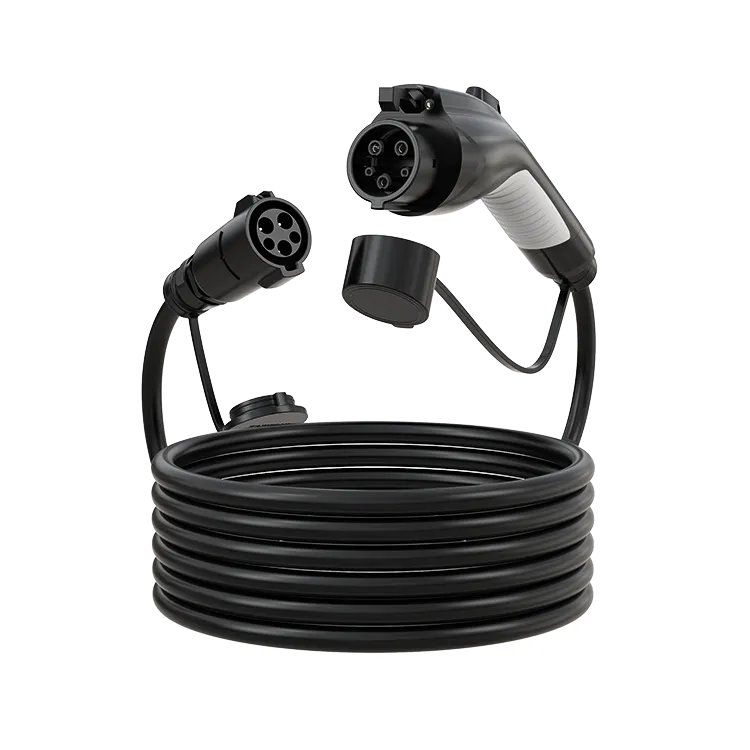
The EVDANCE EV-AC04001U is a 40 A J1772 portable charger: 9.6 kW, NEMA 14-50P plug, IP66 enclosure, 25 ft cable, covered by EVDANCE’s 3-year standard warranty. When a fleet outgrows one portable per van — more vehicles, per-session billing records, shared posts — the step up is fixed hardware such as the EV-AC03201T dual-connector AC station (43 kW shared, OCPP 1.6J, RFID) from our commercial charging range.
Frequently Asked Questions
Can one EV-AC04001U serve two vans overnight?
Only one after the other: two deep vans parked eight hours get about four hours each. Nightly vans deserve a unit each.
Do all J1772 delivery vans charge at 9.6 kW?
No. 9.6 kW is the charger’s ceiling. Each van’s onboard charger decides how much it takes, and ratings vary by model and year — check each van’s specification before promising refill times.
What if a van returns almost empty to a short dwell?
It leaves with whatever the hours delivered. Give the deepest-discharge vans the longest dwells; a regular shortfall is the signal to look beyond portables, at fixed posts or DC.
Related Reading
- Fleet Depot Charging: How to Size AC Chargers for Vans and Light Commercial Vehicles
- Level 1 vs Level 2 vs DC Fast Charging: A Practical Comparison
- How Much Does It Cost to Install a Commercial EV Charging Station?
- How to Plan a Workplace EV Charging Program

