
It can charge at an off-grid cabin — with one hard condition. The EV-AC04001U draws its full 40 A, about 9.6 kW, whenever it runs, with no lower settings to fall back on. Your inverter or generator has to carry that whole draw continuously, on top of the cabin’s own loads, or the session will not hold.
Key Takeaways
- The EV-AC04001U always draws its full 40 A — about 9.6 kW — with no lower settings to choose.
- An off-grid inverter or generator must carry that draw continuously, plus other loads.
- Judge generators by their continuous rating; most portable units fall short of full Level 2.
- If the system cannot carry 9.6 kW, an adjustable charger is the answer.
A Fixed Appetite in a Flexible World
Off-grid charging rewards chargers that can sip. Several EVDANCE portables turn down — the EV-ACS4005T adjusts from 16 to 40 A, the EV-ACS3210T runs 10–32 A in six steps — so they can match a weak supply hour by hour. The EV-AC04001U is not one of them: its specification is a single 40 A rating. No flaw at a normal house; at a cabin it is the central planning fact.
| Power source | What it must cover, continuously |
|---|---|
| Solar system inverter | 9.6 kW for the charger, plus whatever the cabin is drawing at the same time |
| Battery bank (via the inverter) | The same 9.6 kW for the full session if you charge after dark |
| Generator | A continuous (running) rating comfortably above 9.6 kW plus the cabin loads — judged on the running figure, not the peak on the box |
Solar Cabins: The Questions That Size the System
- Can the inverter carry it? Compare its continuous output rating with 9.6 kW plus your simultaneous house loads. Below that sum, this charger cannot run at the cabin, full stop.
- When will you charge? Midday charging lets energy flow from panels to car. Night charging means the battery bank supplies the whole session, so the bank becomes the sizing question.
- How much driving must it replace? Work in kilowatt-hours per day: tomorrow’s trip is the energy the system must harvest beyond the cabin’s daily use.
Panel yields, battery sizes and system prices depend on your site and season, so no honest figure can be quoted here. Have a qualified off-grid installer size the system around the charging load you plan. Our guide to solar panels and EV chargers covers the grid-tied version; off-grid removes the grid’s balancing act, which is why the fixed draw matters so much more.
Generator Cabins: The Continuous Rating Decides
A generator is the simpler cabin source, and the same 9.6 kW test applies. Judge it by its continuous running rating, with headroom: a unit held at its limit for hours may trip its own breaker mid-charge, and most portable generators are not rated to sustain a full Level 2 draw — Level 2 spans 7–19 kW in the U.S. DOT’s typical bands, and this charger sits in that range with no way to step down. Check the rating plate and manual, not the headline peak watts.
Two further checks decide whether a session starts. The car and charger verify the supply’s protective earth before power flows, and generator earthing varies by model — follow the manual, and ask a licensed electrician if it is unclear. And a generator always runs outdoors. Our overview of charging an electric car with a generator covers earthing, sizing and power quality in full.

The Charger in This Plan
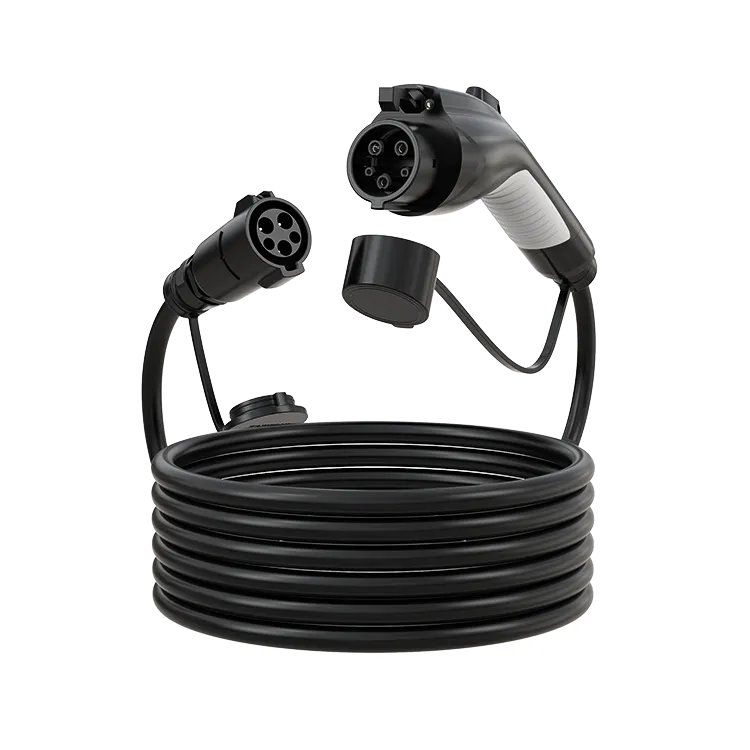
The EVDANCE EV-AC04001U is a 40 A J1772 portable charger: 9.6 kW, NEMA 14-50P plug, IP66, 25 ft cable — a fit for a cabin whose system was sized with a full-rate Level 2 load in mind. If your system cannot carry 9.6 kW continuously, the answer is not a smaller session on this unit but an adjustable one: the EVDANCE EV-ACS3210T turns down to 10 A in six steps — though note it is a NACS unit, so the connector has to match your car.
Frequently Asked Questions
Can I turn the EV-AC04001U down to charge from a smaller system?
No lower settings are listed for this model. Plan around its full 40 A draw: either the cabin system carries about 9.6 kW plus its other loads, or you choose an adjustable charger instead.
What size generator does it need?
One whose continuous (running) rating sits comfortably above 9.6 kW plus whatever else the cabin is drawing. Ignore the peak figure on the box; the running rating and the manual decide.
Can I charge overnight from the cabin’s batteries?
Only if the bank and inverter were sized for hours of 9.6 kW output on top of the house loads. That is a system-design question for your off-grid installer — bring the charger’s draw to it as a fixed number.
Related Reading
- Can I Charge an Electric Car With a Generator?
- Solar Panels and EV Chargers: How to Charge Your Car With Sunshine
- Can You Install a NEMA 14-50 Outlet Outside?
- What Is J1772? The North American EV Plug Explained

