
Yes. If your older EV’s onboard charger accepts 6.6 kW, the EV-AC04001U charges it at 6.6 kW — that car’s full AC rate. The charger offers up to 40 A (9.6 kW), but it never pushes power into the car: the car’s onboard charger draws what it is built to draw. Nothing is harmed, and the same energy arrives — just more slowly.
Key Takeaways
- The 6.6 kW cap lives in the car’s onboard charger, not in any charger you plug into it.
- On the EV-AC04001U, that car charges at 6.6 kW — about 50 kWh over an 8-hour night.
- Nothing is harmed and no energy is wasted; the session is simply longer.
- A bigger home charger cannot lift the cap. Only a different car — or DC charging, where fitted — charges faster.
Why the Cap Is in the Car, Not the Charger
The onboard charger is the part of the car that converts AC from the wall into DC for the battery, and its rating is fixed when the car is built. Many earlier EVs and plug-in hybrids were built with smaller onboard chargers — a sensible size for the smaller batteries of the time, which still refilled overnight. The U.S. DOT puts the whole Level 2 band at 7–19 kW.
That cap follows the car to every AC charger — home, workplace and public Level 2 alike. It is the usual reason behind a car that charges more slowly at home than expected. DC fast charging is the one exception, because a DC station feeds the battery directly and bypasses the onboard charger — but only on cars fitted with a DC port.
What a 6.6 kW Session Looks Like
Worked examples at the car’s 6.6 kW ceiling, before charging losses — and most cars slow further as the battery nears full:
| Energy to add | Time at 6.6 kW |
|---|---|
| 20 kWh | About 3 hours |
| 40 kWh | About 6 hours |
| An 8-hour overnight session | Up to about 50 kWh |
For an older car with ordinary daily miles, that is a comfortable overnight margin. The charger simply runs below its rating — it offers current, the car meters it.

What You Do Not Lose
- The same energy. A 6.6 kW session delivers the same kWh — and the same miles — as a faster one. It just spreads them over more hours.
- The same cost per mile. You pay for kWh, not for speed. A slower session does not use more electricity for the same driving.
- Nothing on the car. Charging at the car’s rated acceptance is exactly what it was designed for.
Plug-in hybrids make the same point at a smaller scale: a hybrid’s lower acceptance rate still fills its smaller battery overnight.
When 6.6 kW Is Genuinely Not Enough
The cap only bites when the miles are high and the parked window is short. As a labelled example: a car that needs about 50 kWh back inside a 6-hour window gets roughly 40 kWh at 6.6 kW. The fixes are about pattern, not power — charge every night instead of in deep cycles, or top up at a DC station on the days the car supports it. A bigger home charger is no fix: a 48 A wallbox is drawn down to the same 6.6 kW by the same car.
Worth knowing before you buy: if you are shopping for an older EV, read its AC charging rate in the specification. That one line — not the charger — sets your home charging speed for as long as you own the car.
The EV-AC04001U With an Older Car
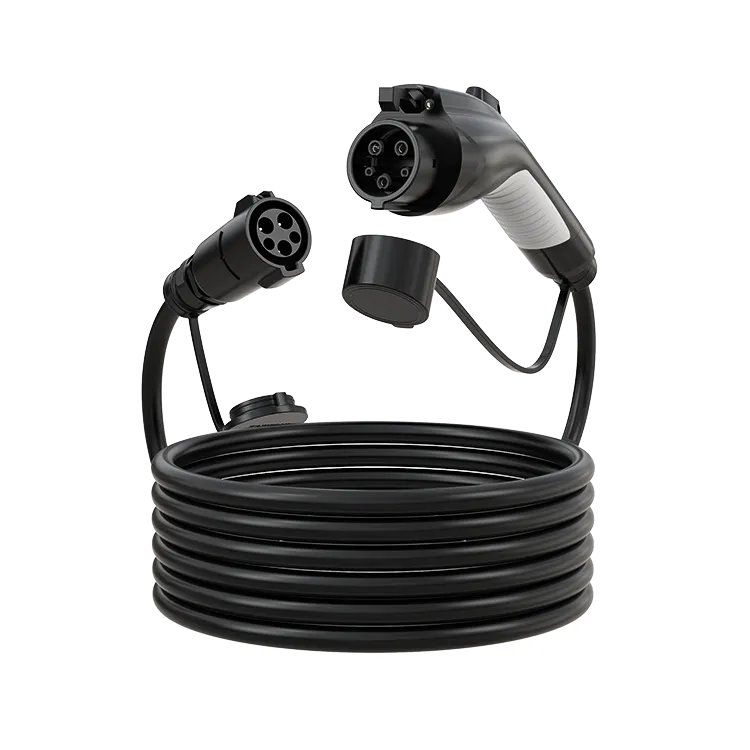
The EVDANCE EV-AC04001U is a 40 A J1772 portable charger: 9.6 kW, NEMA 14-50P plug, SAE J1772 connector, IP66 enclosure, 25 ft cable, covered by EVDANCE’s 3-year standard warranty. With a 6.6 kW car it is deliberately more charger than the car can use — which also means the same unit serves a newer J1772 car at its full rate later. Portable speed following the car and the outlet is covered in our test of how portable charger speed depends on the outlet.
Frequently Asked Questions
Will a 40 A charger damage a car that only accepts 6.6 kW?
No. Charger and car agree a rate before charging starts, and the car’s limit applies. A charger cannot force current into a car that is not asking for it.
Does charging at 6.6 kW cost more in electricity?
No. The same driving takes the same kWh at any AC rate. What changes is how long the car sits plugged in, not what the energy costs.
Can anything make my older EV accept more than 6.6 kW on AC?
No. The onboard charger is built into the car; it is not an upgradeable setting. The only faster route is DC fast charging, if your car has a DC port.
Related Reading
- Why Is My Electric Car Charging Slowly at Home?
- Why Does EV Charging Slow Down After 80%?
- Do I Need an EV Charger for a Plug-In Hybrid?
- Do Portable EV Chargers Work? How Speed Depends on the Outlet

