
Yes — you do not need a smart charger to charge on cheap hours. The EV-AC04001U has no app and no built-in timer, so the schedule lives in the car instead. Set your car’s charging timer to your plan’s off-peak window, plug in when you get home, and the car starts the session itself when power is cheapest.
Key Takeaways
- Time-of-use savings do not need a smart charger — the car’s own timer does the scheduling.
- The EV-AC04001U has no app or timer; it delivers its full 9.6 kW whenever the car asks.
- At 9.6 kW, even a short off-peak window covers a normal day’s driving.
- Your saving is your peak-minus-off-peak gap times the energy you actually shift.
Put the Timer in the Car, Not the Charger
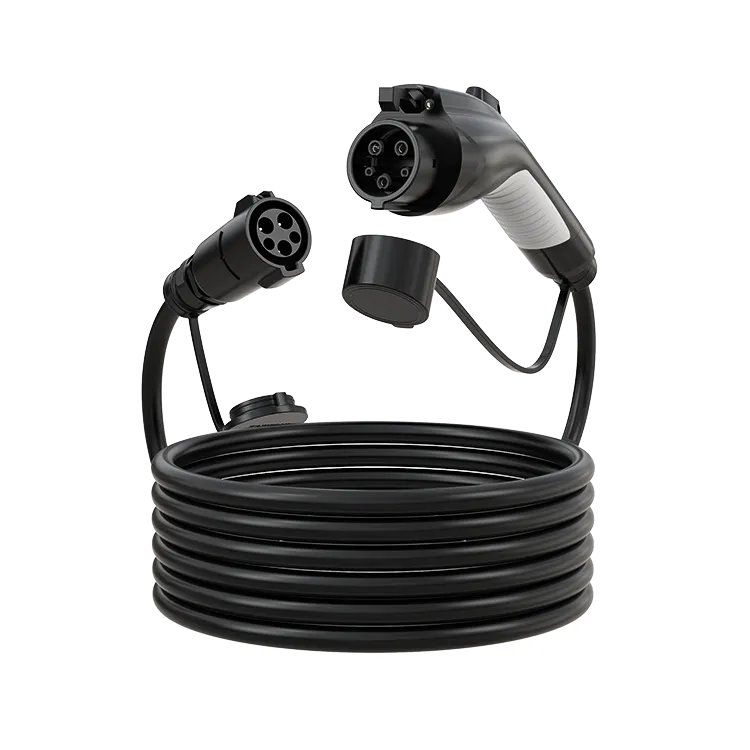
Most EVs offer scheduled charging in the car or its app — a start time, an off-peak-only mode, or a departure time the car works backwards from. Check your car’s manual for which form yours takes, and set that one timer. There is no charger-side timer on this unit to conflict with it: the EV-AC04001U simply delivers its full 9.6 kW whenever the car asks for power, and stays idle while the car waits for the cheap window.
That division of labour has an upside: the schedule travels with the car — another house, another charger, a different tariff — while the charger needs no account, no Wi-Fi and no setup. How time-of-use tariffs are structured is covered in our guide to smart charging and time-of-use tariffs; the rest of this article runs the same idea on a deliberately simple unit.
Will Tonight’s Charge Fit the Cheap Window?
At its full 9.6 kW, each hour of off-peak window can add up to 9.6 kWh to the battery, for a car that can accept that rate. Most daily needs are far smaller than a whole window:
| Off-peak window (example lengths) | Most energy it can hold at 9.6 kW | What that covers |
|---|---|---|
| 4 hours | About 38 kWh | Several ordinary days of driving |
| 6 hours | About 58 kWh | A near-empty mid-size battery, most of the way |
| One hour | About 9.6 kWh | Roughly a 30-mile day, at a labelled example consumption of about 0.3 kWh per mile |
The figures are ceilings worked from the charger’s rating, not promises: the car takes only what its onboard charger accepts, and charging slows near full. The U.S. DOT puts Level 2 at 7–19 kW, adding about 10–20 miles of range per hour — this unit sits in that band, so even a short window covers a normal day’s driving.
Work Out Your Own Saving
The saving is one subtraction and one multiplication: your peak rate minus your off-peak rate, multiplied by the charging energy you move into the cheap window each month. Both rates come from your own tariff sheet — no article can quote them for you.
- Worked example, with invented rates: a 20¢ gap between peak and off-peak, and 250 kWh of charging shifted into the window each month, saves 250 × 20¢ = $50 a month. Substitute your two rates and your real monthly energy.
- A flat-rate comparison: the U.S. average residential price is 18.31 cents per kWh (EIA). If your off-peak rate sits below that line, every kilowatt-hour you shift beats the average flat price.
- Count only what actually shifts. Energy charged outside the window earns nothing; your car’s charge limit can keep ordinary sessions inside it.

The Charger in This Routine
The EVDANCE EV-AC04001U is a 40 A J1772 portable charger: 9.6 kW through a NEMA 14-50P plug, IP66, 25 ft cable, and nothing to configure. That plainness is the point — the intelligence sits in the car you already own. If you would rather schedule from the charger side, that is the smart wallbox class; our explainer on wallbox features — display, scheduling and load management sets out what those units add.
Frequently Asked Questions
Does the EV-AC04001U need Wi-Fi or an app to charge off-peak?
No. It has neither, and it needs neither: the car’s charging timer decides when the session starts, and the charger supplies power on demand.
What if my car has no charging timer?
Check for a departure-time setting, which achieves the same shift by working backwards from when you leave. If the car has no scheduling at all, the fallback is manual: plug in when the window opens.
What happens if the charge runs past the end of the window?
The car keeps charging at the peak rate until it reaches its charge limit. On ordinary nights the session finishes well inside the window at 9.6 kW; on exceptional nights, either accept some peak-rate energy or set the car’s limit so the session stops where you want it to.
Related Reading
- Smart Charging and Time-of-Use Tariffs: How Scheduling Cuts EV Charging Costs
- Wallbox Home Charger Features Explained: Display, Scheduling, and Load Management
- What Is a NEMA 14-50 Outlet? A Guide for EV Owners
- Are Portable EV Chargers Worth It? Pros, Cons and Who Should Buy One

