
On the EV-AC04001U, protection is not a single feature — it sits in layers. The SAE J1772 connection protects the car: the connector is not energised until the car confirms the session, and the car decides how much current to draw. The IP66-sealed housing protects the unit itself. The outlet is protected by the circuit behind it, because a 40 A continuous load belongs on a 50 A breaker. And one layer is not the charger’s at all: this model’s listing does not specify a built-in ground-fault device, so that protection is set by your circuit and code.
Key Takeaways
- Protection on this unit is layered: the J1772 handshake guards the car, the IP66 housing guards the unit, and the 50 A circuit guards the outlet.
- The car, not the charger, decides how much current a session draws.
- The listing does not specify a built-in ground-fault device; that layer belongs to the circuit and local code.
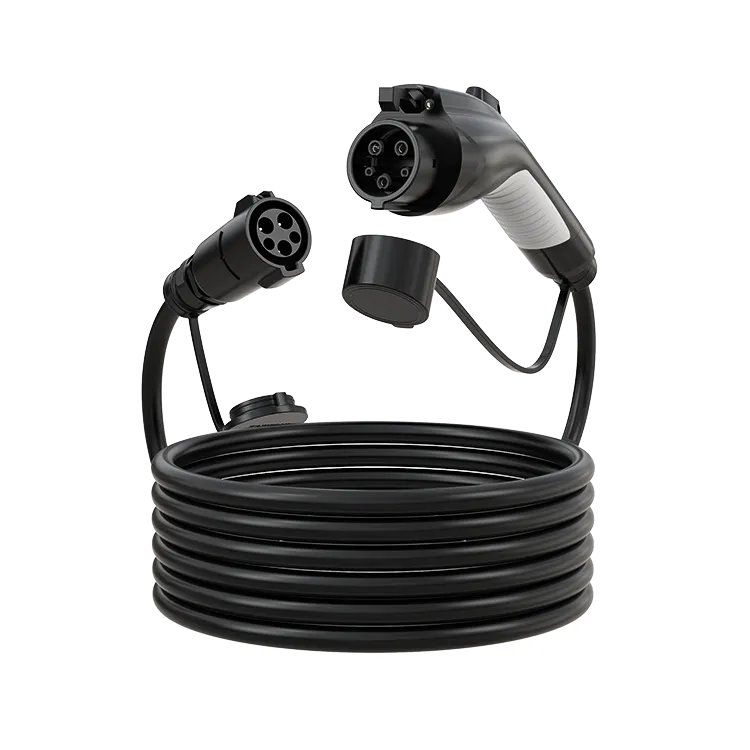
The Car Is Protected by the J1772 Handshake
The EV-AC04001U is built to the SAE J1772 standard, which is designed so a session cannot start by accident. Charger and car exchange a low-voltage pilot signal before any charging power flows: the connector pins stay dead until the car confirms it is connected and ready. The same signal advertises the maximum current available, and the car’s onboard charger draws at or below that ceiling — never above it. The car’s battery management then ends the session when the battery is full. Our explainer on what J1772 is covers the connector itself. An AC charger offers power but the car takes it — a 40 A unit cannot force 40 A into a car that accepts less.
The Four Layers, Side by Side
| Layer | Where it sits | What it guards | What it does not do |
|---|---|---|---|
| J1772 handshake | The connector and the car | The car and the user: no live pins before the session is agreed; draw capped by the charger’s offer and the car’s limit | Nothing for the house wiring |
| IP66 housing | The unit itself | The charger’s internals against dust and powerful water jets | Not immersion protection; silent on sun and heat |
| 50 A breaker | The panel | The wiring and outlet against sustained overload (125% rule) | Cannot make a worn outlet sound |
| Ground-fault protection | The circuit side, set by code | People, against current leaking where it should not go | Not specified as built into this model — see below |
What Protects the Outlet Is Mostly the Circuit
An outlet feeding a charger works harder than almost any other in the house: EV charging is a continuous load, held at full current for hours. That is why the National Electrical Code sizes the breaker at 125% of the charger’s current — 40 A of charging belongs on a 50 A circuit, as our guide to what size breaker an EV charger needs sets out. The breaker guards the wiring and the receptacle against overload. The other half is the outlet’s condition: a receptacle that is loose, discoloured or heat-marked is a stop sign — the general rules are in our portable EV charger safety guide, and anything behind the outlet face is a licensed electrician’s job.

The Honest Gap: Ground-Fault Protection
Read this model’s listing closely and you will find its connector (SAE J1772), its plug (NEMA 14-50P), its output (40 A, 9.6 kW) and its housing rating (IP66). No built-in ground-fault device is specified, and this article will not invent one. Whether a plug-in charger’s receptacle needs GFCI protection is decided by the NEC edition and local amendments your area has adopted — under recent editions, garage and outdoor receptacles in dwellings generally do. Our guide to whether an EV charger needs GFCI protection explains how the two sides interact. Treat ground fault as a question for your electrician and inspector — and if a specific certification matters to your insurer, confirm the current documentation with the manufacturer before buying.
The EV-AC04001U in Brief
The EVDANCE EV-AC04001U is a 40 A J1772 portable charger: 9.6 kW on a NEMA 14-50P plug, an IP66 enclosure and a 25 ft cable, under EVDANCE’s 3-year standard warranty. Its safety story is the layered one above.
Frequently Asked Questions
Does the EV-AC04001U have built-in GFCI protection?
Its product listing does not specify one. Ground-fault protection for the receptacle is a circuit and code question — under recent NEC editions, garage and outdoor dwelling receptacles generally require it — so have a licensed electrician confirm what your circuit provides.
Can this charger overcharge my car’s battery?
No. With AC charging, the car’s onboard charger and battery management control the session: the charger advertises a ceiling, the car draws what it accepts, and charging stops when the car is full.
Is IP66 a safety certification?
No. IP66 is an ingress rating — dust-tight, and protected against powerful water jets. It describes the housing’s sealing, not electrical protection.
Related Reading
- Does an EV Charger Need GFCI Protection?
- What Is J1772? The North American EV Plug Explained
- What Size Breaker Do I Need for an EV Charger?
- Portable EV Charger Safety Guide 2026

