
Upgrading from a NEMA 14-30 to a NEMA 14-50 for the EV-AC04001U means upgrading the circuit, not the plug. The receptacle face is the last, smallest part: behind it, the breaker goes from 30 A to 50 A and the wiring must be rated for 50 A. This charger draws a fixed 40 A, and EV charging is a continuous load, so it belongs on a 50 A circuit. A licensed electrician does the work; your job is the decision.
Key Takeaways
- A 14-30 to 14-50 move is a circuit upgrade: 50 A breaker, wiring rated for 50 A, panel capacity checked.
- The receptacle face is the smallest part — swapping it alone, or adapting the plug, leaves a 30 A circuit overloaded.
- A 14-30 already has separate ground and neutral, unlike the older 10-30 conversion.
- Upgrade when full-speed charging is a nightly habit; step down to 24 A when it is not.
What Actually Changes in a 14-30 to 14-50 Upgrade
| Part of the job | What changes |
|---|---|
| Receptacle | The 14-30 face is replaced by a 14-50, so this charger’s plug fits |
| Breaker | 30 A becomes 50 A, matching the continuous-load rule for 40 A charging |
| Wiring | Must be rated for 50 A — most 14-30 runs were wired for 30 A, so expect new wire |
| Panel | Checked — the panel must carry a 50 A circuit alongside existing loads |
| Ground and neutral | Nothing — a 14-30 already keeps them separate, which is what a 14-50 needs |
That last row is why a 14-30 upgrade is simpler than the older 10-30 conversion, which also has to add the separate ground and neutral — our guide to whether a NEMA 14-50 is a dryer outlet, and converting a 10-30 works through that case. Here the deciding item is the wire: only if the existing run is already heavier than the circuit needed can the job shrink, and an electrician verifies that in person. Never assume it.
The Two Things Not to Do
- Do not swap only the receptacle face. A 14-50 face on a 30 A breaker invites a 40 A charger to plug into wiring rated for 30 A. The face changing shape does not change what the circuit can carry.
- Do not adapt the plug and charge anyway. An adapter changes the shape of a connection, never a circuit’s rating. Running this fixed-rate unit at 40 A on a 30 A circuit is exactly the overload the upgrade exists to avoid.
Our guide to what size breaker an EV charger needs sets out the pairings behind both warnings.

When the Upgrade Is Worth It — and When Stepping Down Is Smarter
The upgrade earns its place when the car charges at home most nights and the full 9.6 kW is genuinely used — a long commute refilled by morning, or an outlet that becomes the permanent charging point for this charger or a future 40 A unit. If the dryer has left that circuit for good, the upgrade also ends the sharing question. It is harder to justify for occasional charging: a stepped portable set to 24 A on the existing 30 A circuit covers most nights at about 5.8 kW, with no circuit work at all. The fork: pay once for the circuit and charge at full speed forever, or pay nothing and charge a little slower on the circuit you own.
The Two Chargers at This Fork
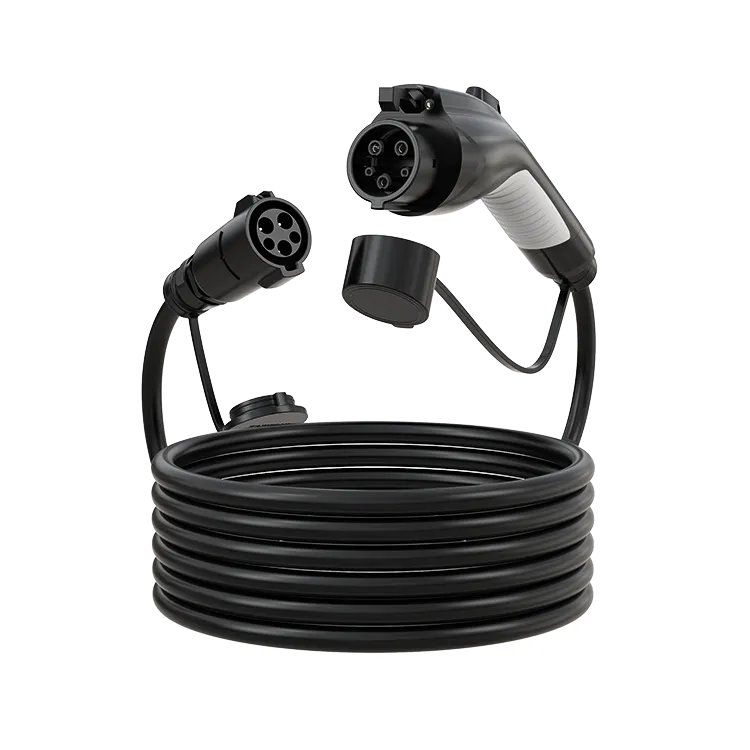
The EVDANCE EV-AC04001U is the charger on the upgrade side of the decision: 40 A, 9.6 kW, J1772, NEMA 14-50P, IP66, with a 25 ft cable and a 3-year standard warranty — simple and fast, on a circuit built for it. On the other side, the EV-ACS4005T offers settings from 16 A to 40 A, including the 24 A step a 30 A circuit serves. Neither is wrong: the money goes into your panel, or into a charger that adapts to the panel you have.
Frequently Asked Questions
Can an electrician just change the outlet and leave the rest?
A receptacle swap alone does not make a 50 A circuit. The breaker and wiring must match the new rating, and the panel capacity must be checked — which is why this is an electrician’s job, not a hardware-store trip.
Is my 14-30 the same problem as an old 10-30?
No — a 14-30 already has separate ground and neutral, so the move is about ampacity: breaker and wire. The 10-30 conversion adds the grounding work on top, which is why it usually ends as a new circuit.
What will the upgrade cost?
It depends on the wire run, the panel and local labour, so no honest figure exists without a quote — our breakdown of NEMA 14-50 installation costs shows what drives the number. Get the quote before choosing.
Related Reading
- Is a NEMA 14-50 a Dryer Outlet? And Can You Convert a 10-30?
- How Much Does NEMA 14-50 Installation Cost?
- What Size Breaker Do I Need for an EV Charger?
- Can I Plug a Level 2 Charger Into a Dryer Outlet?

