
Agricultural shows and country fairs can offer EV charging by connecting portable three-phase chargers like the EV-ACS3205PE to 32 A CEE outlets on the event’s temporary power distribution. The key steps are agreeing spare capacity with the power contractor, protecting cables from vehicles and crowds, staffing or signing the bays, and deciding how to charge visitors. Exhibitors with electric vans and tractors may also need charging.
Key Takeaways
- Agree charger load with the event power contractor.
- Protect cables from vehicles, crowds and animals.
- Use only protected event outlets, never adapters.
- Keep pricing simple on the day.
Who Needs Charging at a Show
| User | Typical need | Approach |
|---|---|---|
| Visitors | A few hours of top-up while they attend | Public bays near the car park entrance |
| Exhibitors | Overnight charging of vans or demo vehicles | Bays in the exhibitor area |
| Organisers and staff | Site vehicles and buggies | Dedicated outlets near the operations area |
| Traders | Refrigerated vans, mobile units | Separate from EV bays, planned with the power contractor |
Planning the Power
Event power usually comes from generators or a temporary grid connection, distributed through boards with CEE outlets. Each 22 kW charger at full output needs 32 A per phase. Tell the power contractor how many chargers you plan and whether they can be limited to lower current. Car charging is flexible, so it can be the first load reduced if other demand peaks. Read charging from a generator for points to check when power comes from generators, such as voltage stability.
Safety on a Busy Showground
- Route cables away from walkways, or use cable protectors rated for vehicle traffic.
- Fence or cone off charging bays so pedestrians and animals stay clear of cables.
- Use only the event’s protected outlets, never adapters or domestic extension leads.
- Check each charger, plug and cable before the gates open, and after any heavy rain.
- Make sure a competent person checks the temporary installation, as event electrical rules require.
Our guides on driving over charging cables and portable charger safety cover cable protection and safe use.
Pricing and Operations
Options include free charging as a visitor perk, a flat fee added to parking, or a per-session fee collected by staff. Keep it simple on a busy day. A volunteer or staff member at the bays can help first-time users, swap cars as sessions finish and keep a log. Lock chargers away at night if the site is open to the public.
Why Portable Chargers Fit Events
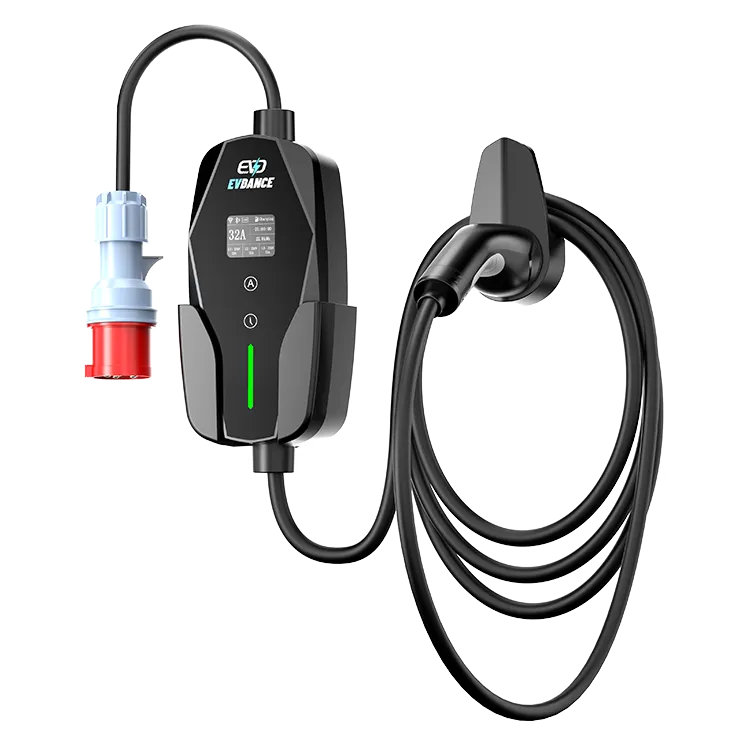
Shows run for a few days a year, so fixed infrastructure rarely makes sense. Portable units can be stored between events and lent to other community uses. The EV-ACS3205PE is a 22 kW three-phase portable charger at 32 A, 380 to 400 V, with a Type 2 connector, CEE five-pin plug, 1.77-inch display and IP66 protection, which suits outdoor show conditions.
Frequently Asked Questions
Can a show offer EV charging from generators?
Yes, if the generators have spare capacity and stable output. Agree the load with the power contractor.
What outlet do the portable chargers need?
A 32 A CEE five-pin outlet on a three-phase supply, provided by the event distribution.
Should visitors pay for charging at a fair?
That is the organiser’s choice. A flat fee or free charging is easiest to manage on the day.
Related Reading
- Can I Charge an Electric Car With a Generator?
- Can You Drive Over an EV Charging Cable?
- Portable EV Charger Safety Guide 2026: NEC Rules, Extension Cords, and What to Avoid
- CEE Plugs Explained: Choosing 16A or 32A for a Three-Phase Portable EV Charger

