
Yes — the tow car charges from the same pitch hook-up that feeds the motorhome. The rating marked on the post is one ceiling shared by both vehicles: the motorhome’s own loads draw from it first, and the car can only take what is left, at a charger setting stepped down to fit. One hook-up rarely runs the motorhome and a fast car session at once; they take turns, or the car charges slowly alongside.
Key Takeaways
- The hook-up’s marked rating is shared: the motorhome draws first, and the car takes the headroom that is left.
- Do the subtraction before every session — post rating minus the motorhome’s current load sets the charger’s step.
- If the headroom falls below the charger’s 10 A floor, wait or charge elsewhere — do not try anyway.
- Permission and electricity charges are the site’s call; ask at reception first.

One Hook-Up, Two Vehicles’ Worth of Loads
A caravan pitch feeds one outfit. A motorhome touring with an electric tow car is two: the motorhome’s fridge, heating and lights on one side, a car battery on the other — and the car session is by far the largest single load on the pitch. The post’s marked rating, the figure our CEE plugs guide explains how to read, is the total the two must fit inside. The working sum is a subtraction: post rating, minus what the motorhome is drawing now, equals the headroom the car may use.
| Situation (worked example) | Headroom for the car | Setting to choose |
|---|---|---|
| Post marked 16 A; motorhome drawing about 4 A for fridge and lights | About 12 A | 10 A — inside the headroom, with margin |
| Post marked 16 A; a cold evening, heating and cooking drawing about 8 A | About 8 A | None — below this charger’s 10 A floor; charge later, when the motorhome’s load drops |
| Post marked 10 A; motorhome loads low overnight | Under 10 A once the motorhome takes its share | Do not charge from this post — the charger’s floor is 10 A |
The motorhome’s draws there are examples, not ratings — your own outfit’s appetite is the figure to learn. A trip means the combined load asked for more than the post offers: read it as information, step the charger down, and tell the site rather than resetting and retrying at the same setting.
Take Turns, or Charge Slowly Alongside
- Charge when the motorhome rests. The easy window is when heating and cooking are quiet — the middle of the day, or mild evenings. The car takes the headroom the motorhome is not using.
- Or run the car at the lowest step. At 10 A the session is slow but steady, sized to sit under a modest motorhome load. Overnight, slow is usually enough for a tow car covering local trips.
- Watch the session without going out. The charger’s app shows the session and its energy, so a tripped post or a finished charge is visible from inside the motorhome.
- Ask before the first session. Whether a tow car may charge from the hook-up, and how the electricity is charged for, is the site’s call — ask at reception, before you plug in.
The Charger That Travels in the Motorhome
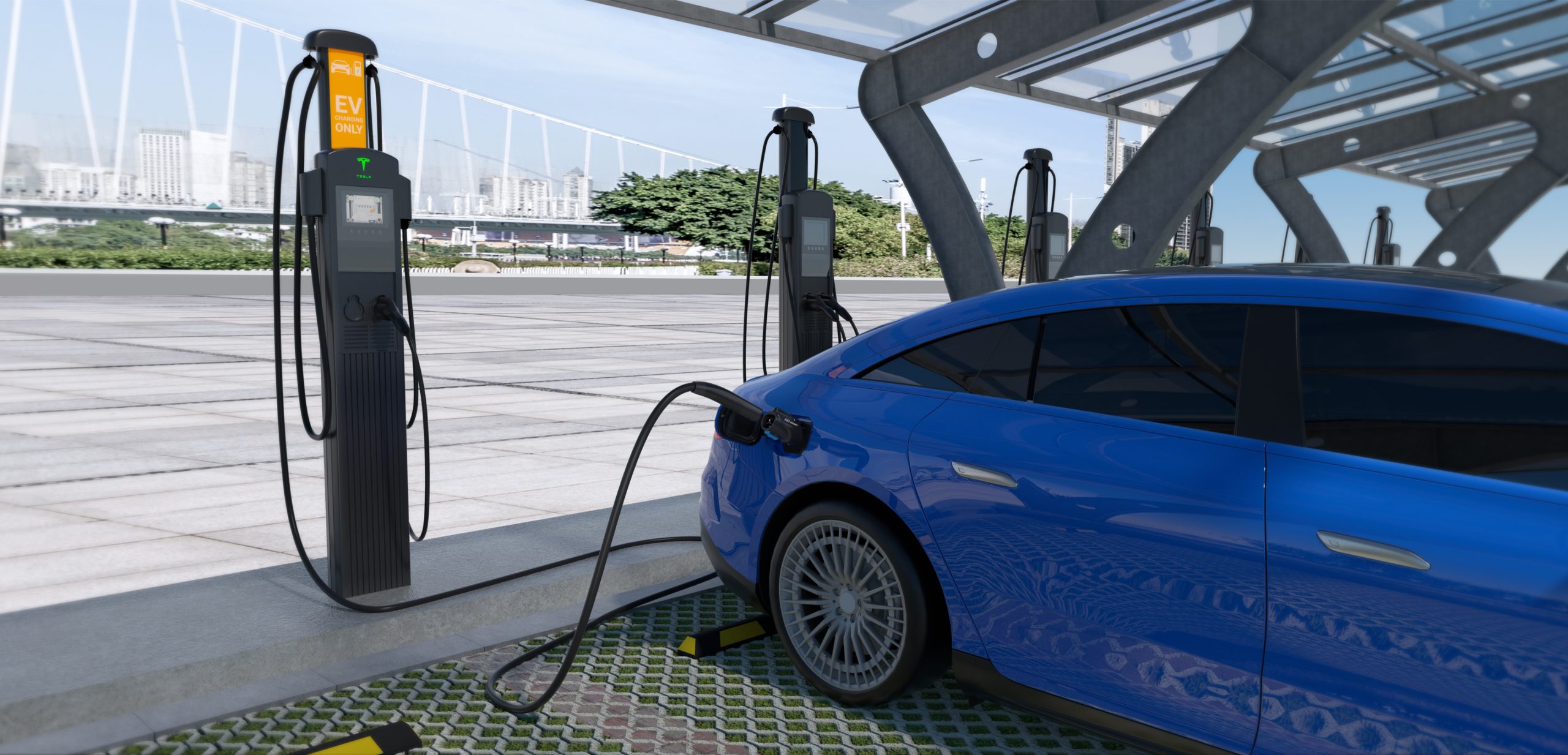
The EV-ACS3210E suits this life because it is built to be carried and adjusted. It is a Type 2 portable charger, single-phase at about 7 kW at its top setting, with the current adjustable from 10 to 32 A — the low steps are the ones a shared hook-up actually uses. Its 7.5 m cable runs from the post, past the motorhome, to the tow car parked alongside. The enclosure is IP66-rated for outdoor use, and the app’s energy monitoring records what each session added. It lives in a locker between stops; our explainer on charging from a normal socket covers the domestic-socket stops on a tour.
Frequently Asked Questions
Can the motorhome and the tow car draw from the hook-up at the same time?
Yes, if the sum fits under the post’s marked rating. The motorhome’s loads come and go; the charger’s setting is the part you control — set it to the headroom.
The hook-up is marked below 10 A. What are my options?
This charger’s floor is 10 A, so that post is not a match for it. Charge the tow car at a public station nearby instead — our guide to where to find EV charging stations covers the fallback.
Do I need a different charger for the tow car than for home?
No. The same portable covers both: at home it runs at the setting your circuit allows, on tour it steps down to whatever a pitch offers. That adjustment range is why one unit does both jobs.
Related Reading
- CEE Plugs Explained: Choosing 16A or 32A for a Three-Phase Portable EV Charger
- Can I Charge an Electric Car From a Normal Socket?
- What Is a 7kW Portable EV Charger? Speed, Range, and Compatibility Explained
- Where to Find EV Charging Stations: Maps, Apps and Tips

