
A 22 kW DC charger will not turn a heavy truck around at midday, an hour at the connector stores about 20 kWh before taper — a modest slice of a truck-class battery, stated plainly. The EV-RHDC30K-L earns its place in a logistics yard on the vehicles whose midday gap is that size — light trucks, vans and yard vehicles that dwell at base between rounds and need a working top-up, not a full charge.
Key Takeaways
- At a sustained 22 kW, an hour stores about 20 kWh before taper — a working top-up, not a heavy-truck turnaround.
- The fit is light trucks, vans and yard vehicles with midday dwell at base and a modest energy gap.
- Full batteries belong to the overnight AC row; journey stops belong to corridor DC fast charging.
- One connector, one vehicle: size the lane from your own duty records, and confirm the fitted connector in writing.

The Scale, Stated Plainly
Work in energy, and label the arithmetic. At a sustained 22 kW, the ceiling figures are:
| Time at the connector | Energy drawn | Roughly stored, allowing ~10% losses |
|---|---|---|
| 30 minutes | About 11 kWh | About 10 kWh |
| 60 minutes | About 22 kWh | About 20 kWh |
| 90 minutes | About 33 kWh | About 30 kWh |
Read those numbers against pack classes, as labelled arithmetic. For a light-truck pack in the 100 kWh class, an hour is roughly a fifth of the battery — a real contribution to an afternoon’s work. For a heavy truck pack of several hundred kilowatt-hours, the same hour is a few percent: enough to matter to a yard vehicle, not enough to re-plan a long-haul route around. Every figure is a ceiling: DC charging tapers as the battery fills, and the vehicle’s own DC acceptance caps the session below 22 kW whenever it is lower.
Where a Midday Top-Up Actually Fits
- Light trucks and vans between rounds — vehicles back at base for loading, with an hour or two of dwell before the next run.
- Yard vehicles — shunters and site trucks that never leave the site and work in shifts.
- The vehicle that missed its overnight charge — starting the day short, with a gap to close.
The common thread is dwell at base plus a modest energy gap. Whether one connector covers your yard is answered by your own duty records — who returns when, and how short they are — not by the size of the fleet. Overnight, the pattern reverses: depot AC sizing for vans and light commercial vehicles covers the row that does the fleet’s real charging while hours are free.
The Jobs This Charger Does Not Do
Full charges and heavy-truck turnaround belong to other hardware, and saying so is sizing, not criticism. En route, corridor DC fast charging in the U.S. DOT’s 50–350 kW band is the tool built for journey stops; DOE-cited U.S. figures put that class at about $38,000–$90,000 equipment plus $20,000–$60,000 installation — U.S. corridor context, and exactly the supply and budget scale a compact yard unit avoids. Anything needing a full battery by morning belongs on the overnight AC row. The compact DC connector sits between those jobs and does neither; it closes midday gaps.
The EV-RHDC30K-L in a Yard
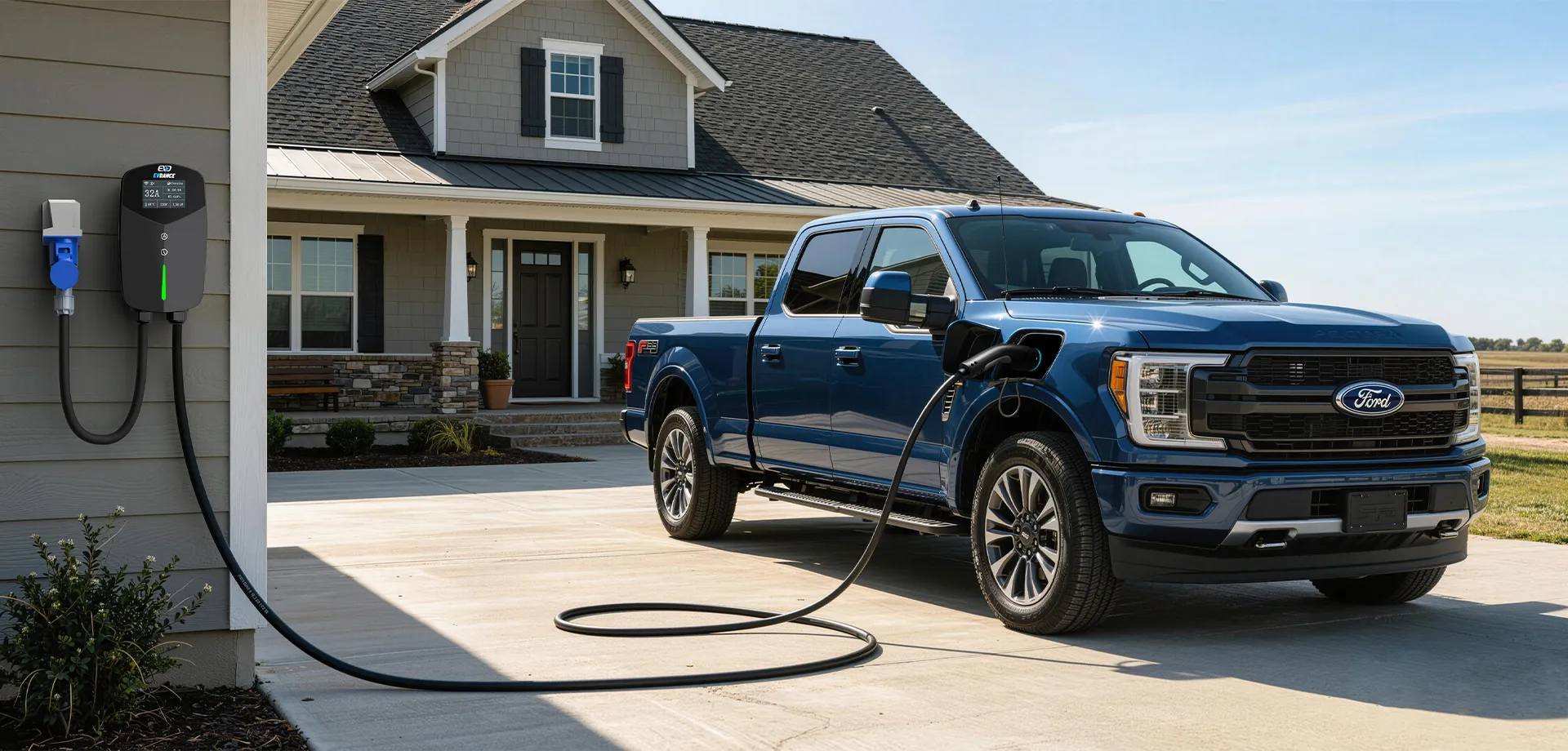
The EV-RHDC30K-L is a floor-standing, single-connector DC charger rated 22 kW on its product page, with an LCD and an IP54 enclosure. It speaks OCPP 1.6J, so top-up sessions land in the same platform records as the rest of the fleet’s charging — your platform arrangement, on your terms. One connector serves one vehicle at a time, so the midday lane runs on a rota, which is the operator’s document. Before ordering, confirm in writing that the fitted connector matches the vehicles that will use it: the listing does not name the DC connector standard. The unit carries the 3-year standard warranty.
Frequently Asked Questions
Can it charge a truck at all?
Yes — any vehicle whose inlet matches the fitted connector and that accepts DC charging. The useful question is not whether it connects, but how much energy the dwell holds: acceptance and taper shape the session, and the table above is the ceiling.
How long would it take to fill a heavy truck’s battery?
Many hours at 22 kW, which is why a full truck battery is overnight-AC or corridor-DC work. This unit is sized for top-ups measured in tens of kilowatt-hours at base.
Is one connector enough for a whole yard?
One connector serves one vehicle at a time. Count a month of real midday gaps in your duty records: if exceptions are occasional, one lane covers them; if a queue forms every day, that is a rota problem or a second unit — an operator decision taken from records, not from fleet size.
Related Reading
- Fleet Depot Charging: How to Size AC Chargers for Vans and Light Commercial Vehicles
- How Do DC Fast Chargers Work?
- Level 1 vs Level 2 vs DC Fast Charging: A Practical Comparison
- How Fast Is a DC Fast Charger?

