
Installers win business customers with grants by doing the verification work competitors skip: finding the programs open today, confirming the customer’s eligibility in writing, and building the quote only around money actually confirmed. The largest federal example shows why. The Section 30C credit applied to property placed in service through June 30, 2026 — for new installations it is closed, and a quote still built on it is built on nothing.
Key Takeaways
- The installer’s grant skill is verification: current program documents, eligibility confirmed in writing, dated evidence.
- Section 30C closed for property placed in service after June 30, 2026 — never quote it as available money.
- Quote your full price; show confirmed support as a separate, sourced line.
- NEVI and state programs reward installers who build to the funder’s published specification and file on time.
The Verification Workflow
| Step | What the installer does | What counts as proof |
|---|---|---|
| Find current programs | Search the DSIRE incentives database, then the customer’s state energy office and utility documents | The program’s own current document, saved with the date checked — not a blog summary or last year’s leaflet |
| Confirm the customer’s eligibility | Match this customer — site location, organisation type, project scope — against the program’s written criteria; eligibility belongs to the customer, not the installer | Written confirmation from the program administrator, or the customer’s tax adviser’s reading of the criteria |
| Build the offer on verified figures only | Quote the full installation price as your price; show confirmed support as a separate, sourced line | A quote that still reads correctly if the program changes tomorrow — no unconfirmed grant inside the price |
| Set the paperwork division | Agree who files what, by when; answer funder questions about the equipment from the manufacturer’s documents | A dated checklist both sides have seen, so a deadline is never discovered after it passes |
What Closed, and What Remains Open
The 30C history is worth stating plainly, because customers still ask for it. For property placed in service between January 1, 2023 and June 30, 2026, the credit covered homes at 30% up to $1,000 per item in eligible census tracts, and businesses at 6% — or 30% with wage and apprenticeship requirements — up to $100,000 per item. That window has closed, as our status guide on whether the EV charger grant is ending sets out; edge cases go to a tax adviser, not into a sales promise. What remains is program money with its own rules. NEVI funding flows through states to corridor stations, and installers win that work as contractors who can build to the funder’s specification — DC ports of at least 150 kW with CCS1, contactless payment, 24/7 opening and average annual uptime above 97%. State and utility programs sit underneath, each with current documents that change; the customer’s side of claiming is covered in our guide to claiming an EV charger grant, and the installer’s edge is arriving with those documents already read.
Selling With Evidence, Not Promises
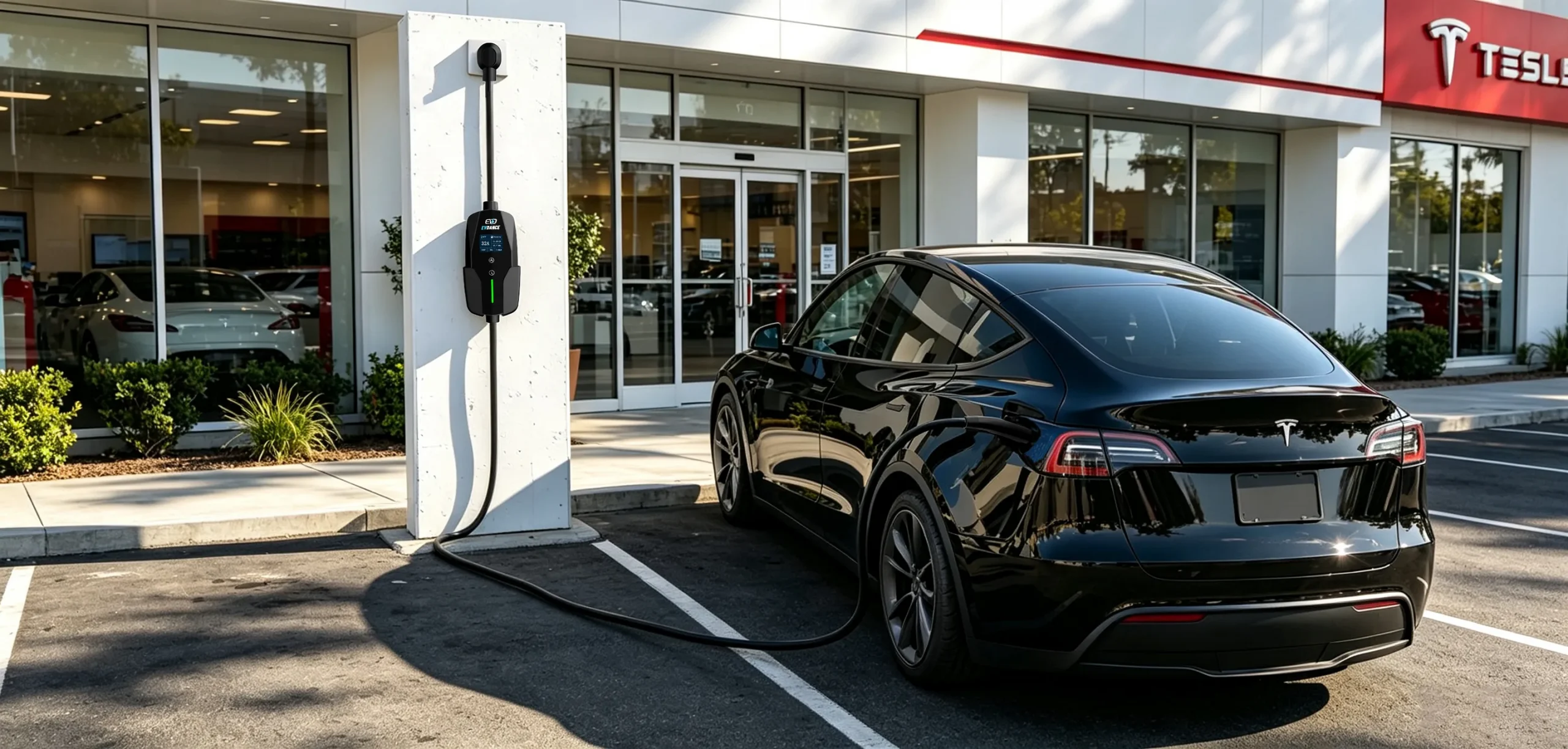
An unconfirmed grant inside a quote is a loan against your reputation: if the program refuses, the customer remembers who promised it. The installer who wins repeat business does the opposite — full price stated, confirmed support shown separately with source and date, and a clear sentence about what happens if the program changes before installation. Funders also ask equipment questions — certification, network capability, payment method — and those answers come from the manufacturer’s documents, not from memory. EVDANCE supplies that documentation per model, and its commercial hardware carries features funders often specify: the EV-AC03201T dual-connector AC station runs OCPP 1.6J with RFID access, and the EV-RHDC30K-L compact DC fast charger covers smaller DC projects. Installers quoting business work can pull specifications through our product range or via contact us, and sanity-check numbers against the published commercial installation costs.
Frequently Asked Questions
Can I still offer customers the 30C credit?
No. The credit applied to property placed in service from January 1, 2023 through June 30, 2026, so equipment installed now falls outside it. If a customer believes an exception applies, that is a question for their tax adviser — never a line in your quote.
Where do I check which grants are open today?
Start with the DSIRE database, then confirm in the current documents of the customer’s state energy office and utility. Programs open, close and change criteria; record the date you checked.
Should the grant be deducted inside my quote price?
No. Quote your full price, and show confirmed support as a separate line with its source and verification date. If the program later changes, your price was never the thing that moved.
Related Reading
- Is the EV Charger Grant Ending? UK, US and Ireland Status in 2026
- How Do I Claim My EV Charger Grant? UK, Ireland and US Explained
- How Much Does It Cost to Install a Commercial EV Charging Station?
- Is an EV Charging Station Business Profitable?

