
For a typical driver, home charging adds a few thousand kilowatt-hours a year to a home’s electricity use. The exact figure is one multiplication: your annual miles times your car’s consumption per mile. As an example, 12,000 miles a year at 0.30 kWh per mile comes to about 3,600 kWh into the battery — with a little more drawn from the wall after losses.
Key Takeaways
- Annual home-charging energy is your miles times your car’s kWh per mile — a few thousand kWh for a typical driver.
- Count a small margin on top for charging losses; Level 2 wastes less than Level 1.
- At the EIA average price, the 12,000-mile example costs about $660 a year.
- A charger that logs sessions turns the estimate into a measured annual total.
The One Multiplication
Your car’s consumption figure is the only input that is really yours. You can find it three ways: the official rating for your model on FuelEconomy.gov, the average your dashboard shows over a season of your own driving, or your charging records — session kWh divided by the miles driven since the previous charge. Multiply by the miles you drive in a year. The examples below use 0.30 kWh per mile; substitute your own figure for your own answer.
| Annual miles (example) | Energy into the battery, at 0.30 kWh per mile |
|---|---|
| 8,000 miles | about 2,400 kWh a year |
| 12,000 miles | about 3,600 kWh a year |
| 15,000 miles | about 4,500 kWh a year |
| 20,000 miles | about 6,000 kWh a year |
The same multiplication, run for a single charge instead of a year, is worked through in our guide to how many kWh it takes to charge an EV.

The Wall Sends a Little More Than the Battery Keeps
The table counts energy that reaches the battery. Your meter counts what leaves the wall, and the two differ because part of the energy becomes heat during conversion:
- Level 2 charging is on average about 10% more efficient than Level 1, according to ENERGY STAR — so the wall figure sits closer to the battery figure on Level 2, and a little further away on a household outlet.
- Standby draw adds a small constant on top. ENERGY STAR certified chargers use 40% less energy in standby than conventional models, but the idle total over a year stays minor next to the thousands of kWh your driving uses.
Take your table figure, add a small margin for losses, and you have the annual load on your bill.
What a Year of Home Charging Costs
At the U.S. average residential price of 18.31 cents per kWh reported by the EIA, the 3,600 kWh example works out to about $660 a year — roughly $55 a month. That is arithmetic on the national average, not a quote: your tariff decides your figure, and off-peak rates pay less. Two checks keep the number real:
- Add up your last twelve electricity bills to get your home’s existing annual total; the charging figure above is what gets added to it.
- Subtract whatever share of your miles you charge in public — only home-charged miles pass through your meter. Our breakdown of what it costs to charge an electric car at home works the per-charge side.
Keep the Year’s Total Where You Can See It
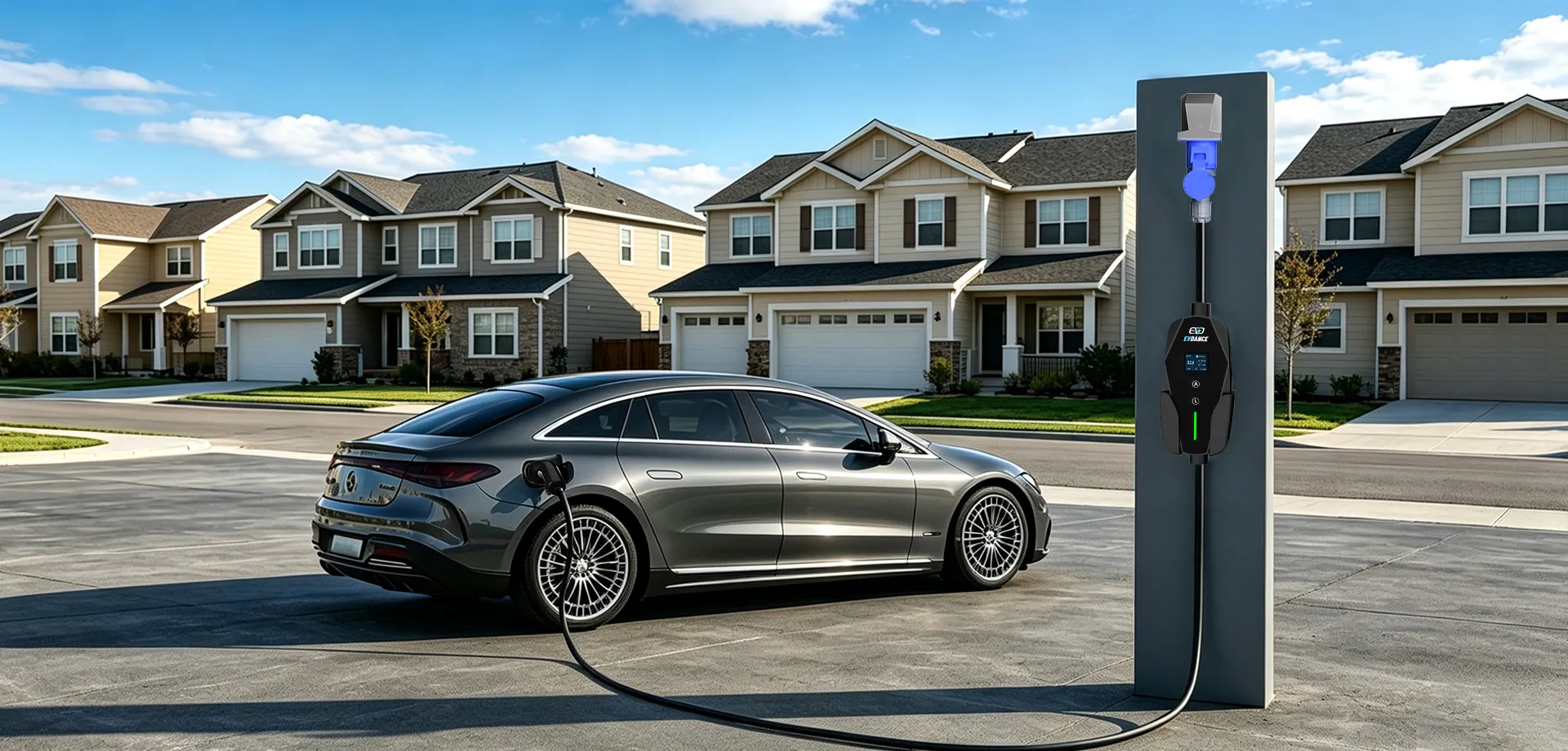
Because nearly all of the car’s home energy flows through one device, a recording charger turns this estimate into a measured fact.
The EV-ACT3204PE 22 kW wallbox offers RFID and app control, so sessions are logged rather than guessed. For North American homes, the EV-ACT5006T 48A Level 2 wall charger covers the high-current end, hard-wired or on a NEMA 14-50 plug. Adding up a year of logged sessions gives you your real annual figure — the one to plan tariffs and budgets around.
Frequently Asked Questions
Does a bigger, faster charger increase my annual kWh?
No. The charger sets how fast energy moves, not how much your driving needs. A more powerful wallbox shortens sessions; the annual total still comes from your miles and your car’s consumption, with only small efficiency differences between setups.
Does Level 1 use more electricity per year than Level 2?
Slightly, for the same miles. ENERGY STAR puts Level 2 at about 10% more efficient than Level 1 on average, so a year of outlet charging draws a little more from the wall for the same energy delivered.
How do I find my real figure after a year?
Sum the kWh your charger or its app recorded across the year’s sessions. If your charger does not log sessions, compare twelve months of bills against the year before the car arrived, adjusting for any other big changes at home.
Related Reading
- How Many kWh Does It Take to Charge an EV?
- How Much Does It Cost to Charge an Electric Car at Home?
- How Many kW Is a Level 2 Charger?
- Smart Charging and Time-of-Use Tariffs: How Scheduling Cuts EV Charging Costs

