
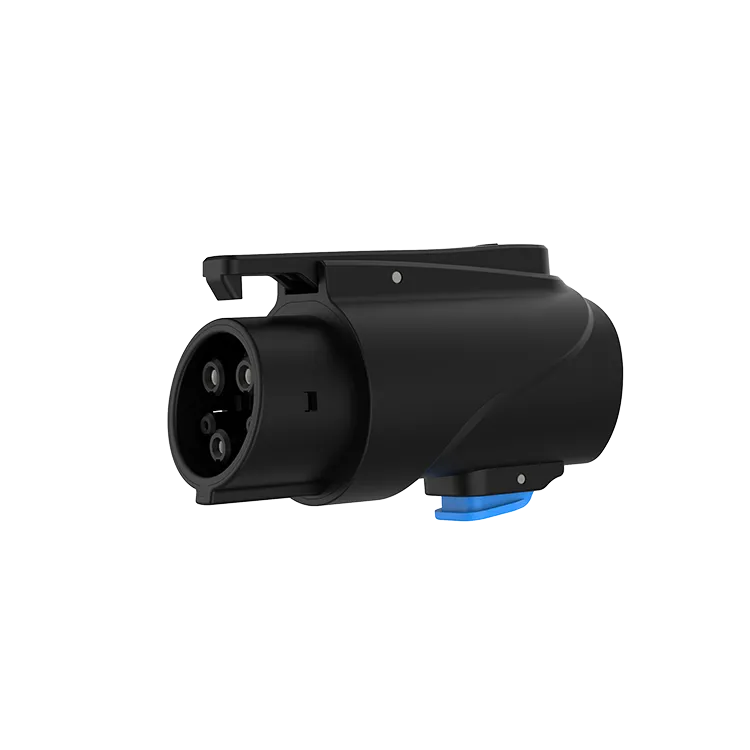
First, the honest answer on the numbers: EVDANCE’s listing for the JT02 does not publish a length or a weight, so this article invents none. Ask for both in writing before you buy if they matter to you. What can be explained is why a short adapter body is the design goal at all: an adapter hangs off your car’s charge port for hours, and a short body keeps its mass close to the joint, so less of its weight works as a lever against the connection.
Key Takeaways
- The JT02’s listing publishes no length or weight — get both in writing before buying if they matter.
- Short helps mechanically: mass close to the joint means less leverage rocking the connection during long sessions.
- Compact also means one-hand handling and an adapter that lives in the car, where it is needed.
- Size changes nothing electrically: rating, fit and the session’s three-way limit are unaffected.
The Missing Figures, and How to Get Them
Plenty of listings lead with dimensions; this one leads with the electrical rating (up to 80 A at AC 250 V) and the IP65 seal. If size and weight decide your purchase, get them as you would any unstated specification — in writing, from the seller, before ordering:
| What to ask for | Why it decides things |
|---|---|
| Overall length, and how far it protrudes once seated | Clearance around your car’s inlet — port doors and recessed inlets differ by car. |
| Weight | What hangs on the car’s inlet, and the charger’s plug, for every session. |
| The figures in writing | A number you can hold the delivery against when the unit arrives. |
Leverage: Why Short Hangs Better
During a session, the connected assembly — the charger’s plug plus the adapter — hangs from your car’s inlet, held by that one joint. Weight is only half the story; the other half is where the weight sits. Mass held close to the joint mostly pulls straight down. The same mass on the end of a longer body acts as a lever, adding a turning force that tries to rock the joint, session after session. A short body keeps the mass near the faces it connects, so the seat stays loaded as designed — square, firm and still. The same logic applies at the adapter’s other end, and in a tight garage a shorter assembly is less likely to be brushed as people pass.
Handling and Living With It
The other dividends of compact are ordinary. A short adapter is a one-hand job: line it up, push it home, with little body to grip wrong or swing against the paintwork. Between sessions it lives in the car — cabin box or boot — rather than on a shelf, which matters because an adapter only helps if it is there when you reach a NACS charger away from home.
What Short Does Not Change
Compact is a handling quality, not an electrical one. A short body adds no power and takes none away: the JT02 passes AC at up to 80 A whatever its length, and your session still runs at the lowest of the charger’s output, your car’s acceptance and that ceiling. Nor does short rescue a poor fit — an adapter of any length that will not seat fully should not be charged through. Judge any adapter on its rating, its confirmed figures and your car’s clearances — the standards are explained in our guide to whether the Tesla charger is NACS.
The Adapter in Question
The EVDANCE JT02 NACS-to-J1772 adapter is listed for AC charging up to 80 A at AC 250 V, with silver-plated copper contacts and an IP65 rating. It is an AC adapter for home wallboxes and destination chargers — never for Superchargers. If the unpublished figures matter for your car, the product page and a written answer from EVDANCE are where they should come from.

Frequently Asked Questions
How much does the JT02 weigh?
EVDANCE’s listing does not publish a weight, and this article will not estimate one. Ask the seller for the figure in writing before you order.
Will a short adapter fit my car?
The electrical fit is standardised — NACS on one side, J1772 on the other, as our guide to what J1772 is explains. The variable is physical room: a recessed inlet or tight port door leaves less space around the connector. Ask for the length, then judge your own inlet’s clearance before buying.
Can a heavy adapter damage my charge port?
Any adapter’s weight hangs on the inlet joint for hours, and more length means more leverage — that is the honest extent of it. What deserves action is a sign, not a number: visible sag, play or rocking means stop and inspect.
Related Reading
- Are EV Charging Adapters Safe?
- What Is J1772? The North American EV Plug Explained
- Is the Tesla Charger NACS? NACS, J3400 and Adapters Explained
- Can a Tesla Use J1772 Chargers?

