
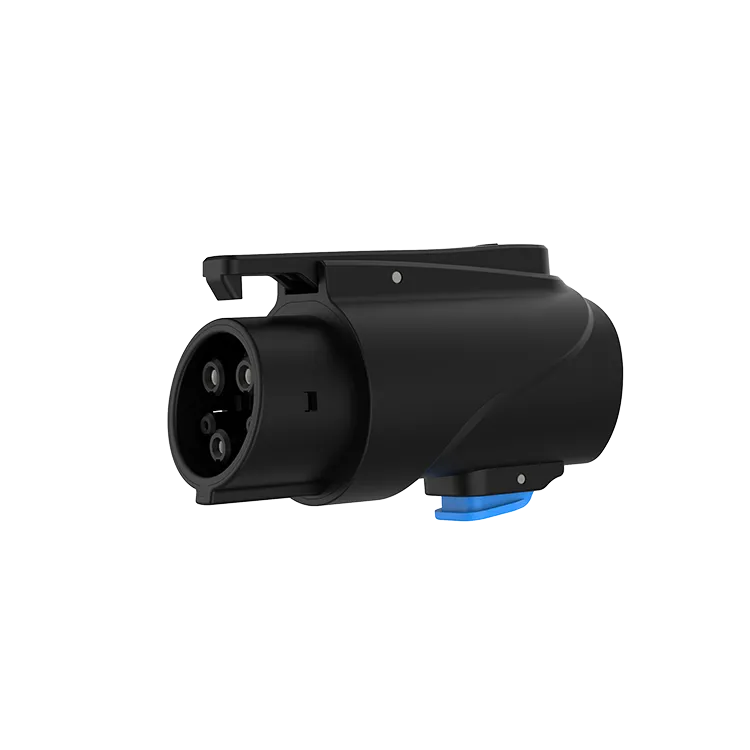
The JT02’s spec sheet is four lines: up to 80 A, AC 250 V, silver-plated copper terminals, IP65. Each does one job. The sheet also has honest gaps — no electrical protection devices and no certification marks are named — and a careful buyer reads the gaps as carefully as the numbers.
Key Takeaways
- Up to 80 A is a ceiling: the session runs at the lowest of charger output, car acceptance, and the adapter rating.
- AC 250 V is stated in the listing and covers North American 240 V Level 2 supplies; it grants no DC use.
- IP65 and silver-plated copper terminals are the stated protection-side facts — an enclosure rating and a contact material.
- No certification mark, protection device, temperature range or service life is stated; each is a written question for the seller.
Current: Up to 80 A Is a Ceiling, Not a Promise
The 80 A figure is the most the adapter is built to carry — not what your car will charge at. Every AC session is set by the lowest of three figures:
| The three limits | Example | Session runs at |
|---|---|---|
| Charger offers 48 A, car accepts 32 A, adapter ceiling 80 A | A home Wall Connector and a mid-size EV | 32 A — the car decides |
| Charger offers 40 A, car accepts 48 A, adapter ceiling 80 A | A destination charger and a high-acceptance EV | 40 A — the charger decides |
| Charger offers 80 A, car accepts 80 A, adapter ceiling 80 A | The rare top-end pairing | 80 A — the only case where the adapter is the limit |
Read the 80 A line as headroom: the adapter is sized to almost never be the bottleneck — and a rating that covers the session matters more than one that merely matches it, as our guide to whether EV charging adapters are safe explains.
Voltage: AC 250 V, Stated in the Listing
The listing states the voltage rating directly: AC 250 V. North American home and destination Level 2 runs on 240 V AC, so the rating covers the supply the adapter will meet — the figure on the sheet sits above the figure on the wall. Two boundaries come with it. The rating is for AC only: no DC rating, and no role at a DC fast charger, whatever the plug shape suggests. And it is a ceiling, not a conversion — the adapter passes the charger’s AC through unchanged to the car’s onboard charger, which does the converting. With equipment whose stated voltage differs from the norm, the nameplate figures on both parts are the check.

Protection: What the Sheet Does and Does Not Claim
“Protection” here means two stated things, not to be stretched further. IP65 is an enclosure rating: the housing is dust-tight and resists water jets, which is what outdoor AC charging asks of it. The silver-plated copper terminals are a contact material: copper carries the current, the silver plating is the surface contact is made through. Neither line is an electrical protection device.
The listing names no ground-fault (GFCI/RCD), surge, or thermal cut-out protection for this adapter — in an AC setup, those protections live in the charger and its circuit. A sheet that does not claim a protection has not hidden one; it has told you where to look instead.
What the Sheet Does Not State
| Not stated for the JT02 | How a buyer handles it |
|---|---|
| Certification marks (no ETL, UL or other mark is named) | Ask the seller for the certificate file in writing; OSHA’s NRTL page explains what a recognised listing means |
| Electrical protection devices (GFCI/RCD, surge, thermal) | Treat them as sitting in the charger and circuit; confirm in writing if a seller claims otherwise |
| An operating temperature range | Ask for the manual’s figure instead of assuming one |
| A service-life figure (years or cycles) | Judge the individual adapter by inspection, not by age |
The JT02 product page is the source for everything stated above; anything beyond it is a question for the seller, in writing, before money moves.
Frequently Asked Questions
Will my car charge at 80 A through the JT02?
Only if the charger offers 80 A and the car accepts it — a rare pairing. In ordinary home and destination use, the car or the charger sets the session well below the ceiling.
Is the JT02 protected against power surges?
The listing claims no surge, ground-fault or thermal protection for the adapter. In an AC setup those protections belong to the charger and its circuit. If a seller tells you otherwise, ask for it in writing.
Can I use it on a 240 V home circuit?
Yes — that is its rated use: AC 250 V, with a 240 V Level 2 supply inside it. The charger must still be an AC unit; the rating gives the adapter no DC capability.
Related Reading
- Are EV Charging Adapters Safe?
- What Is J1772? The North American EV Plug Explained
- Is the Tesla Charger NACS? NACS, J3400 and Adapters Explained

