
A NACS-to-CCS1 DC adapter sits in the highest-current connection your car makes — this class is rated around 250 kW and 500 A — and a counterfeit or no-name unit has no verified rating behind it. You cannot bench-test one in a shop, but you can spot most bad ones first: ratings and direction printed and specific, an identifiable manufacturer behind the product, and the approval conditions described honestly. A genuine adapter of this type only bridges a CCS1-inlet car to a NACS DC station, including Superchargers opened to that car, where the car maker approves third-party DC adapters and the station is open to the car.
Key Takeaways
- A DC adapter carries fast-charging current; on a counterfeit, the printed ratings are decoration, not verified design figures.
- Run the five checks as a set: ratings, direction, maker, approval honesty, documentation.
- “Works with every CCS car, no approval needed” is the loudest tell — no adapter maker can grant the car maker’s approval.
- The genuine JT08 and JT09 are backed by a named maker and a 3-year warranty — and still need maker approval and an open station.
Why a Fake DC Adapter Is a Different Risk
DC fast charging runs at 50–350 kW in the U.S. DOT’s typical band, and every amp of it crosses the adapter’s contacts. On a genuine unit, those figures are design ratings the maker can be held to. On a copy they are decoration: the contacts, housing and assembly were never verified against them. An unrated component in a several-hundred-amp path is a heat and failure risk at exactly the joint you cannot inspect from outside.
Five Spot Checks Before You Buy
| Check | What a genuine listing shows | The warning sign |
|---|---|---|
| Ratings | Specific figures: JT08 up to 500 A / 1000 V, IP66; JT09 up to 500 A, IP66. | Vague words like “high power”, with no current, voltage or IP figure anywhere. |
| Direction | The journey stated in plain words: NACS station side to CCS1 car side. | Photos only, or wording so loose it could describe either direction. |
| The maker | A named manufacturer with product pages, support and a stated warranty. | No company behind the listing; “support” is a marketplace inbox that can vanish. |
| Approval honesty | States both conditions: car-maker approval for third-party DC adapters, and a station open to your car. | “Works with every CCS car — no approval needed.” |
| Documentation | A specification and manual you can read before ordering. | Nothing to read until the box arrives — and nothing in the box either. |
These checks are heuristics, not a certification: a careful copy can imitate one or two of them, so run them as a set. Buying through channels where the maker is identifiable — and a return reaches a real company — is the other half of the protection. Our guide to whether EV charging adapters are safe sets out the wider checks for any adapter.
The Loudest Tell: “No Approval Needed”
Third-party DC adapters work inside a system of permissions. The car maker decides whether an adapter may be used with its cars at all; the network decides which of its stations are open to which cars. A seller who promises universal compatibility with no approval is not offering a better adapter — they are denying how the system works, because no adapter maker can grant the car maker’s approval on the maker’s behalf.
The Genuine Articles: JT08 and JT09
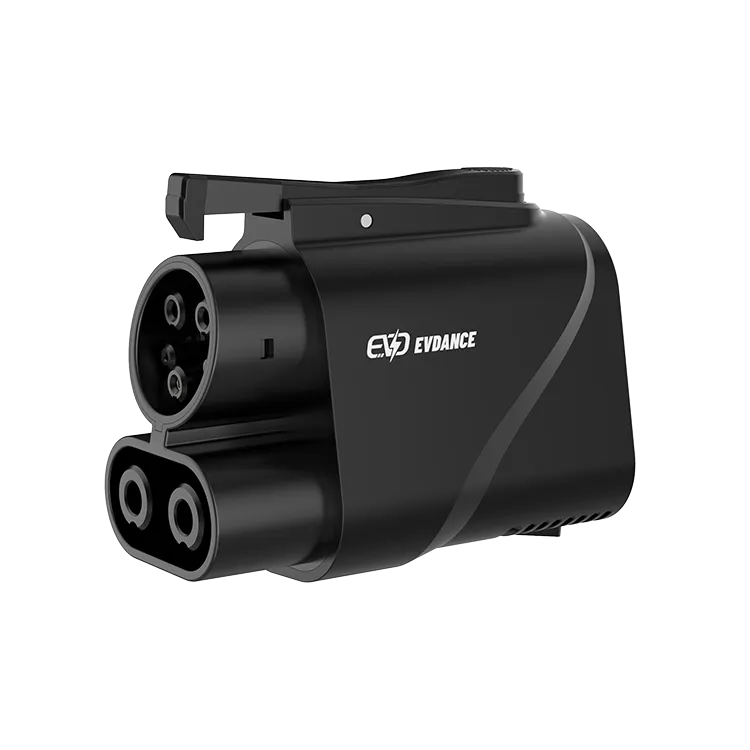
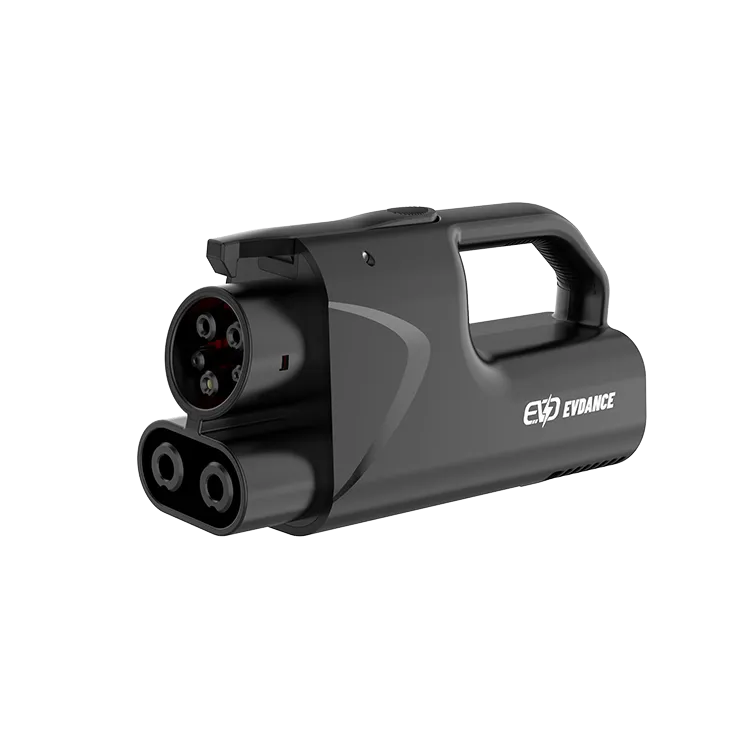
EVDANCE, a Shenzhen EV charger manufacturer founded in 2011, specifies its two DC adapters in the open. The JT08 is the handleless version, rated up to 500 A / 1000 V with IP66 sealing. The JT09 does the same job with a handle, rated up to 500 A and IP66. Both carry EVDANCE’s 3-year standard warranty — and the same honest condition as any third-party DC adapter: use them only where your car maker approves third-party DC adapters for your exact car, and only at stations open to it.
Frequently Asked Questions
My car only draws about 150 kW. Is a cheap adapter fine at lower power?
No. The car and the station set the session rate, but the adapter’s rating is a claim about its construction, and an unverified claim is unverified at any draw — heat builds at the contacts either way. The approval condition applies at every power level too.
What if I already bought a no-name adapter?
Run the five checks on it. If the ratings are unmarked, the direction unclear or no maker identifiable behind it, stop using it: an unverifiable DC adapter is not a “use it carefully” item, it is a retire-and-replace item.
Does a genuine adapter remove the approval step?
No. Authenticity and approval are separate questions. A genuine JT08 or JT09 still needs your car maker’s approval and a station open to your car; any seller who merges the two into “just plug it in” fails the loudest check above.
Related Reading
- Are EV Charging Adapters Safe?
- Is the Tesla Charger NACS? NACS, J3400 and Adapters Explained
- Type 2 vs J1772 vs NACS: Which EV Charger Connector Does Your Market Need?

