
A DC adapter session stands or falls on two joints: the JT08 or JT09 onto the station’s NACS connector, and the pair into your car’s CCS1 inlet. A fit check takes seconds: clean faces, a straight push fully home at each joint, no gap, no rocking — and the session starting as the final confirmation. If a joint will not seat with a firm, straight push, stop. Forcing a DC connector is never the fix.
Key Takeaways
- Two joints, one check each: adapter onto the station connector first, then the pair into the car.
- Read the seat by four signs — flush faces, no rocking, an even bottoming-out, and a session that starts.
- A joint that will not seat gets causes worked in order — debris, angle, damage — never more force.
- A fit that degrades over time is a retirement signal; a seated adapter is still not permission to charge.
The Order: Station Side First, Then the Car
Seat the adapter onto the station’s connector before the pair goes near the car: the combined unit is then handled as one piece, and the heavy cable is not dragging on a half-made car-side joint while you work. Removal reverses the order — end the session, unplug from the car, then separate the adapter. This check sits inside the full charging sequence set out in our guide to how to use a DC fast charger.
Reading a Full Seat: The Four Signs
| Check | Fully seated | Not seated — act |
|---|---|---|
| The faces | Flush, with no visible step or gap at either joint | A gap or a step — withdraw and reseat squarely |
| The nudge test | The connector does not rock when nudged gently | Rocking means a partial joint — reseat before starting |
| The push itself | It bottomed out evenly, with a definite end to its travel | A spongy or angled stop — something is between the faces |
| The session | It starts when asked | It refuses — one careful reseat, then work the causes below |
You may feel the connection engage as it goes home — treat that feel as one sign among four, not the verdict. The hold that keeps a connector in place while power flows belongs to the station–car arrangement; these adapters’ listings describe no latch of their own to rely on.
When It Will Not Seat: Work the Causes in Order
- Something on a face. Grit, ice, a leaf — wipe both faces dry and look again. Debris is the commonest cause and the cheapest fix.
- The wrong angle. Withdraw fully and come back square. A connector pushed in crooked can feel nearly home for a long time.
- A damaged part — and which one. Try a second stall: if the adapter seats there, the first stall’s connector was the problem. If it seats nowhere, the adapter or your inlet is the suspect — and a damaged adapter is retired, not persuaded.
Never escalate force. A joint that needs more than a firm two-handed push is reporting an obstruction or damage — and current through a forced, partial joint is what this check exists to prevent.
A Fit That Changes Over Time
Note how the fit feels while the adapter is new — that is your baseline. A connection that used to seat cleanly and now needs force, or has started to sit loose, has worn or been damaged: retire it and replace it, and never open or repair a DC adapter yourself. Keeping the faces clean and protected in storage slows that wear.
The Fit Check on the JT08 and JT09
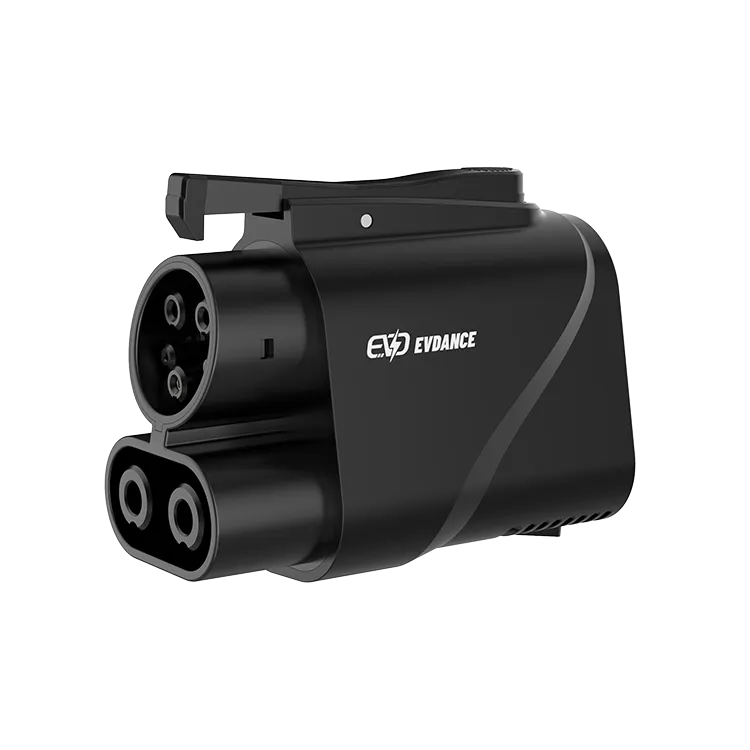
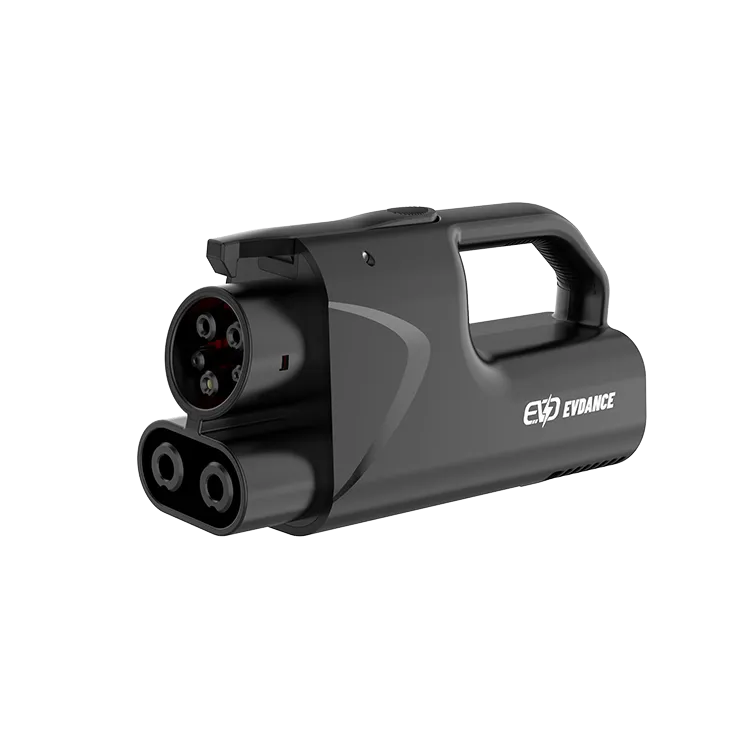
Both models present the same two joints and take the same check: the EVDANCE JT08 is the compact, handleless form; the EVDANCE JT09‘s handle gives the straight push a better grip. The ratings family is shared — up to 500 A, the JT08 also up to 1000 V, IP66 on both. And a good seat is not permission: both adapters are used only where your car maker approves a third-party DC adapter for your car and the station is open to it.
Frequently Asked Questions
How hard should I have to push?
A firm, straight, two-handed push ending in a definite stop. More than that means obstruction or damage — work the causes above instead of pushing harder.
The session started. Does that prove the seat was good?
It is the strongest single confirmation you have; with no gap and no rocking, the check is complete. If a session later misbehaves, seating is a first re-check — diagnosing a failing session is its own topic.
It seats at some stalls but not others. Whose fit is at fault?
Follow the pattern: if the failure stays with one stall, its connector is the suspect and the site operator is the contact; if it follows your adapter everywhere, the adapter is the suspect — retire it.
Related Reading
- How to Use a DC Fast Charger: Step by Step
- Are EV Charging Adapters Safe?
- How Do DC Fast Chargers Work?
- Can I Use a Tesla Charger for Other Cars?

