
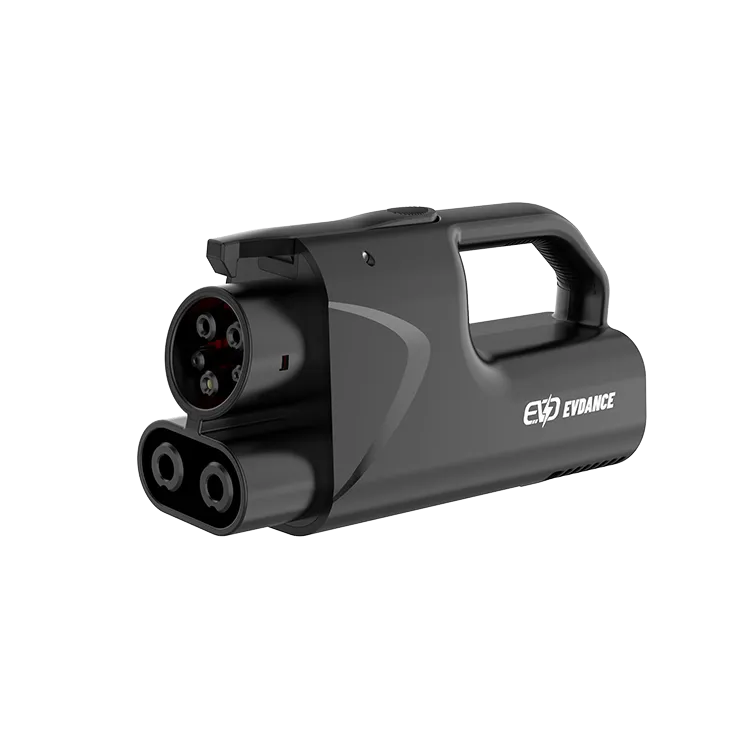
Be clear about the job first: a DC connector is a heavy cable end, and an adapter adds its own body to what your hands must lift, align and push home. The JT09 — the handled version of this adapter family — gives proper grip and better leverage than the handleless JT08, and technique reduces the strength the job needs. But no adapter makes the cable light, and some stops are better made where no adapter is needed at all.
Key Takeaways
- The job is lifting, aligning and seating a heavy cable end — technique (two hands, square stance, one straight push) reduces the strength it needs.
- The JT09’s handle adds grip and leverage; it does not lighten the cable or change the car’s inlet.
- Never use tools or force. A connector that will not seat aligned is a stop signal, not a strength test.
- CCS1 stations let the same car charge with no adapter handling at all.
What the Job Actually Asks of Your Hands
The sequence is short: fit the adapter onto the station’s connector, lift the pair — connector, adapter and the first length of a stiff, heavy cable — carry it to the inlet, hold it aligned against the cable’s pull, and push it home. None of it needs tools, and none should need force: a connector that only goes in with force is misaligned. Cold makes it harder: cables stiffen, and warm gloves blunt your feel for alignment.
Technique That Reduces the Strength Needed
| The move | How to make it easier |
|---|---|
| Picking up and carrying | Two hands from the start — one on the handle (JT09) or adapter body, one under the cable close behind it, so the weight is shared instead of hanging off one wrist |
| Aligning with the inlet | Stand close and square, elbows in; bring the connector up already pointing the way it goes in |
| Seating | One straight push from the shoulders, not a series of shoves; if it stops early, come out and re-align rather than push harder |
| Holding against the cable’s pull | Park so the cable runs short and unstressed — a cable not stretched sideways is not fighting your hands |
| Removing | Support its weight before releasing the connector, so the pair never drops or swings on the inlet |
The JT09’s Handle — and Its Limits
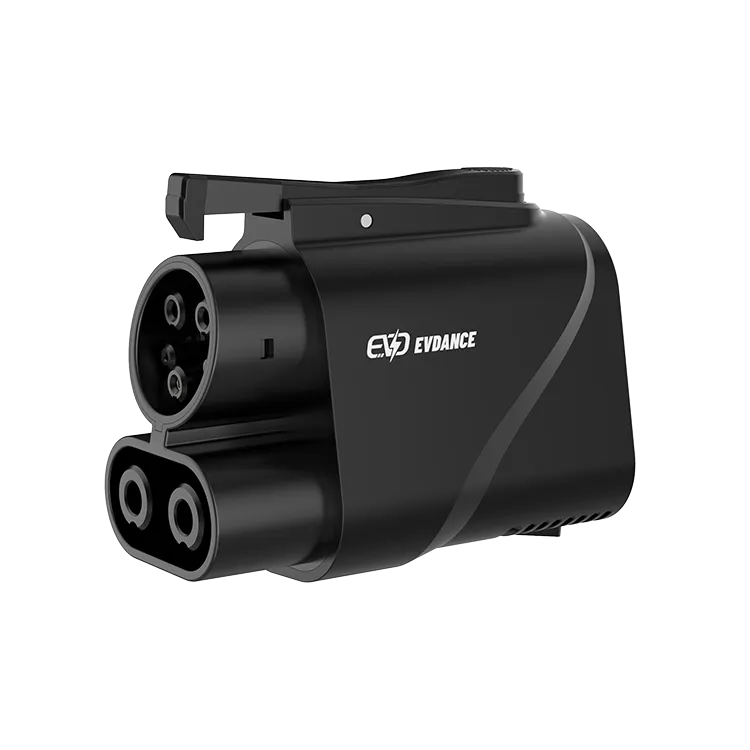
The handle is the stated difference: the JT09 adds it to the same NACS-to-CCS1 job the handleless JT08 does — both up to 500 A, IP66 (the JT08 also states up to 1000 V). A handle helps two ways: a closed grip instead of a pinch on a smooth body, and a push in line with the connector. It does not reduce the cable’s weight, change the car’s inlet, or seat a misaligned attempt. Both carry the same two conditions: your car maker must approve third-party DC adapters for your exact car, per its current document, and the station must be open to your car under the network’s terms. Choosing between the two on handling grounds is legitimate — handling is a real part of this job, as the guidance on whether EV charging adapters are safe sets out.
Routes That Skip the Adapter Entirely
- Charge at CCS1 stations. The same car plugs straight in — no adapter to lift, carry or seat — and the stop itself is the same exercise as any DC stop (see how to use a DC fast charger). A route planned on CCS1 stops removes the adapter handling completely.
- Mix the networks. A trip need not be all one connector: CCS1 where convenient, a Supercharger through the adapter where it suits.
- Ask for a hand. At a staffed site, asking staff or a fellow driver to steady the cable is an ordinary request. The seating itself stays yours to judge.
Frequently Asked Questions
Is the JT09 an accessibility product?
No such claim is made for it. The handle is a handling feature — grip and leverage. Whether it makes the job manageable for your hands is yours to judge, ideally by handling the part before a trip.
Can I use grip gloves, or a lever or tool to help seat the connector?
Grippy gloves are fine, and help in the cold. Tools are not: never lever, strike or clamp a DC connector. Force hides misalignment, and a damaged connector or inlet is a far bigger problem than a missed charge. If it will not seat with a firm, straight push, stop and re-align — or choose another stall.
What if I cannot seat it fully on the day?
Do not charge on a partial seat, and do not keep pushing. End the attempt: another stall if geometry was the problem, or a CCS1 station where your car needs no adapter. The adapter is optional equipment; a fully seated connection is not.
Related Reading
- Are EV Charging Adapters Safe?
- How to Use a DC Fast Charger: Step by Step
- Is the Tesla Charger NACS? NACS, J3400 and Adapters Explained
- How Fast Is a DC Fast Charger?

