
A car dealership is a channel a distributor can stock, brief and support — but not control. The dealer sells cars; the charger is a small line that makes the car easier to hand over. Your job from the supply side is to make that line effortless: the right units within reach at the handover moment, staff answers short enough to say out loud, and a fault route that comes back to you, not to the showroom. This article takes the distributor’s seat.
Key Takeaways
- The dealership channel sells at one moment — the handover — and stock and answers must be ready before it.
- Portable units sit on the dealer’s shelf; fixed lines work as a demo plus warehouse stock.
- Staff get one page per model: which cars it fits, what the buyer still needs, one fault number — yours.
- Installation is never quoted at the desk; the installer surveys and quotes it.
The Dealer’s Moment, From Your Side of the Counter
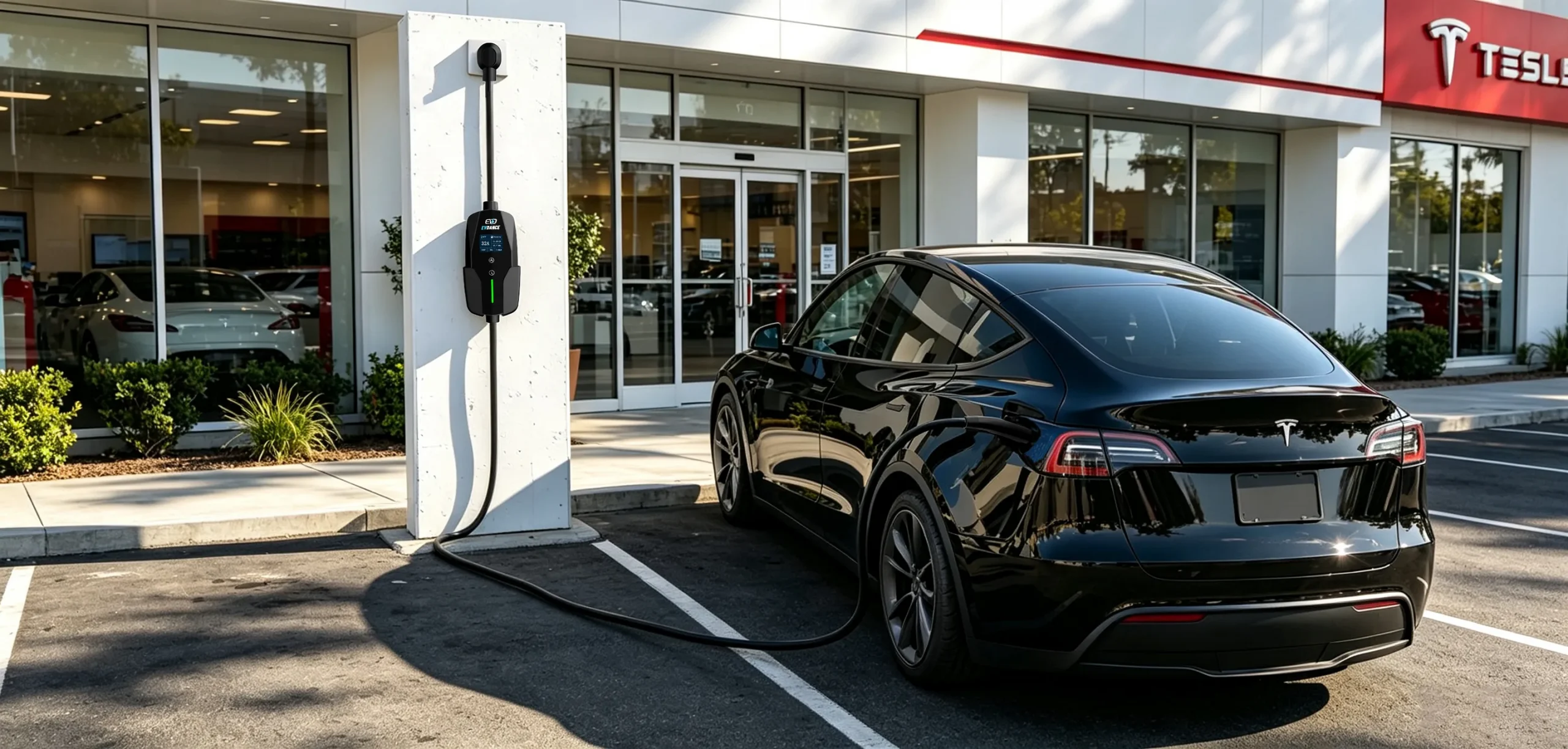
Every EV the dealer sells leaves with one unfinished question: where will it charge tonight? The buyer trusts the dealer’s answer, which is why a charger the dealer can name, show and hand over sells at that moment and rarely later. Note what this channel is not: the dealership’s own charging project — charging for the dealer’s lot and service bays is covered in our guide to EV charging for car dealerships.
Stock: On the Shelf or On Call
| Stock position | What it suits | The risk it carries |
|---|---|---|
| A small shelf stock at the dealership | Portable units the buyer takes home the same day — the strongest form of the handover sale | Your capital sits in their stockroom; agree counts, ownership and restock trigger in writing |
| One working demo unit, stock held by you | Wall chargers and higher-value lines ordered at handover for later installation | The demo sells a promise: the delivery and installation route behind it must be real |
| Nothing on site; dealer refers to your installer network | Markets where the dealer will not hold stock at all | The moment cools; you depend on the speed of a follow-up you do not control |
The EV-ACS3210E (32 A Type 2 portable, about 7 kW, IP66) fits European handovers; the EV-AC04001U (40 A J1772 portable, 9.6 kW, 25 ft, IP66) and EV-ACS4005T (40 A NACS portable, adjustable 16/24/32/40 A, IP66) fit North American ones; the JT02 adapter (NACS-to-J1772, AC only, up to 80 A, IP65) is a counter accessory — never a Supercharger accessory.

The Answers Dealer Staff Need
Showroom staff will not study a catalogue. Give each dealership a one-page sheet per stocked model, written to be said aloud:
- Which cars it fits. By inlet family only — the unit’s connector against the inlet on the cars that dealer sells. Compatibility is a physical fact; never let the sheet imply the car maker endorses the charger.
- What the buyer still needs. A suitable socket for a portable unit, or a licensed electrician’s installation for a fixed one. Staff sell the hardware; installation is surveyed and quoted by the installer, never promised at the desk.
- What happens if it faults. One phone number: yours. The buyer calls the dealer, the dealer calls you, and first response runs under the supply terms — for EVDANCE hardware, a 3-year standard warranty stands behind the unit.
Fault Route and Review
Run the channel like any other you supply: a named dealership, an agreed stock position and answer sheets in place, then a review against your own records — units placed, restocks, fault calls and how they closed. Extend to a second dealership only when the first log is clean. EVDANCE supplies this channel through distributors under its reseller and distributor programme; choose handover lines from the product range and discuss stock positions via contact us.
Frequently Asked Questions
Who installs the charger the dealer sells?
Not the dealer. Installation belongs to a licensed electrician or installer partner, surveyed and quoted as its own job. Have that route arranged before the first unit is sold, so the dealer’s promise is “our installer will contact you”, never a date invented at the desk.
Should the dealership hold stock, or should I?
Portable units belong on the dealer’s shelf — the handover sale dies if the buyer waits. Fixed wall chargers sit better as a demo plus warehouse stock, delivered against the installation booking. Ownership, counts and the restock trigger belong in writing either way.
Can dealer staff quote the full installed price?
They can quote the hardware they sell. The installed price depends on the buyer’s supply, panel capacity and cable route, which only a survey establishes. A desk quote that guesses those will be wrong in one direction or the other — and the correction lands on your brand.
Related Reading
- EV Charging for Car Dealerships: What to Install and Why
- How to Find EV Charger Distributors and Installers to Sell To
- EV Charger Warranty and After-Sales Terms: A Distributor’s Checklist
- How Distributors Can Build a Profitable EV Charger Product Line

