
“Trained technicians” is a promise a distributor makes at the sale and is judged on at the first fault — yet in most supply arrangements the training behind it is never written down. A service-training arrangement settles it per model: who delivers the training, what it covers, which work your technicians may do without breaking the warranty, how completion is recorded, and what refreshes it. Whatever the arrangement does not settle does not exist when a claim is disputed.
Key Takeaways
- Training exists only where the arrangement writes it: scope per model, provider, depth of work, records, refresh triggers.
- The authorisation scope is the claim-time document — work outside it is how cover gets disputed.
- Manufacturer training never replaces a local electrician’s licence; the two credentials answer different questions.
- EVDANCE publishes no course or technician scheme; training is an ask-list item settled per market, in writing.
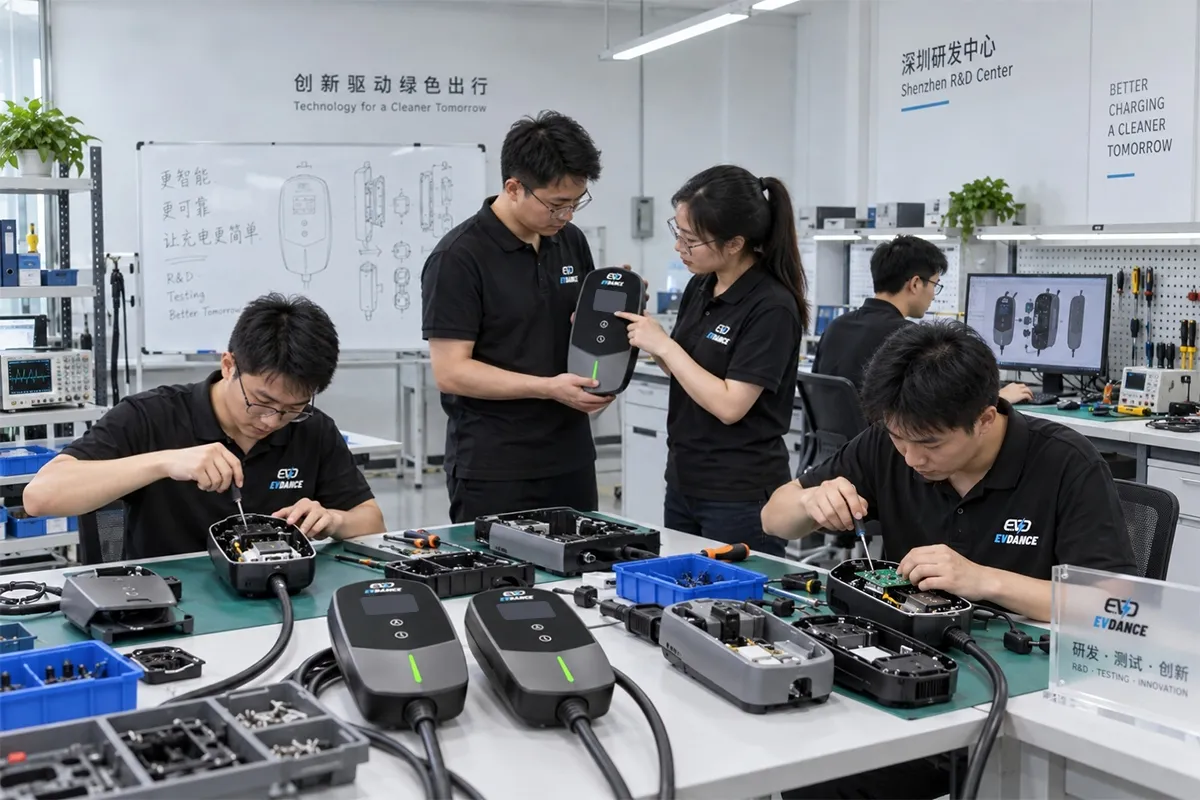
The Arrangement, Element by Element
| Element | What it must settle | The document that records it |
|---|---|---|
| Scope by model | Which models and variants your technicians are trained on — named, never “the range” | A training schedule attached to the supply agreement |
| Depth of work | Diagnosis only, part replacement, or full repair — and where the line sits | The maker’s written authorisation scope |
| Who delivers | The maker’s staff, a third party, or train-the-trainer — in what format and language | The schedule names the provider |
| The safety boundary | Which tasks stay with licensed electricians under local rules, whatever the training says | The schedule, read against the local wiring rules |
| Records | An attendance or completion record per technician, held by both sides | The parties’ own register or certificates |
| Refresh triggers | A new model, a hardware revision, a recurring fault pattern in your claims file | A review clause with the trigger list written in |
| Cost and time | Who pays, whose hours, where it happens | The schedule’s commercial lines |
Note what the table never contains: a promise that training makes your team the maker’s service network. It settles competence and authorisation for the work named — nothing beyond the named scope travels with it.
Why the Paper Matters at Claim Time
The disputed claim writes itself in advance. A unit fails, your technician opens it in good faith, and the maker’s answer is that the repair hands were never recognised — so the cover is contested. The defence is documentary and it exists only if the arrangement created it: the training record for that technician, on that model, plus the authorisation scope that names the work performed. The same file protects the other direction: work your team was never trained or authorised for should be recognised at intake and routed on, not attempted — the boundary is a service-quality line as much as a legal one. Training records also feed the returns file: a fault pattern your trained team keeps meeting is a refresh trigger and a maker conversation, not a local workaround.

The EVDANCE Position, Stated Plainly
EVDANCE is a Shenzhen manufacturer founded in 2011, exporting to more than 30 countries, with private label from 100 units and a 3-year standard warranty. Its published terms state no training course, no technician certification and no stationed-engineer service — so none is claimed here, for any model, including installed units like the EV-AC03201T dual-connector station (up to 43 kW shared, OCPP 1.6J, RFID, IP54) and the EV-ACT3204PE wallbox (22 kW three-phase, tethered Type 2 cable, RFID and app, IP66). Training belongs on the after-sales ask list — the ground our distributor’s after-sales checklist surveys — and is settled per market, in writing, through the reseller and distributor programme or contact us.
Frequently Asked Questions
Does manufacturer training replace an electrician’s licence?
No. Installation and mains work follow local licensing law whatever a maker teaches; product training covers the product — its diagnosis, its parts, its limits — not the trade licence. Keep the two credentials in separate files.
Should training be free?
It is a commercial term like any other, priced or bundled as the parties agree. What decides its value later is not the price but the writing: scope per model, the named provider, and the records both sides keep.
How often should training be refreshed?
On the triggers written into the arrangement — a new model, a revision, a fault pattern in your own claims file — rather than on a calendar guess. A team trained once, on a superseded revision, is an uncovered team with certificates.
Related Reading
- EV Charger Warranty and After-Sales Terms: A Distributor’s Checklist
- EV Charger Spare Parts and RMA Process for Distributors
- How to Find EV Charger Distributors and Installers to Sell To
- How Distributors Can Build a Profitable EV Charger Product Line

