
A sourcing agent is a paid intermediary who finds factories, handles language and negotiation, and follows production for you. An agent helps most on a first order, when you have no presence near the factories and no Mandarin in-house. An agent never replaces your own specification, sample approval and inspection — and your sales contract is still with the factory, which is where quality claims land.
Key Takeaways
- An agent sells presence, language and legwork — not lower prices or guaranteed quality.
- Ask who pays the agent; a factory-paid commission points the agent’s loyalty at the factory.
- First orders and multi-factory sourcing favour an agent; repeat volume favours going direct.
- Specification, sample approval and inspection stay under your control either way.
What a Sourcing Agent Actually Does
- Searches for factories, screens them against your specification and gathers quotations.
- Translates, supports negotiation, and explains local business practice.
- Follows the order: factory visits, production photos, schedule chasing.
- Consolidates goods from several suppliers into one shipment.
- Coordinates export documents and local logistics.
Just as important is what an agent is not: not the manufacturer, not a certification body, not an independent inspector. Presence is not a formal pre-shipment inspection with a sampling plan and written report; it is a separate engagement.

How Agents Charge: Structures, Not Standard Rates
There is no standard agent fee. Structures come in three types, and the number is negotiated each time:
| Fee structure | How it works | What to pin down in writing |
|---|---|---|
| Percentage of order value | The fee scales with the size of the order | Who pays it — you, or the factory as commission |
| Flat project fee | A fixed sum for a defined search or a single order | Which deliverables the fee covers, and when it ends |
| Per-visit or per-day fee | Paid for factory visits, audits or QC days | What each visit produces: a report, photos, a sign-off |
The question that matters most is who pays. An agent who earns commission from the factory is working for the factory’s sale — ask directly and get the answer in writing. And if the agent adds a margin and sells through their own company, you are no longer using an agent: you are buying from a trading company — the model compared in our guide to factory, trading company or marketplace seller.
When an Agent Helps — and When Direct Wins
An agent earns the fee when:
- It is your first import, with no China-side presence or language.
- You are sourcing several product categories at once, from different factories.
- You cannot visit in person, and an unchecked first order is the bigger risk.
- The order is a small trial, where a sourcing trip would cost more than the fee.
Direct sourcing wins when:
- You place repeat orders with a factory you already know.
- Your own inspection arrangement already exists.
- Yours is a volume business: a percentage fee on large orders becomes real money.
- You want one unbroken line of accountability for warranty, spare parts and claims.
Many importers settle on a middle path: agent for the search phase, then a direct contract and independent inspection — local knowledge paid for once, not per order.
Ground Rules If You Use One
- Contract with the named factory, not only with the agent, so the warranty counterparty is known before you pay.
- Keep the controls yours: specification in writing, samples approved, inspection before shipment — the steps in our guide to testing a sample before a bulk order stay yours, not the agent’s.
- Pay the agent separately and transparently, with the fee basis in writing.
- Give the agent your written specification. An agent can only chase what is written down.
Sourcing Direct From EVDANCE
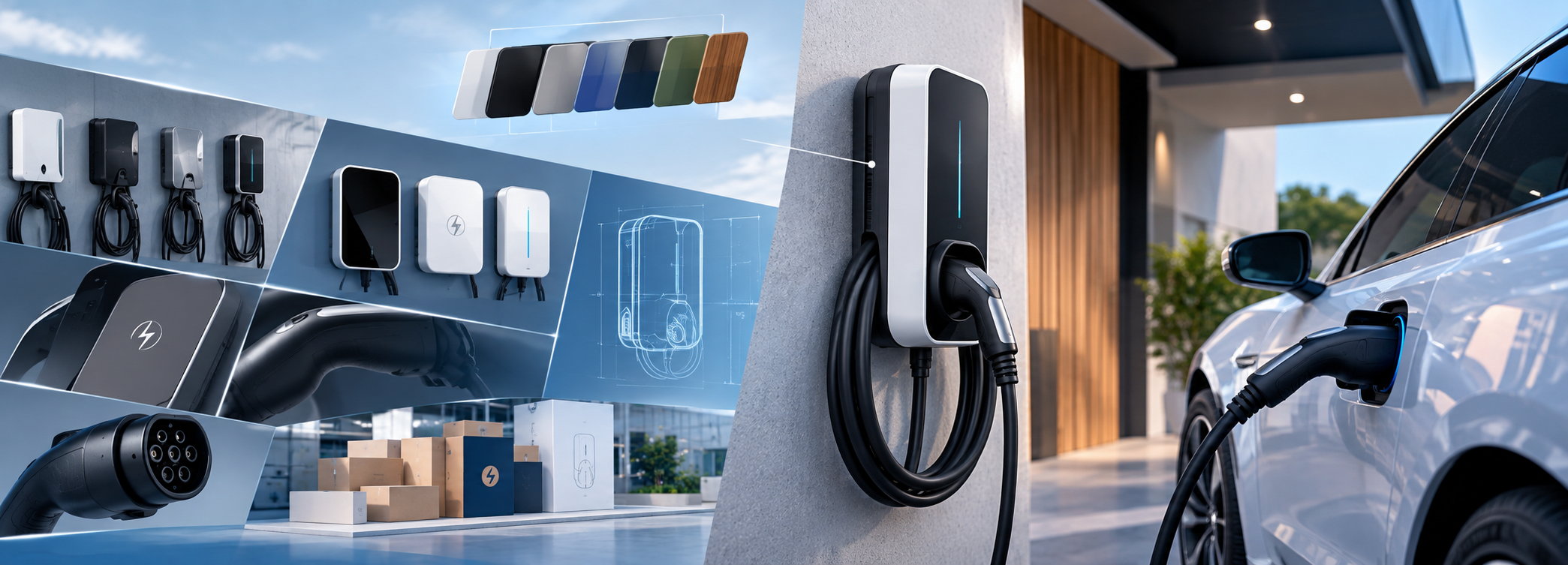
EVDANCE is a Shenzhen EV charger manufacturer founded in 2011, exporting to more than 30 countries, with private label from 100 units and a 3-year standard warranty. Buy direct or arrive through an agent — the checks are the same: specification in writing, samples approved, inspection before shipment. Start with the OEM and private-label program, browse the full product range, or contact us for a quotation.
Frequently Asked Questions
Does a sourcing agent make EV chargers cheaper?
No. An agent adds a fee layer; what it buys is time, access and presence. Legwork may surface a better first quotation, but a saving is never guaranteed — and on repeat volume orders the fee argues for going direct.
Can my agent handle quality control for me?
An agent can visit, photograph and report — presence, not inspection. Keep a formal pre-shipment inspection, against your approved sample and specification, independent of the agent, so the evidence behind your balance payment stays independent.
If units fail, who do I claim against — the agent or the factory?
The seller named in your contract, normally the factory. An agent is rarely the warranty counterparty. Agree who stands behind the product before you pay.
Related Reading
- Chinese EV Charger Manufacturers: Factory, Trading Company or Marketplace Seller?
- How to Choose a Portable EV Charger Supplier: A B2B Checklist for Importers
- EV Charger Factory Audit Checklist for Importers
- NACS Portable EV Charger Sourcing Guide for US Importers

