
You need a NACS-to-CCS1 DC adapter — an adapter built for DC fast charging, with the NACS plug on the station side and the CCS1 connection at your car. Two conditions decide whether you may use one at all: your car maker must approve third-party DC adapters for your exact car, and the Supercharger site must be open to your car. Confirm both in the maker’s and the operator’s documents before you buy, not at the plug.
Key Takeaways
- The adapter is a NACS-to-CCS1 DC adapter — the AC adapter class, including the JT02, can never be used at a Supercharger.
- Two conditions come before the purchase: your car maker’s approval for your exact car, and the site being open to it.
- Check the adapter’s stated ratings; a session runs at the lowest of station, car and adapter.
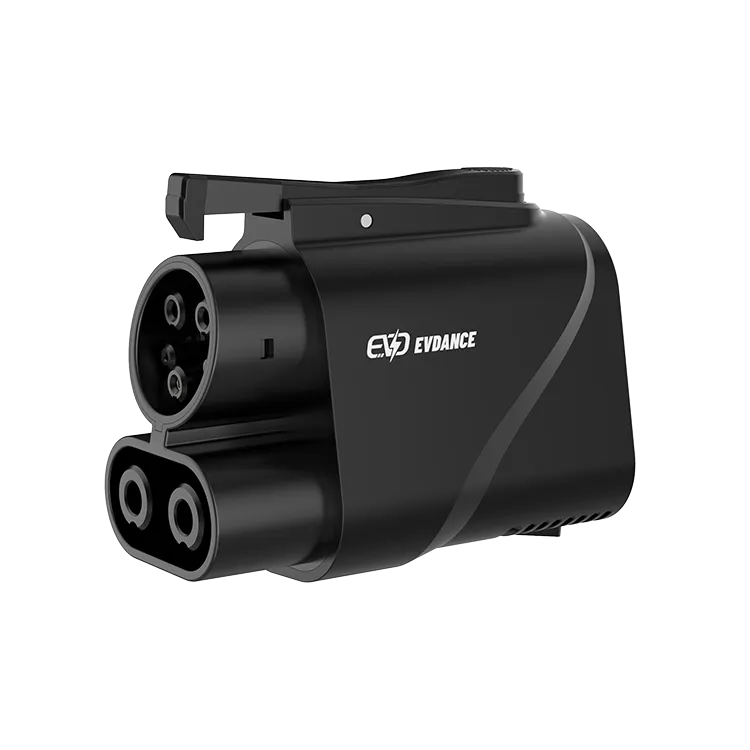
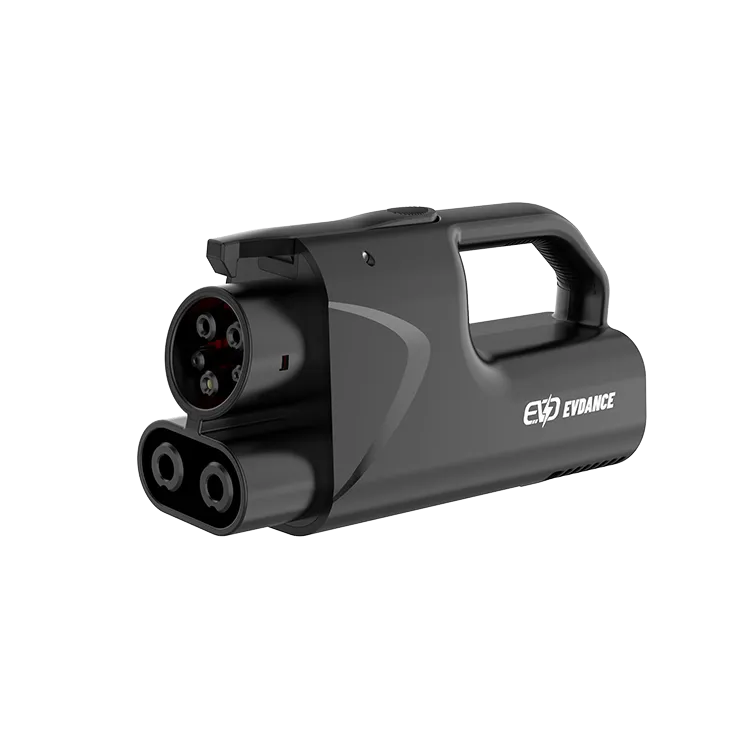
- JT08 (no handle) and JT09 (with handle) are the EVDANCE options in this class.
The Adapter Class You Are Shopping For
Superchargers deliver DC. Your CCS1 inlet accepts DC through its two large lower pins — the part of the inlet an AC adapter never touches. The shopping category is narrow, and the common buying mistake is shopping outside it:
| Adapter | What it connects | At a Supercharger? |
|---|---|---|
| NACS-to-CCS1 DC adapter | A CCS1 car’s DC inlet to a NACS DC station | Yes — this is the one, under the two conditions |
| NACS-to-J1772 AC adapter, such as the JT02 | A J1772 car’s AC inlet to NACS destination and home chargers | No — AC only; it can never carry a DC session |
| J1772-to-NACS adapter | The opposite direction — a NACS car at a J1772 charger | No — wrong direction entirely |
The adapter changes connector shape only: it converts nothing, adds no power, and cannot give a car a DC inlet it does not have. If your car has no CCS1 inlet, no adapter makes this journey possible.
Three Checks Before You Buy
| Check | Where it lives | What settles it |
|---|---|---|
| 1. Maker approval | Your car maker’s current owner documentation and adapter guidance | The maker approves third-party DC adapters — or names its own — for your exact model. Silence means not yet; ask before spending |
| 2. Station access | The network operator’s current site information | The Supercharger sites you plan to use are open to your car. Access is granted site by site and changes over time |
| 3. Stated ratings | The adapter’s own product specification | Its stated current and voltage cover DC fast charging. A session runs at the lowest of the station’s output, your car’s acceptance and the adapter’s rating — the adapter is a ceiling, not a boost |
Buy only when all three say yes. An adapter bought on check three alone — the right shape with strong ratings — is still unusable if your maker’s document does not approve it or the site is closed to your car. Adapter safety in general, including the listing to look for, is covered in are EV charging adapters safe?
The Two EVDANCE Options
The EVDANCE JT08 is a NACS-to-CCS1 DC adapter rated up to 500 A / 1000 V, IP66, without a handle. The EVDANCE JT09 is the same class with a handle, rated up to 500 A, IP66. The stated difference between them is the handle; the choice is handling preference, not capability. Both carry the two conditions, restated because they are part of the purchase: use them only where your vehicle maker approves a third-party DC adapter for your exact car, and only at a station open to your car. The JT02 is not a cheaper route to the same journey — it is an AC adapter (up to 80 A, IP65) for destination and home charging, and it has no place at a Supercharger.
Frequently Asked Questions
My car maker sells its own adapter. Do I have to buy that one?
What matters is the approval, not the badge. If your maker’s document approves third-party DC adapters for your car, an adapter from another maker that meets the stated ratings is within that approval. If the document names only the maker’s own adapter, that is the approved route — follow the document.
Will the adapter give me the Supercharger’s full speed?
No adapter adds speed. The session runs at the lowest of three numbers: what the station delivers, what your car accepts, and what the adapter is rated for. For most CCS1 cars the car’s acceptance is the ceiling, and the adapter’s rating exists to stay above it.
The site near me is not open to my car yet. Should I buy the adapter now?
Only if the other checks already pass and you have open sites you will use. Access changes over time and is decided by the operator; an adapter bought for a closed site is a purchase waiting on someone else’s announcement.
Related Reading
- Are EV Charging Adapters Safe?
- Is the Tesla Charger NACS? NACS, J3400 and Adapters Explained
- Can I Use a Tesla Charger for Other Cars?
- Can a Tesla Use J1772 Chargers?

