
No chart can size the cable for an 11 kW three-phase charger, because the size comes from your installer’s calculation — but this class starts that calculation from a number many readers do not expect: 16 amps on each of three phases. Most 11 kW three-phase charging plugs into a CEE socket, so the live question is not which cable to buy, but whether the circuit behind that socket was designed for this load.
Key Takeaways
- An 11 kW three-phase charger draws 16 A per phase — a different wiring class from 22 kW three-phase and from single-phase 11 kW.
- No cable size can be quoted for the class: a new circuit’s cable comes from the installer’s calculation.
- Most 11 kW three-phase charging is plug-in, so the real check is the existing socket circuit — its rating, dedication and fitness for a continuous load.
- Match the CEE class of charger and socket as a pair, and have the circuit confirmed before relying on it.
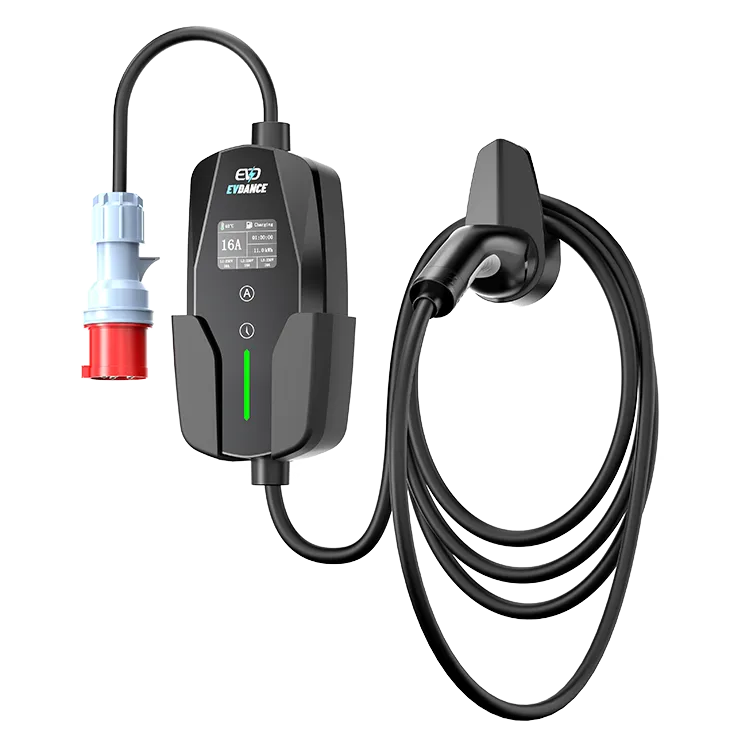
16 Amps per Phase: The Class 11 kW Lives In
Three-phase power splits the work across three phases, so each conductor carries a third of the current a single-phase supply would need for the same power. That is why “11 kW” describes two very different installations:
| Charging class | Current the wiring carries | Where you meet it |
|---|---|---|
| 11 kW, three-phase | 16 A on each of three phases | Europe’s smaller three-phase class |
| 22 kW, three-phase | 32 A on each of three phases | The full-power three-phase class |
| About 11 kW, single-phase | About 48 A on one pair of conductors | High-power single-phase home charging in North America |
Our single-phase vs three-phase explainer sets the classes side by side. The per-phase figure is also the first check on any quote: a design quoting 32 A per phase for this charger is describing the 22 kW class.
The Question Behind the Question: The Socket Circuit
Most 11 kW three-phase chargers in Europe are plug-in portables with a CEE plug, and a plug-in unit has no supply cable for you to choose — its lead is part of the listed product. The cable that matters is already in the wall: the circuit feeding the socket, specified when it was installed — for whatever it was installed for, which may or may not have been hours of continuous EV charging. So the checks at this class are about that existing circuit, and they are read-only:
- The socket’s own rating. CEE sockets come in 16 A and 32 A classes, marked on the socket; the charger belongs with its own class — the CEE plug guide explains the two.
- Whether the circuit is dedicated. A socket sharing its circuit with workshop machinery differs from one wired for the charger alone.
- Whether it suits a continuous load. Charging draws full current for hours; a circuit fitted for intermittent tools has not automatically been assessed for that duty. Your installer confirms it from the circuit’s design, not its label.
For a new circuit, the installer’s calculation decides the cable — from the per-phase current, the run, the installation method and your local code, the inputs our guide to wire sizes for EV chargers walks through. There is no “11 kW size” to order in advance.
Two EVDANCE Portables, One Class Apart
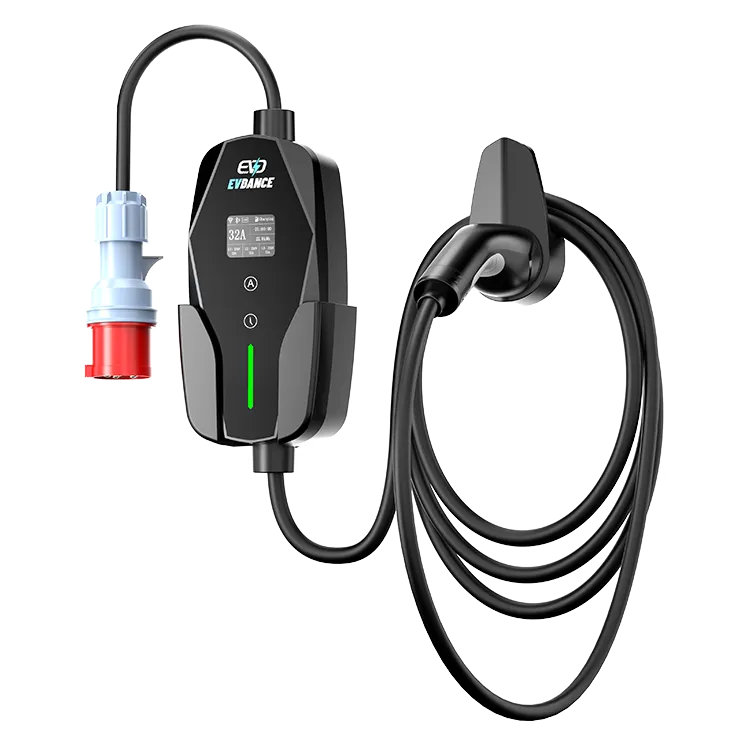
The ACS1605PE is the 11 kW class in portable form: 16 A three-phase, CEE five-pin plug, Type 2 connector, 7.6 m cable, IP66, with a 1.77-inch display. Its sibling, the EV-ACS3205PE, is the same idea one class up: 22 kW, 32 A per phase, CEE 32 A plug, IP66. Neither asks you to specify a supply cable; both move the question to the socket circuit behind them. A hardwired 11 kW wallbox is the same story from the other side: its supply cable runs into the unit, as part of the installer’s specification.
Frequently Asked Questions
A forum gave me one cable size for 11 kW. Why won’t this article?
Because the size turns on your run length, installation method and local code. At this class the more useful check is whether your existing circuit was designed for a continuous 16 A-per-phase load.
My CEE socket is the 32 A class. Is that a problem for an 11 kW charger?
The plug classes are physically different, so charger and socket must match as a pair. Which class a site has — and whether its circuit suits charging — is the installer’s check, not something to adapt around.
Is 11 kW three-phase easier on a house than 11 kW single-phase?
On the wiring, yes: the current spreads as 16 A per phase instead of roughly 48 A on one pair. The total energy is the same, and load balance across phases is part of the installer’s design.
Related Reading
- Single-Phase vs Three-Phase EV Charging: 7 kW, 11 kW and 22 kW Explained
- CEE Plugs Explained: Choosing 16A or 32A for a Three-Phase Portable EV Charger
- What Size Wire Do You Need for an EV Charger?

