
A CCS2 to GB/T adapter is a device sold to let a car with a GB/T inlet — the charging standard of the Chinese market — plug into CCS2 infrastructure, the DC fast-charging system built on Europe’s Type 2 plug. Two very different products hide behind the name: AC versions that only reshape the plug, and DC versions that claim to translate between two charging languages. The first can work within limits; the second is a grey-market claim no car maker stands behind. EVDANCE sells neither.
Key Takeaways
- “CCS2 to GB/T adapter” names two products: a workable-with-care AC shape adapter and a DC translation claim.
- DC fast charging fails on language, not shape — GB/T and CCS negotiate in different protocols.
- No car maker approves a DC adapter between them; verify any claim with your car’s maker in writing before buying.
- EVDANCE sells no such adapter; it builds chargers to each destination market’s standard instead.
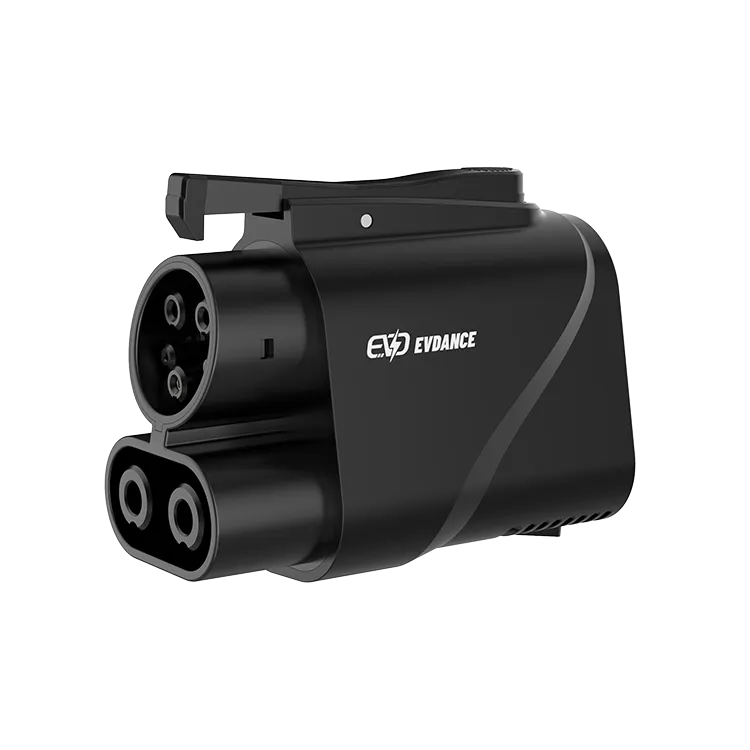
Two Products Hide Behind One Name
“CCS2” describes a combined inlet: a Type 2 section for AC charging, with two DC pins beneath it. An adapter sold under this name may address either half, and the two halves are not equally adaptable.
| Version | What it connects | What has to be true |
|---|---|---|
| AC adapter | A Type 2 AC post to the car’s GB/T AC inlet | Correctly rated for the car’s AC charging; AC is the simpler, slower session |
| DC adapter | A CCS2 fast charger’s DC plug to the car’s GB/T DC inlet | Active translation of a live, safety-critical negotiation between two protocols, at fast-charging current |
Listings rarely separate the two clearly. A product photographed next to a fast charger may still be an AC-only device, so the first check on any listing is which half of the inlet it actually serves. Our guide to whether EV charging adapters are safe sets out the general checks that apply to any adapter.
Why the DC Version Is a Protocol Problem, Not a Plug Problem
A DC fast-charging session is a conversation. Before current flows, car and charger confirm the connection, and the car then requests voltage and current continuously as the session runs. GB/T runs that conversation over its own CAN-bus-based protocol; CCS uses power-line communication. The connector shape is only half of each standard — the language is the other half, and the languages do not match.
That is why a DC “adapter” between them cannot be a passive piece of metalwork. It would need active electronics translating between protocols inside the highest-current connection the car has. No car maker lists such a device among its approved accessories, and its seller cannot certify how your car’s inlet, battery controls or warranty position respond. Treat every DC claim here as unverified until your car’s maker confirms it in writing, for your exact model.
Checks Before Believing a Listing
- Which half? Confirm in the seller’s specification whether it is AC-only or claims DC, and its current rating.
- Whose standard? Ask which published standard the adapter is built and tested to, and who did the testing.
- The car maker’s position. Ask the maker of your car, in writing, whether the device is approved for your model — and keep the answer with the car’s documents.
- The warranty question. A translated session is what warranty disputes turn on; get the position before buying, not after a fault.
The EVDANCE Position, Stated Plainly
EVDANCE sells no CCS2 to GB/T adapter and no GB/T product for export markets. Where a genuine consumer DC adapter exists, it works inside one communication family: the JT08 NACS-to-CCS1 DC adapter (up to 500 A / 1000 V, IP66) bridges NACS and CCS1 because both sides already speak the same language — and even it is sold for use only where the automaker approves it. For cars and chargers that cross regions, EVDANCE builds equipment to the destination market’s standard instead — see the full product range, organised by market for that reason.

Frequently Asked Questions
Is there an official CCS2 to GB/T adapter?
No car maker sells or approves one. These are third-party products, and the DC versions rest on their sellers’ translation claims — not on any car maker’s endorsement.
Can one make my Chinese-market EV fast-charge in Europe?
That is exactly the claim to distrust: the obstacle is the protocol, not the plug shape, and a translating device carries the approval and warranty problems above. Plan as if public DC fast charging abroad is unavailable to a GB/T car.
Is the AC version a different story?
Partly. AC is a simpler session, and correctly rated AC equipment for a GB/T inlet can be workable — rating matched to the car, maker’s position checked first. It solves home and destination charging, never fast charging.
Related Reading
- Are EV Charging Adapters Safe?
- Type 2 vs J1772 vs NACS: Which EV Charger Connector Does Your Market Need?
- Are EV Chargers Universal?
- Is the Tesla Charger NACS? NACS, J3400 and Adapters Explained

