
A J1772 adapter is a small, passive AC adapter with a J1772 socket on one side and a NACS plug on the other. It lets a car with a NACS inlet charge from the much older J1772 network — home wallboxes and public Level 2 stations — by passing the charger’s power and signals straight through. It converts nothing, works in one direction only, and never applies to DC fast charging.
Key Takeaways
- A J1772 adapter bridges a J1772 charger to a NACS-inlet car, for AC charging only.
- Adapters are one-direction parts; the NACS-to-J1772 direction is a different product.
- It changes nothing about speed — the charger and the car’s onboard charger set that.
- Match the current rating, buy a certified part, and follow the car maker’s approval.
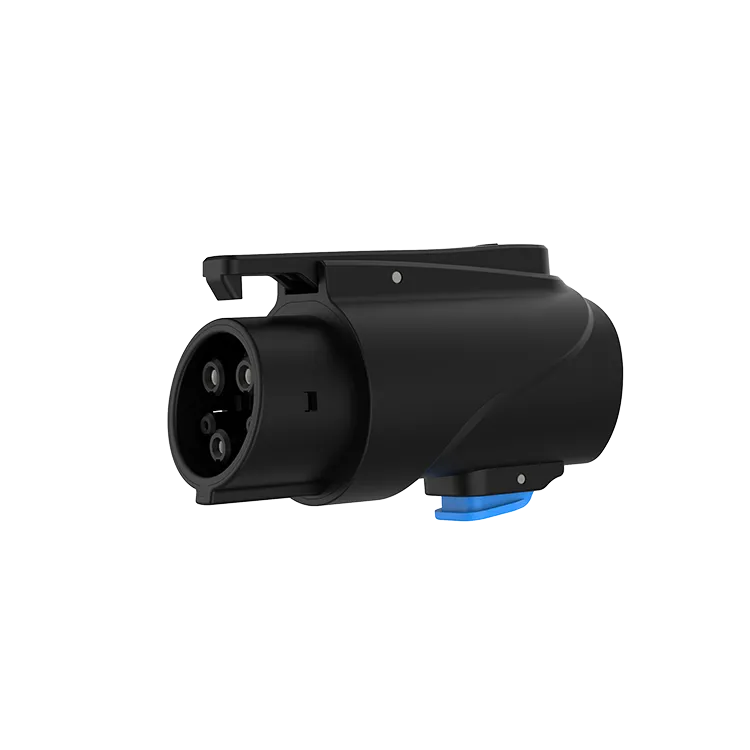
Two Adapters With Almost the Same Name
“J1772 adapter” causes real confusion, because both directions exist and the parts are not interchangeable. The name follows the charger you start from. Our explainer on what J1772 is covers the plug itself; the adapter family looks like this:
| Adapter | Charger end | Car end | Charging type |
|---|---|---|---|
| J1772 adapter (this article) | J1772 plug | NACS inlet | AC Level 1 and Level 2 only |
| NACS-to-J1772 adapter | NACS plug | J1772 inlet | AC only |
| NACS-to-CCS1 DC adapter | NACS DC fast charger | CCS1 inlet | DC fast charging, only where the automaker approves |
If your car has a NACS port and your home or workplace charger has a J1772 cable, the first row is the part you need — as our guide to whether a Tesla can use J1772 chargers shows in use. One adapter cannot serve both directions, and adapters should never be stacked together.
What It Cannot Do
- It does not enable DC fast charging. The J1772 connector carries AC power only. DC fast charging on the other standard uses a different, much heavier adapter.
- It does not change your charging speed. The session is still set by the station’s output and the car’s onboard charger — typically 7 to 19 kW on Level 2, per U.S. DOT figures. The adapter is a bridge, not a booster.
- It is not a travel plug converter. Adapters made for EV charging are rated for continuous charging current. Generic travel adapters are never suitable for charging a car.
Ratings and Approval: What to Check Before You Rely on One
- Current rating. EV charging is a continuous load, so the adapter’s rating must cover the full output of the chargers you will use — a unit rated below the station will cap every session or overheat.
- Certification. Choose a listed, certified part made for EV charging, and inspect the pins and latch for wear or damage. Our article on whether EV charging adapters are safe sets out the full checks.
- Car-maker approval. Many NACS cars are supplied with this adapter by the manufacturer. If yours was not, check the car maker’s guidance before buying a third-party one — approval is what protects your warranty position.
- Weather sealing. Public charging happens outdoors. Check the adapter’s stated protection rating rather than assuming it matches the charger’s.
The Same Bridge From EVDANCE — and the Native Options
EVDANCE builds the reverse direction: the EVDANCE JT02 adapter takes a NACS charger to a J1772 car for AC charging, up to 80 A, rated IP65. If your household is standardising on one connector, a native charger removes the adapter from every session: the EVDANCE EV-AC04001U 40A J1772 portable charger for J1772 cars, or the EVDANCE EV-ACS4005T 40A NACS portable charger for NACS cars.

Frequently Asked Questions
Does a J1772 adapter slow down charging?
No, provided its current rating covers the charger’s output. Charging speed is set by the station and the car’s onboard charger; the adapter only has to not be the lowest-rated link in the chain.
Can I use a J1772 adapter at a DC fast charger?
No. It is an AC-only part for Level 1 and Level 2 charging. DC fast charging across standards needs a dedicated DC adapter, used only where the automaker approves it.
Does a J1772 adapter come with the car?
Often, yes — many cars with a NACS inlet are delivered with one in the kit. Check the boot and the delivery paperwork before buying a second one.
Related Reading
- What Is J1772? The North American EV Plug Explained
- Can a Tesla Use J1772 Chargers?
- Are EV Charging Adapters Safe?
- Is the Tesla Charger NACS? NACS, J3400 and Adapters Explained

