
No DC charger is portable the way an AC cord set is portable — nothing that converts power at DC scale fits in a travel bag. When a DC unit is sold as “portable”, the word means a compact DC charger built to be repositioned between prepared supply points: workshop bays, depot corners, event sites. The portability is in the cabinet’s frame, not in where it can plug in.
Key Takeaways
- “Portable” at DC power means repositionable between prepared supply points — never carry-anywhere.
- The input supply line on the specification is the tell: a three-phase-class feed means the site is prepared first.
- Read the DC connector variant and the rated power from the exact unit’s stated figures; assume neither.
- EVDANCE’s DC unit is a fixed floor-standing install; its portable range is AC.
Two Meanings of Portable
| Portable AC charger | “Portable” DC charger | |
|---|---|---|
| Carried how | In a bag, in the boot, by one person | By trolley, castors or crew, between fixed points |
| Plugs into | A household or industrial socket, as found | A prepared supply point, installed for it in advance |
| Where conversion happens | In the car — the unit is a protected, communicating switch | In the unit — it carries the rectifier itself |
| Typical job | Overnight charging wherever you stay | DC sessions at workshops, depots and temporary sites |
The dividing line is the conversion. An AC portable stays small because the car does the heavy work, as our explainer on what an EV mobile charger is sets out. A DC unit moves that work into its own cabinet — rectifier, control and cooling included — which is why it arrives on wheels rather than in a bag.
The Supply Test
One line on the specification separates the two meanings: what the unit plugs into. If a “portable” DC charger’s documents call for a substantial three-phase-class feed at a connection point prepared by an electrician, the unit travels between sites made ready for it — not between sockets. Each new home for the unit needs its supply point first. A listing that hides the input requirement is hiding the main fact about the product; ask for it in writing.

Where Repositionable DC Earns Its Keep
- Workshops and service bays that DC-charge cars under test or repair, and want the unit at the bay that is free.
- Fleet depots bridging the months before a fixed installation lands.
- Events and temporary sites where power distribution is brought in anyway and the charger follows the layout.
- Demonstration and rental fleets, where the unit’s job is to be somewhere different next month.
Every case shares one condition: someone prepared the supply point before the unit arrived — flexible hardware on top of inflexible power.
Reading a “Portable DC” Specification
- DC connector variant. A stated field on the exact unit — read which DC connector it carries and match it to your cars. A listing that does not state it has not answered the first question; get it in writing.
- Rated power. These units sit in the small-DC class. The U.S. DOT’s DC fast band runs 50–350 kW; a unit below that band is compact DC, whatever its marketing calls it, and delivers accordingly.
- Input supply. The feed the unit requires — the line that tells you what each new site will cost in preparation.
- Session features. Anything beyond the conversion itself — access control, metering, networking — is present only where the listing states it.
Where EVDANCE Sits: Fixed DC, Portable AC
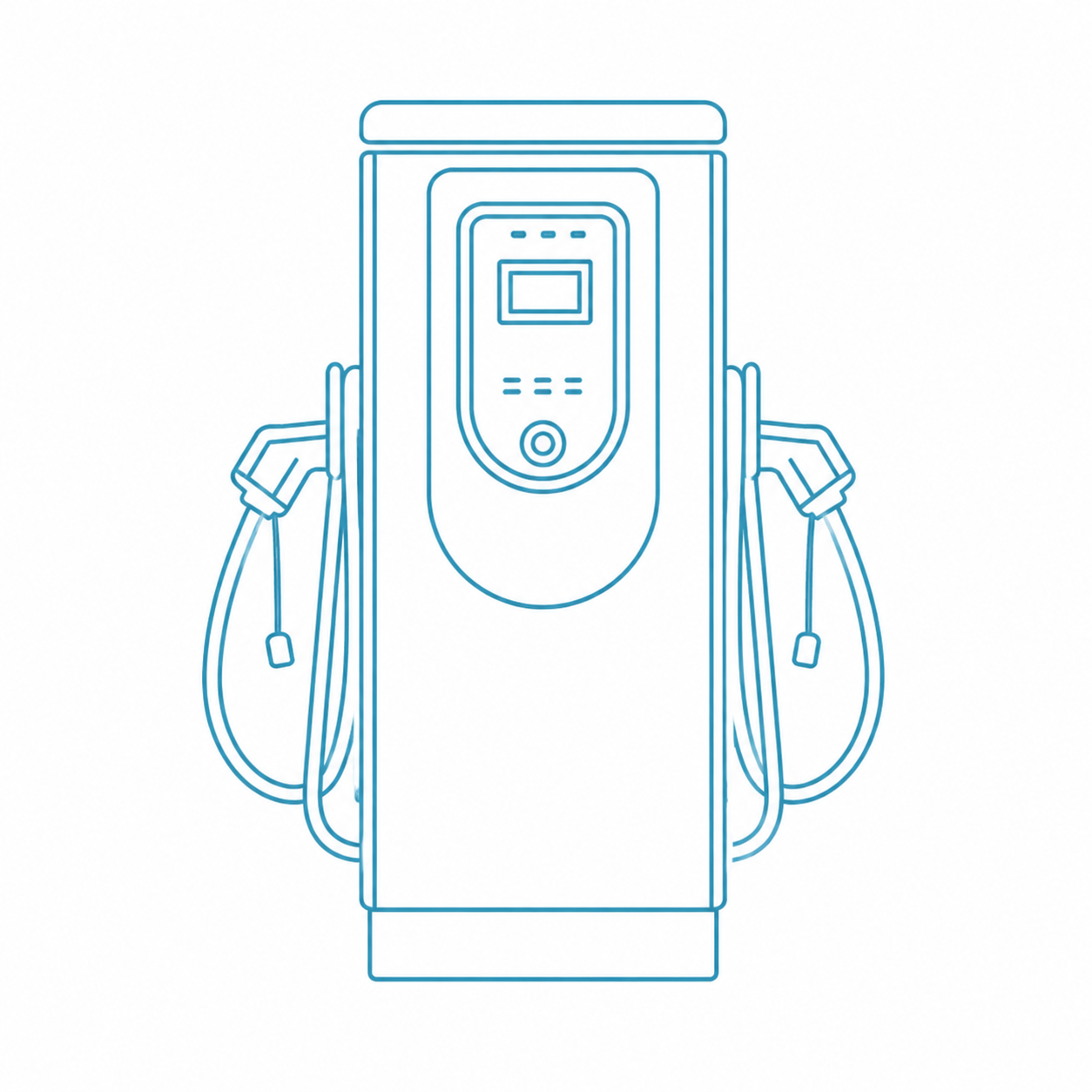
EVDANCE’s DC charger, the EV-RHDC30K-L, is on the fixed side of the line: a floor-standing compact DC unit (22 kW DC, OCPP 1.6J, IP54) that an electrician installs once at its supply. There is no portable DC model in the range. The portable range is AC — for example the EV-ACS3205PE 22 kW three-phase portable (CEE 32A plug, Type 2, IP66), which travels in a boot precisely because the car does the conversion. The full range is on our products page.
Frequently Asked Questions
Can I take a portable DC charger to a hotel or campsite?
No. It needs a prepared supply point, not a socket you find on arrival. For travel, carry an AC portable; DC charging on a trip means public stations, whose cables are always attached.
Is a compact DC charger the same as a portable DC charger?
No. “Compact” describes the power class and cabinet size; “portable” describes being built for repositioning between prepared points. Most compact DC units — the EV-RHDC30K-L included — are fixed installations.
Do portable DC chargers charge as fast as highway fast chargers?
No. They sit in the small-DC class, below the DOT’s 50–350 kW DC fast band. Expect a faster session than any AC charger, not a corridor stop — and take the exact rate from the unit’s stated figures.
Related Reading
- What Is an EV Mobile Charger?
- Do EV Charging Stations Have Cables?
- Does J1772 Work With CCS? CCS Connectors Explained
- Which EV Charging Cable Do I Need?
Sources & Standards
For buyers: EVDANCE is a DC fast charger manufacturer in Shenzhen — our 22 kW commercial DC charger, with samples before bulk orders.

