
A solar charging canopy is a roof built over parking bays with photovoltaic (PV) panels on top and EV chargers underneath. The panels generate electricity a few metres above the cars that use it, feeding the chargers first and the site or the grid after that. It turns land that is already a car park into a small power station — no spare field or roof required.
Key Takeaways
- A solar charging canopy puts PV panels on a roof over parking bays, feeding the chargers below.
- It suits sites whose roofs cannot take panels but whose car parks sit full through the day.
- It is grid-connected construction, not an off-grid promise — output follows weather and season.
- The chargers underneath are standard AC or DC units; the canopy changes the power source, not the plug.
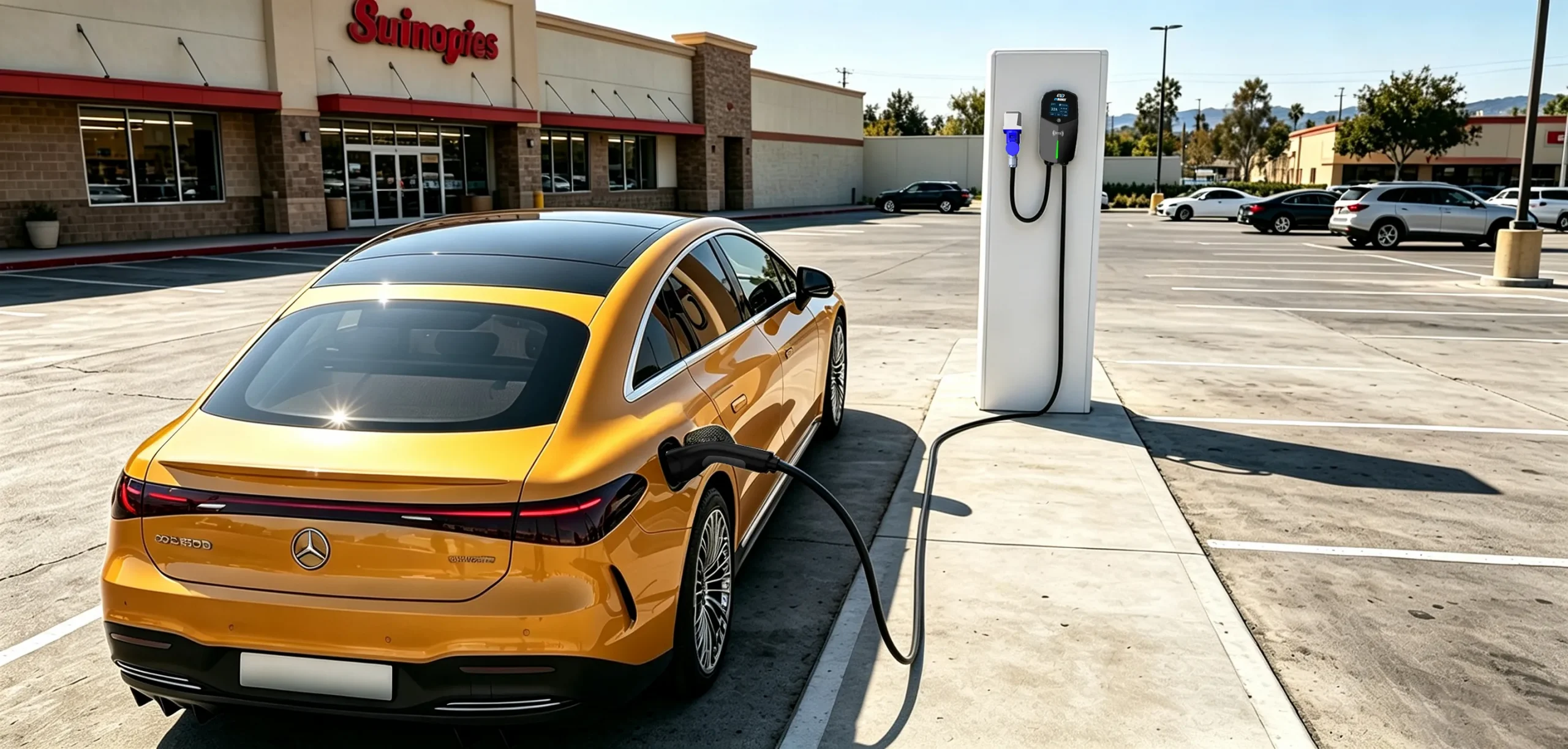
How a Solar Canopy Is Put Together
A canopy project is a small building job plus a solar job plus a charging job. The main parts:
| Part | What it does |
|---|---|
| Canopy structure | Steel columns and a roof frame over the bays, engineered for wind and weather like any small building. |
| PV panels | Mounted on the canopy roof, tilted for drainage and sun, generating DC power in daylight. |
| Inverter | Converts the panels’ DC output into AC the chargers and building can use, and manages export to the grid. |
| Chargers | Ordinary AC posts or wallboxes on the columns, or DC units for faster turnover — the same equipment as any site installation. |
| Battery storage (optional) | Stores midday surplus for evening charging or other loads; many canopies are built without one. |
Why a Site Chooses a Canopy Instead of a Roof
Rooftop solar is the default in our guide to solar panels and EV chargers, but plenty of sites cannot use it: the roof is too small, shaded, ageing or structurally spoken for. A canopy solves the siting problem because the generation sits directly above the load. Cars park under the panels all day — exactly when a workplace or retail car park is full — and drivers get shade and weather cover as a side benefit. Typical owners are employers electrifying a staff car park, retailers adding destination charging, and fleet operators whose vans return to a yard, the setting in our fleet depot charging guide.

What a Canopy Can and Cannot Do
Three honest limits apply. First, generation follows the weather and the season: output is strongest on bright days and weakest in winter, so a canopy offsets part of a site’s charging energy rather than guaranteeing it — the chargers stay grid-connected, as on any commercial site in how commercial charging stations work. Second, the structure is real construction: foundations, steelwork and electrical works cost more than bolting panels to an existing roof, so the numbers have to be run like any other project in commercial installation costs. Third, planning and grid-connection approvals apply to the canopy just as they do to the chargers. What it does well is combine three things a site often wants at once — covered parking, on-site generation and charging — on land that was already paved.
The Chargers Under the Canopy
Because the chargers are standard equipment, a canopy project can mix speeds to suit dwell times: Level 2 AC, typically 7–19 kW per the U.S. DOT bands, for cars parked for hours, and compact DC where turnover is fast. EVDANCE supplies both sides of that mix — the EV-AC03201T dual-connector AC station (up to 43 kW shared, OCPP 1.6J, RFID) for rows of bays, and the EV-RHDC30K-L compact DC charger (22 kW) where one faster point is needed. Our commercial EV charging page is the starting point for site projects.
Frequently Asked Questions
Can a solar canopy run chargers completely off-grid?
That is not how they are normally built. Canopies are grid-connected: solar power is used first, the grid covers cloudy spells and evenings, and surplus can be exported. A battery can shift some energy into the evening, but the grid connection is what guarantees the chargers always work.
How is a canopy different from a solar carport at a house?
Scale and ownership. A home carport array serves one household’s charger. A charging canopy is a commercial structure over many bays, feeding several chargers and often the building too, with the planning, structural and grid paperwork that commercial work involves.
Do the cars have to be there in the daytime?
For the solar energy to go straight into cars, yes — which is why canopies suit workplaces, retail and depots, where vehicles sit parked through the bright hours. Energy generated when no car is plugged in is not wasted: it supplies the building or is exported.
Related Reading
- Solar Panels and EV Chargers: How to Charge Your Car With Sunshine
- Fleet Depot Charging: How to Size AC Chargers for Vans and Light Commercial Vehicles
- How Do Commercial EV Charging Stations Work?
- How Much Does It Cost to Install a Commercial EV Charging Station?

