
An EV charging power bank is a battery box with an output an electric car can use: stored energy you carry to the car, instead of supply equipment that connects the car to a socket. The name covers two different products, and both hold only a small fraction of a car’s battery — a car battery is a tens-of-kilowatt-hours device. So the honest unit for judging one is a few miles of top-up, not a refill. Our article on charging an EV with a portable battery works through whether it is worth doing; this one is about what you are buying when a listing says “power bank”.
Key Takeaways
- The name covers two products: a power station feeding your own charger, and a purpose-built battery charger.
- Judge any listing by stored energy, continuous output and the output story — in that order.
- The fraction of your car’s battery is the honest measure; the answer is a few miles of top-up.
- EVDANCE sells the charger half of the pairing, not the battery box.

Two Products Behind One Name
| Power station with an AC outlet | Purpose-built battery charger | |
|---|---|---|
| What it is | A general portable power station — the camping and backup box — whose AC outlet a portable charging cable can plug into | A battery unit built for EVs, with the charging connector and control gear built in |
| What does the car talk to? | Your own portable charger, plugged into the box as if it were a wall socket | The unit itself — it is the charger and the store in one case |
| Typical buyer | Someone who wants one box for camping, tools and a small EV margin | Fleets, roadside operators and drivers who want a dedicated emergency store |
| The shared limit | The store is the ceiling. When it is spent, the session ends, wherever the car has got to. | |
The Three Numbers That Decide
- Stored energy. The kilowatt-hour figure on the listing, set against your car’s battery size, which is in the car’s documents. Divide one by the other: the fraction of a charge the box can ever give, before losses. No marketing phrase survives that fraction.
- Continuous output. The store must also flow at a rate a charger can use, steadily, for hours. The realistic pairing is Level 1 pace — about 1 kW, roughly 2–5 miles of range per hour on U.S. DOT figures. A box that cannot sustain even that is a phone charger with ambitions.
- The output story. A plain AC socket means your own portable charger does the safety checks and the car talk — and its checks decide whether the box’s supply is accepted at all. A built-in EV connector means the box does that work itself. Either way, “has an outlet” and “will run a charging session” are different claims.
What It Is Honestly For
Judged as a top-up, the category makes sense. Campers use the margin to get home instead of to a stranger’s socket. Drivers on thin charging routes carry one as a stranding buffer — enough to reach the next town’s charger. Event and fleet operators keep larger battery units as mobile stores, the class our explainer on what an EV mobile charger is describes in service form. What the category is not is a home-charging substitute: a box refilled from the wall after every use is a slower, lossier wall socket with extra steps. And a car that can export power through vehicle-to-load already carries a far larger store, as our bidirectional charging explainer sets out.
Where EVDANCE Fits
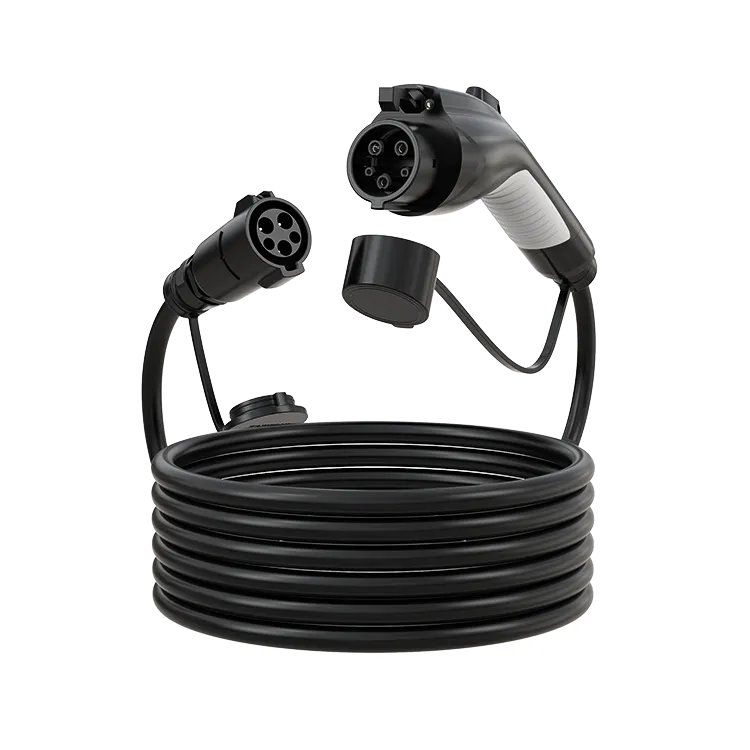
EVDANCE sells chargers, not power banks — nothing in the range stores energy. Its portable chargers are the other half of the first product above: the unit a power station feeds. Models such as the EV-AC04001U (40 A J1772, 9.6 kW, NEMA 14-50P, IP66, 25 ft) draw from a supply — a wall outlet all night, or a battery box until the box is empty. The full range is on our products page.
Frequently Asked Questions
Can an EV charging power bank fully charge my car?
No. Do the fraction: the box’s stored energy divided by your car’s battery size. For any box you can carry, the answer is a small percentage — a top-up measured in a few miles, which is the job the category is honestly for.
Can I recharge the power bank from a solar panel?
Many units accept a panel input; it works, slowly, in proportion to the panel. It changes how the store refills, not how much of a car charge the store holds.
Is a home battery wall the same thing, bigger?
The same physics at a larger fraction: a fixed home battery holds more than a carry box, but it is still a store emptied into a bigger store — which is why homes charge cars from the grid and keep the battery for the house.
Related Reading
- Can You Charge an EV With a Portable Battery or Power Bank?
- What Is an EV Mobile Charger?
- Bidirectional Charging Explained: V2L, V2H and V2G

