
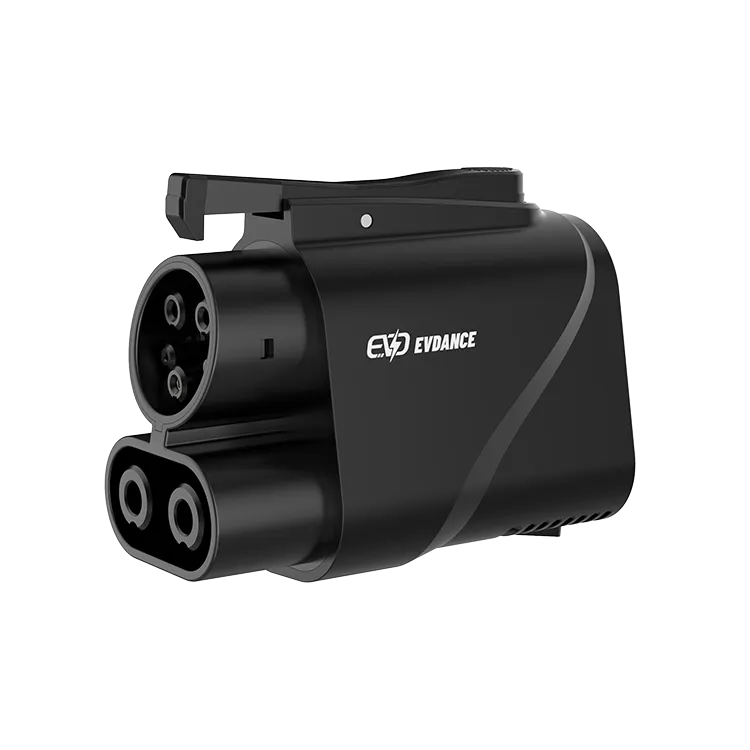
CCS1 charging is charging through the Combined Charging System Type 1 — the North American system that gives a car one inlet for both kinds of charging. The upper part is the familiar J1772 connector, carrying AC for home and destination charging. Below it, two large added pins carry DC for fast charging. One socket, two power paths.
Key Takeaways
- CCS1 combines AC and DC in one inlet: J1772 on top for AC, two added pins below for DC.
- On AC the car converts the power; on DC the station does, and DC flows straight to the battery.
- CCS1 is North America’s combined system, and NEVI-funded DC ports must offer it.
- A CCS1 car charges at home through the same inlet — the DC pins are only for fast charging.
One Inlet, Two Jobs
“Combined” is the whole idea. Instead of separate sockets for slow and fast charging, CCS1 stacks them: the AC pins you use at home sit on top, and the DC pins below wake up only at a fast charger. What changes is where AC becomes DC — in the car on AC, in the station on DC.
| AC charging (J1772 section) | DC fast charging (added pins) | |
|---|---|---|
| Where it happens | Home, workplace, destination posts | Public fast-charging stations; the cable is tethered to the unit |
| Who converts AC to DC | The car’s onboard charger | The station — DC flows straight to the battery |
| Typical power (U.S. DOT classes) | Level 2: 7–19 kW, about 10–20 miles of range per hour | 50–350 kW, about 180–240 miles of range per hour |
| What limits the speed | The car’s onboard charger and the circuit feeding the post | The lower of the station’s rating and the car’s DC maximum |
How the J1772 section physically fits the combined inlet is covered in our explainer on whether J1772 works with CCS; this article stays at the system level.
Where CCS1 Fits in North America
CCS1 is built on North America’s Type 1 (J1772) plug, so it is the DC standard of the North American fleet. Its European sibling, CCS2, applies the same idea to the Type 2 inlet — same concept, different shape, and the two do not fit each other. The wider landscape is compared in Type 2 vs J1772 vs NACS.
CCS1 also carries a regulatory role. Under the NEVI rule (23 CFR Part 680), federally funded corridor stations must provide CCS1 on their DC ports, alongside 24/7 operation, contactless payment and average annual uptime above 97%. Even as the market adds other connectors, CCS1 remains the funded network’s required plug — and the inlet on a large share of North American EVs.
What a CCS1 Fast-Charging Session Looks Like
At a DC station the cable belongs to the unit: park, plug the combined connector in until it seats, start the session on the unit or its app, unplug when you have enough. Before power flows, car and charger exchange data and agree the current the car will accept, monitored throughout. As the battery fills the car asks for less — why charging slows after 80% on every DC standard. At home, the same inlet ignores its DC pins and charges on AC.
EVDANCE Hardware Around the CCS1 Inlet
Two EVDANCE products meet the CCS1 car from opposite sides. The JT08 and JT09 are NACS-to-CCS1 DC adapters (up to 500 A, IP66; the JT09 adds a handle): they let a CCS1-inlet car charge at a NACS DC station, including Superchargers open to that car — only where both conditions hold: the vehicle maker approves third-party DC adapters for the exact car, and the station is open to that car. For the AC half, the EV-AC04001U is a 40A J1772 portable charger (9.6 kW, NEMA 14-50P, IP66, 25 ft) for the inlet’s top section at home.

Frequently Asked Questions
Is CCS1 the same thing as J1772?
No. J1772 is the AC connector standard on its own; CCS1 is the combined system built on it — the J1772 section plus two DC pins. Every CCS1 inlet accepts a J1772 plug for AC; a plain J1772 inlet has no DC pins and cannot fast charge.
Can a CCS1 car charge at home?
Yes — through the same inlet, on AC, with a Level 1 cord or a Level 2 charger using the J1772 section. The DC pins work only at fast-charging stations, so a CCS1 car needs no second socket for daily charging.
Is CCS1 being replaced by NACS?
They coexist. Many makers are adopting NACS for new models, and adapters bridge the two systems under the conditions above. CCS1 is still required at NEVI-funded stations and fitted to a large existing fleet — plan around both, not a switch-off date.
Related Reading
- Does J1772 Work With CCS? CCS Connectors Explained
- What Is J1772? The North American EV Plug Explained
- Type 2 vs J1772 vs NACS: Which EV Charger Connector Does Your Market Need?
- How Fast Is a DC Fast Charger?

