
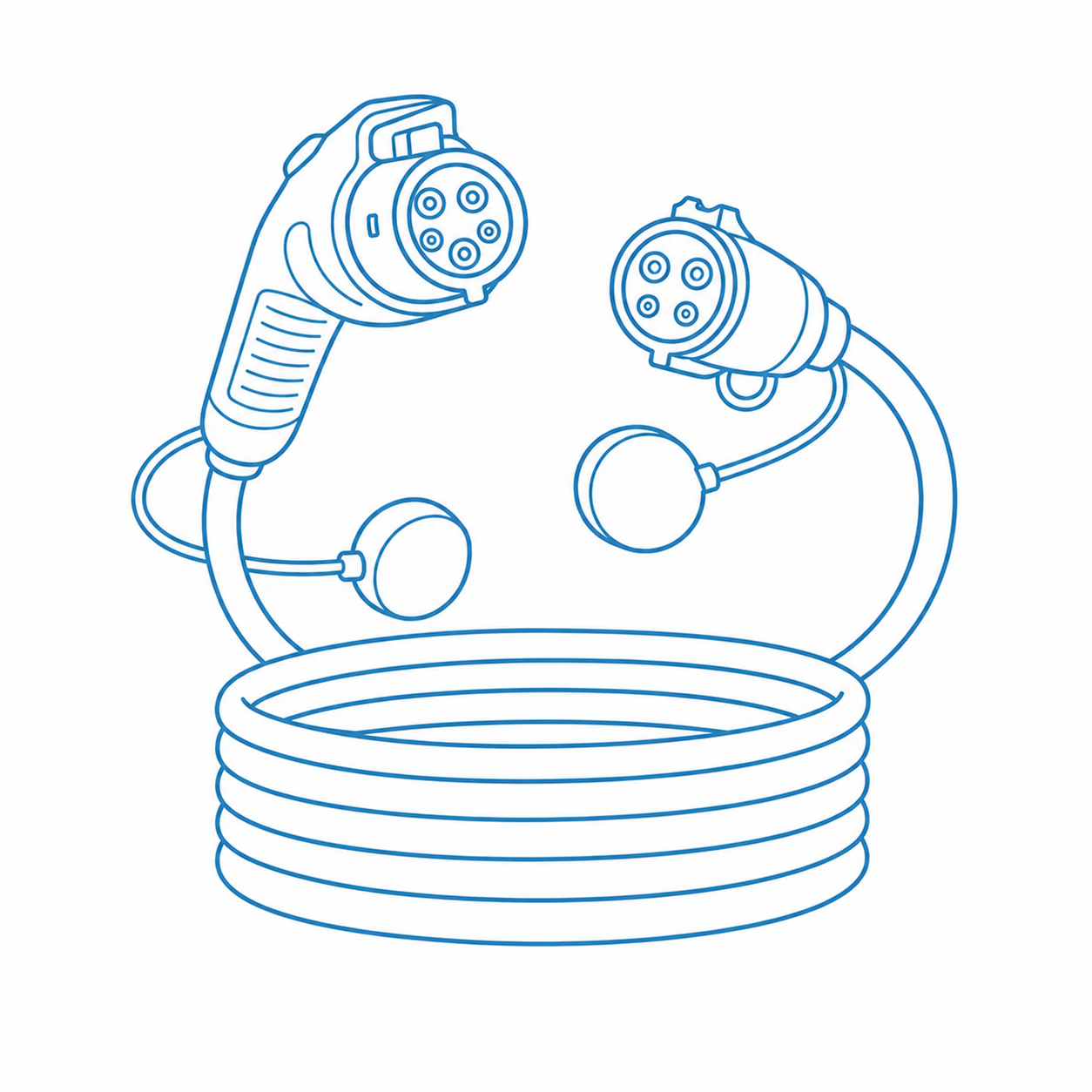
ChaoJi is a next-generation DC fast-charging connector being developed jointly by the CHAdeMO Association and China’s electricity industry council. It is designed as one harmonised successor to two existing systems: CHAdeMO, used mainly in Japan, and the GB/T fast-charging connector used in China. No car on sale today uses it — ChaoJi is a plan for the next generation, not a plug you will meet at a charger yet.
Key Takeaways
- ChaoJi is a joint CHAdeMO Association and China project: one DC connector designed to succeed both CHAdeMO and GB/T.
- It is a future-generation plan for Japan and China; no car on sale today has a ChaoJi inlet.
- CCS and NACS are separate regional tracks and are not part of the project.
- Buy cars and chargers for today’s connectors — new standards do not strand existing vehicles.

Why a Successor Was Needed
DC fast charging grew up in regional families. Japan standardised on CHAdeMO, China built its own GB/T system, and Europe and North America went with CCS and then NACS. Each family has its own connector, its own communication and its own installed base, and none of the plugs fits another family’s inlet. For the two Asian systems, the logic of a joint successor is simple: one shared design is cheaper to build cars and chargers for than two parallel ones, and a clean-sheet connector can add headroom for higher-power charging and newer safety and communication features that the older designs were not shaped for. ChaoJi is that joint project — a single new connector and inlet intended to serve both markets in place of two.
Where ChaoJi Sits Among Today’s Connectors
| Connector family | Where it is used | Relation to ChaoJi |
|---|---|---|
| CHAdeMO | Japan and early EVs worldwide | One of the two systems ChaoJi is designed to succeed |
| GB/T (DC) | China | The other system ChaoJi is designed to succeed |
| CCS1 / CCS2 | North America / Europe | Separate track — not part of the ChaoJi project |
| NACS (SAE J3400) | North America | Separate track — North America’s own standardisation path |
| ChaoJi | Planned for Japan and China | New harmonised design; not fitted to today’s cars |
The split in the table is the honest summary of where fast charging stands: the Japan–China track is working on ChaoJi, while North America has standardised the connector it already had, as our explainer on whether the Tesla charger is NACS sets out. A single worldwide DC plug is not part of any current plan.
What It Means for Drivers and Buyers
- Nothing to buy or check today. Cars and chargers on sale now use CHAdeMO, GB/T, CCS or NACS. ChaoJi belongs to future model generations in its home markets.
- Your current car is unaffected. A new standard does not strand existing cars; CHAdeMO and GB/T chargers will keep serving the cars built for them, in the same way older connectors remain in service elsewhere.
- Compatibility is a design goal, not a product. The project aims for orderly migration paths from both older systems, but until production vehicles and chargers exist, treat adapter promises as plans rather than accessories you can buy.
- Buy for today’s networks. The right connector question when choosing a car or charger is still which of today’s inlets it has — the comparison in our Type 2 vs J1772 vs NACS guide is the decision that matters now.
Chargers Are Bought for Today’s Standards
Standards projects run years ahead of hardware, and charging equipment is bought for the cars that exist. EVDANCE builds for the current families: the EVDANCE EV-ACS3210E 32A Type 2 portable charger serves Europe’s Type 2 cars at about 7 kW single-phase, and the EVDANCE EV-ACT3204PE 22 kW wallbox offers a tethered Type 2 cable for home and workplace charging. When a future connector reaches production cars, chargers follow the cars — not the other way round.
Frequently Asked Questions
Can I charge a car on ChaoJi today?
Not in practice. ChaoJi is a standards project aimed at future vehicles, mainly for the Japanese and Chinese markets. Public fast charging today runs on CHAdeMO, GB/T, CCS and NACS, and those are the inlets current cars are built with.
Will ChaoJi replace CCS or NACS?
No — it is not designed to. ChaoJi is the successor track for CHAdeMO and China’s GB/T system. Europe’s CCS2 and North America’s NACS, standardised as SAE J3400, are separate tracks with their own installed bases.
Should I wait for ChaoJi before buying an EV?
No. There is no announced date by which it reaches cars you can buy, and it targets Japan and China first. Buy for the connectors and networks that serve your driving today; an EV bought now will charge on its own standard for its whole life.
Related Reading
- Is the Tesla Charger NACS? NACS, J3400 and Adapters Explained
- Type 2 vs J1772 vs NACS: EV Charger Connector Guide
- What Is J1772? The North American EV Charging Connector Explained
- Does J1772 Work With CCS?

