
ICEing is when a petrol or diesel car parks in an EV charging bay and blocks it — the name comes from ICE, the internal combustion engine. The charger itself works fine; you simply cannot reach it. Drivers also use the word for any vehicle sitting in a charging bay without charging, including an EV that finished long ago and never moved.
Key Takeaways
- ICEing means a non-charging vehicle — usually a petrol or diesel car — blocking a charging bay.
- Ask the site host, report it to the operator, or reroute; never touch the other vehicle.
- Hosts prevent most of it with clear markings, time limits and sensible bay placement.
- Enforcement varies by place — bay signage and local rules decide, not a universal law.
The Two Kinds of Blocking
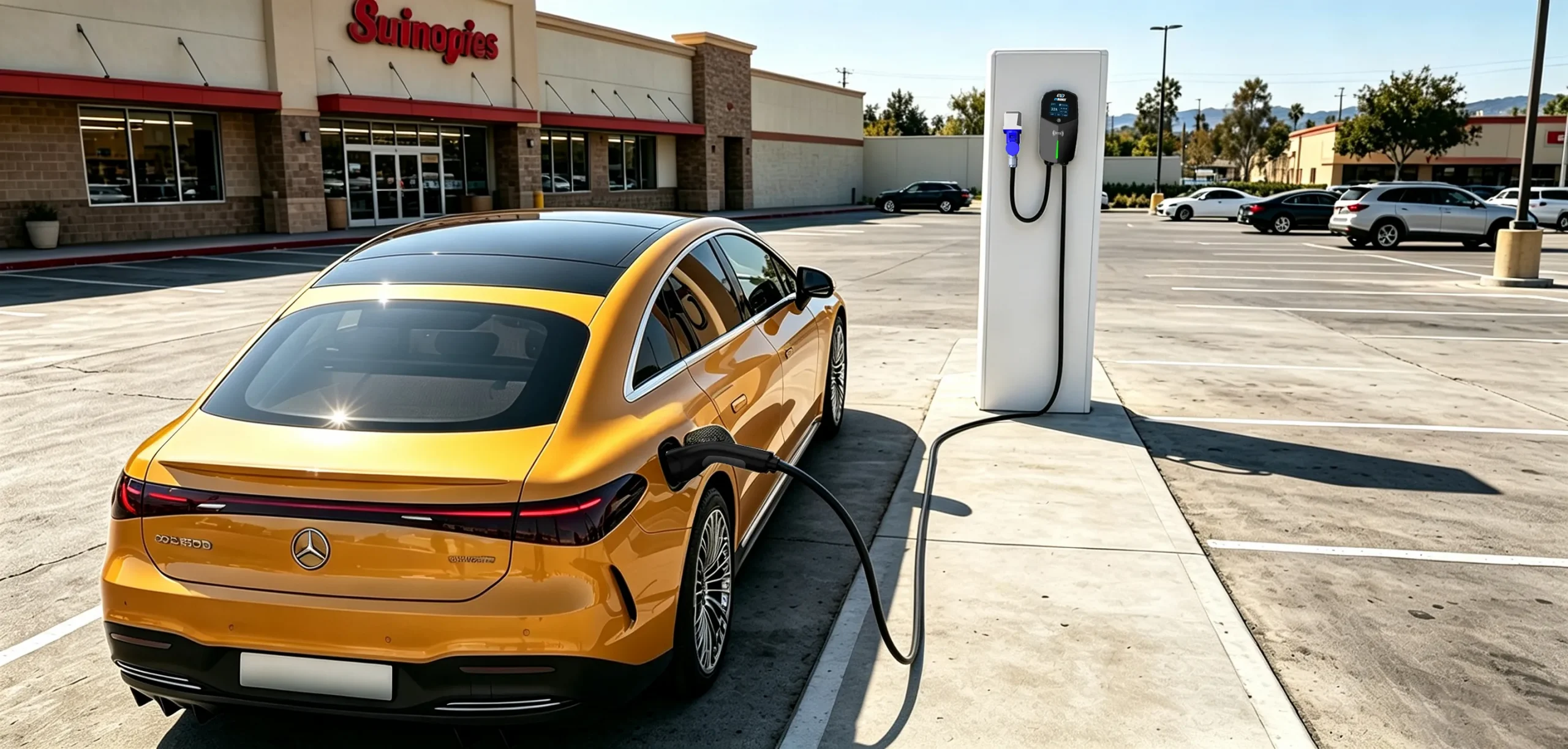
The classic case is a combustion car treating a charging bay as ordinary parking, often at busy retail or workplace sites where bays sit near the entrance. The mirror problem is an EV that stays plugged in — or just parked in the bay — hours after its session ended. Both leave the next driver with the same result. Some networks answer the second kind with idle fees after a grace period, but no fee moves a petrol car.
| Option at a blocked bay | When it fits |
|---|---|
| Check another bay or a longer cable reach | The site has several chargers, or the cable safely reaches from the next space |
| Ask the site host | Staff at the shop, hotel or workplace may know the owner or can make an announcement |
| Report it in the network app or to the operator | The operator logs the bay as unavailable and the host gets a pattern, not just an incident |
| Reroute to the next station | You are low on charge or on time — the practical choice on a trip |
What not to do: never move, touch or block in the other vehicle, and do not park across the bay in a way that creates a second problem. A blocked bay is an annoyance; a confrontation or a damaged car is worse.
Finding a Charge Anyway
If the stop mattered, treat it like a broken charger, only faster: check the app for the next site before you leave, since nearby bays on the same site are often free. The DOE Station Locator lists alternatives by location. Understanding how charging stations work — sessions, networks and bay turnover — also helps you judge whether a “busy” site is worth waiting at.

What Site Hosts and Operators Do About It
Prevention sits with the site. Clear bay markings and signs that state the bay is for charging, time limits while charging, and placement that does not put chargers in the car park’s most contested spaces all reduce blocking. Enforcement depends on where the bay is — some jurisdictions enforce EV-bay rules and many private car parks set their own — so there is no single universal penalty to quote. Shared residential parking has its own version of the problem, covered in our guide to apartment and condo charging in shared parking. Hosts planning bays can build the rules in from the start with a commercial charging installation using networked chargers such as the EV-AC03201T dual-connector AC station, whose session data shows exactly when a bay is occupied but not charging.
Frequently Asked Questions
Is ICEing illegal?
It depends on the place. Some jurisdictions and many private car parks enforce rules for marked EV bays; others rely on courtesy. Read the bay signage and the car park’s terms rather than assuming a universal law.
Can I unplug an EV that has finished charging?
Often you physically cannot — many cars lock the connector until the owner returns, the same locking covered in our post on locking and protecting your charging cable. Do not force anything; finished-car blocking is handled by time limits and, at some networks, idle fees.
Should I report a blocked bay at a funded corridor site?
Yes. NEVI-funded stations carry availability duties — average annual uptime above 97% under 23 CFR Part 680 — and reports to the operator are how blocked or faulty bays get logged and fixed.
Related Reading
- Can EV Charging Cables Be Stolen? How to Lock and Protect Yours
- How Do EV Charging Stations Work?
- Apartment and Condo EV Charging: Solutions for Shared Parking
- How to Charge an EV When You Live in an Apartment

