
One-pedal driving is a mode in which an EV slows down — and on many models stops completely — when you lift off the accelerator, using regenerative braking instead of the brake pedal. The brake pedal is still there and still needed for hard stops. Most ordinary slowing, though, is done by the motor, and part of the energy goes back into the battery.
Key Takeaways
- One-pedal driving slows the car, often to a stop, when you lift off the accelerator, using regenerative braking.
- The brake pedal is still required for hard stops and emergencies.
- Regeneration strength, creep and hold settings vary by car; lower the level on ice or with a cold battery.
- It stretches range in town traffic but never replaces plugging in.

How It Works
Lift off the accelerator and the car’s motor runs in reverse, as a generator. That resistance slows the car and converts part of its motion back into electricity for the battery — the regenerative braking the U.S. Department of Energy describes in its FuelEconomy.gov guide to how EVs work. The effect is strongest at the firmest setting, where a full lift can feel like a confident press of the brake pedal. On most models the brake lights come on under strong regenerative braking, so drivers behind you still get a signal; the manual for your car confirms how yours behaves.
| Your right foot | What the car does |
|---|---|
| Pressing the accelerator | Motor drives the wheels, drawing power from the battery |
| Holding it steady | Car holds speed; in hilly areas it may alternate between power and light regeneration |
| Lifting part-way | Gentle regenerative slowing — the EV equivalent of coasting down |
| Lifting fully | Strongest regeneration; on many models the car slows to a stop and holds its position |
| Pressing the brake pedal | Friction brakes join in — always used for hard or emergency stops |
The Settings Behind It
Cars expose the behaviour differently, but most offer some mix of the same controls:
- Regeneration strength. Two or three levels, from a light coast to a firm stop, sometimes set by paddles behind the steering wheel.
- Creep. With creep on, the car edges forward at a standstill like a conventional automatic; with it off, the car stays put until you press the accelerator.
- Hold at stop. Some cars keep the brakes applied after a one-pedal stop so the car does not roll on a slope.
- Menu names vary. Makers label the same ideas differently, so search the settings for “regenerative braking” or “one-pedal” after any software update.
When to Turn It Down
- On snow and ice. Strong regeneration on a slippery surface can unsettle the car; many models soften it automatically, but choosing a lower level yourself gives a gentler, more predictable slow-down.
- With a cold battery. A cold pack accepts less regeneration, so the familiar firm slow-down can feel weak first thing on a winter morning — our guide to battery preconditioning explains how warming the pack restores it.
- When parking. Tight manoeuvres are often easier with creep on and light regeneration, so small pedal movements make small movements of the car.
- With passengers who feel car-sick. Abrupt lift-off slowing rocks heads; a lower setting and smoother lifts are kinder.
It Returns Energy — It Does Not Replace Charging
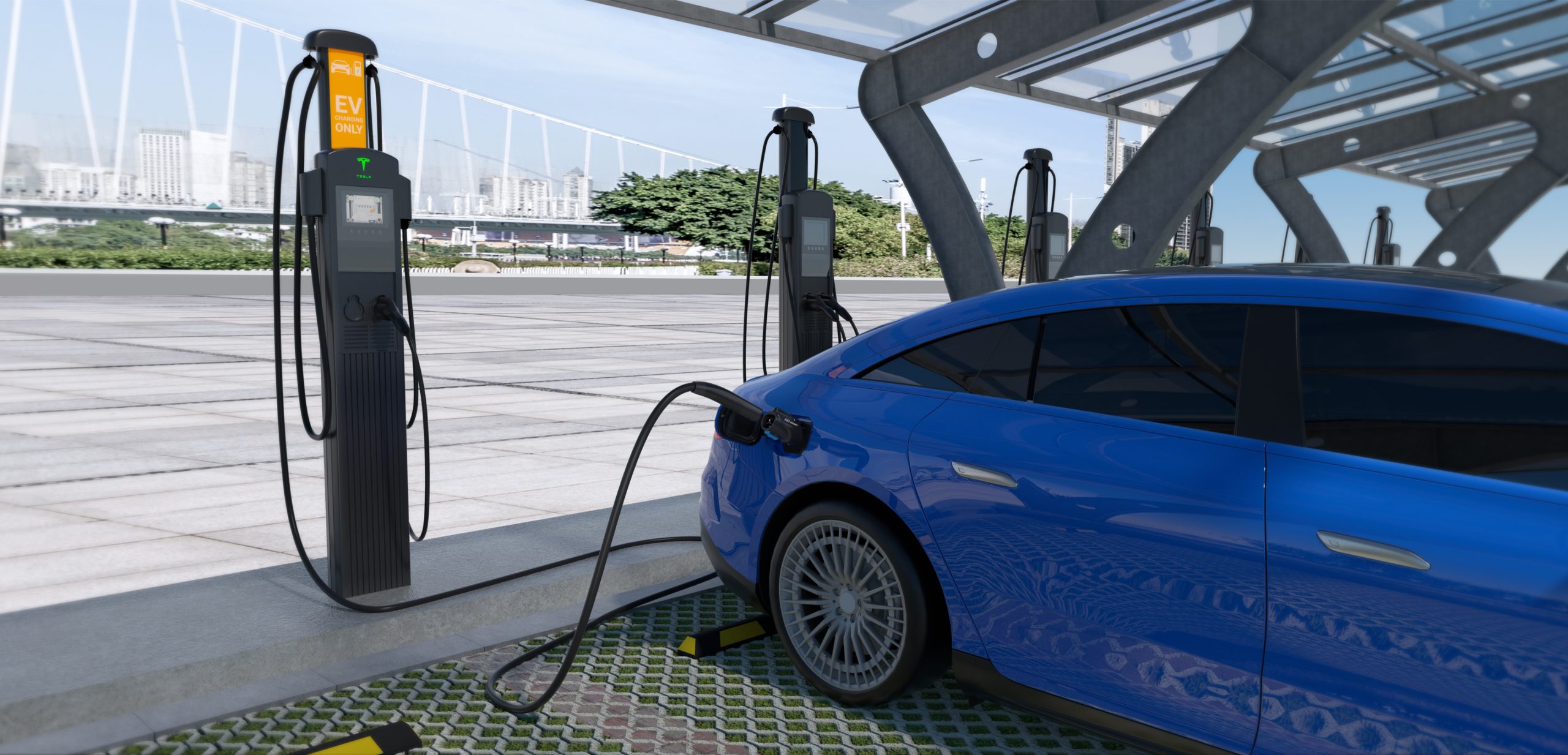
Regeneration recovers only part of the energy a stop cost, and it recovers nothing while you cruise. Think of one-pedal driving as stretching each charge in town traffic, not as a way to charge the car — our explainer on charging an EV while driving separates the real effects from the myths. The battery still needs its regular top-up at home, where a portable unit such as the EVDANCE EV-ACT5006T 40A NACS portable charger refills overnight; see the residential charging solutions page for the home range.
Frequently Asked Questions
Does one-pedal driving replace the brake pedal?
No. It covers most gentle and moderate slowing, and many cars stop fully and hold. The brake pedal remains essential for hard stops, emergencies and holding the car on steep slopes, and the friction brakes must stay in regular use to stay in good condition.
Does one-pedal driving really extend range?
It helps most in stop-and-start traffic, where repeated slowing would otherwise turn energy into brake heat. At a steady highway speed there is little braking to recover, so the effect is small. It cannot recover all the energy — conversion always loses some.
Is it hard to learn?
Most drivers adapt within a few trips. Start on a lower regeneration setting, practise lifting smoothly on a quiet road, and increase the level once your right foot has learned the new relationship between pedal and speed.
Related Reading
- Can You Charge an EV While Driving?
- What Is Battery Preconditioning in an EV?
- Should I Charge My EV to 80% Every Night?

