
No — a correctly rated charging adapter does not slow your charging down. An adapter is a pass-through: it adds no power and takes none away, so the session runs at whatever the charger and the car settle on. It only limits you when its own rating is lower than the rest of the setup, or when it puts you on AC charging where you expected DC fast charging.
Key Takeaways
- A correctly rated adapter is a pass-through: it neither adds speed nor takes it away.
- An adapter slows you only when its rating is the lowest link in the chain.
- AC and DC adapters are different parts — the wrong type means AC speeds, or no session.
- Check the printed rating, match the direction, and retire any adapter showing heat damage or a loose fit.
An Adapter Is a Link, Not a Limit
Every charging session settles at the lowest-rated link in the chain: the supply, the charger, the cable, and the car’s onboard charger on AC — or the station and the car’s DC limit at a fast charger. An adapter joins that chain as one more link. If its rating sits above what the session needs, it is invisible: a 40 A home charger used through an 80 A adapter runs at 40 A, exactly as plugged straight in. The adapter cannot raise the speed either — nothing clipped between a 7.7 kW charger and the car makes the session 11 kW. The charger and the car set the ceiling, in the bands the U.S. DOT charger speed figures describe.
The Two Ways an Adapter Can Slow You Down
| Situation | What happens |
|---|---|
| Adapter rated below the charger | The session must respect the adapter’s rating, so it runs at the adapter’s limit instead of the charger’s |
| AC adapter where you expected DC | You get Level 2 speeds — roughly 10 to 20 miles of range per hour — instead of a fast-charge stop |
| Adapter rated above the session | No effect at all; the charger and the car decide the speed |
| Worn or damaged adapter | Sessions that fault or stop — a replacement question, not a speed one |
The first case is arithmetic — the same weakest-link rule that applies to cables. As an example only: a charger set to 48 A used through a 40 A adapter should be run at 40 A, because passing more current than a part is built for is how parts overheat. The second case is about direction, not quality. AC and DC adapters are different parts: an AC adapter passes alternating current for home and destination charging, while DC fast charging needs a DC-rated adapter. Arriving at a fast charger with only the AC adapter means a slow AC session nearby, or none at all. Choosing the right part is covered by our guide to whether EV charging adapters are safe.
How to Check Your Adapter in Ten Seconds
- Read the rating on the body. Adapters are marked with their current limit — amps for AC, amps and volts for DC. Compare it with your charger’s setting.
- Match the direction. AC adapters are for AC charging, DC adapters for DC fast charging. The shapes may look similar; the internals are not interchangeable.
- For DC adapters, check your car maker’s approval. Some are specified for use only where the automaker approves them.
- Retire a worn adapter. Heat marks, a loose latch or sessions that fail with it and succeed without it mean replacement.
Adapters From EVDANCE
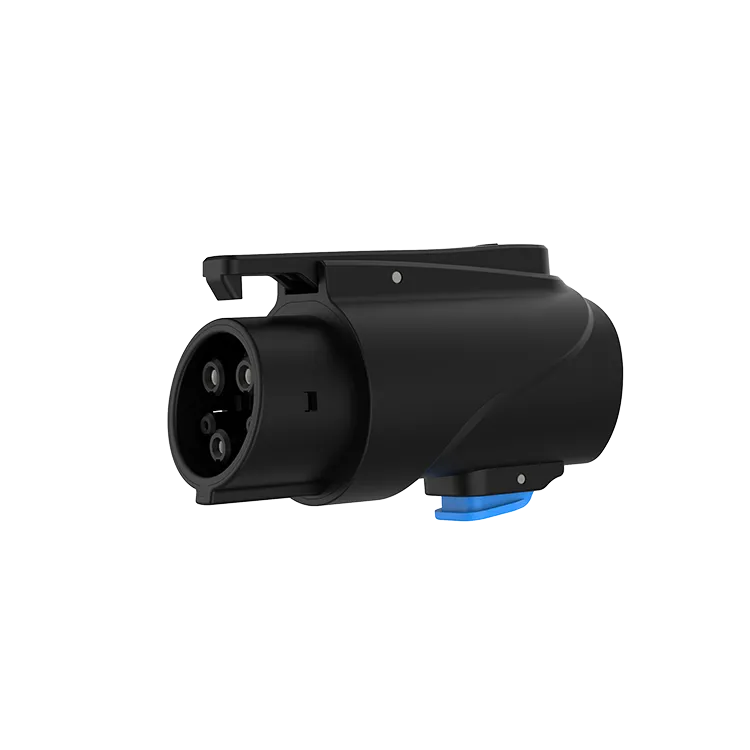
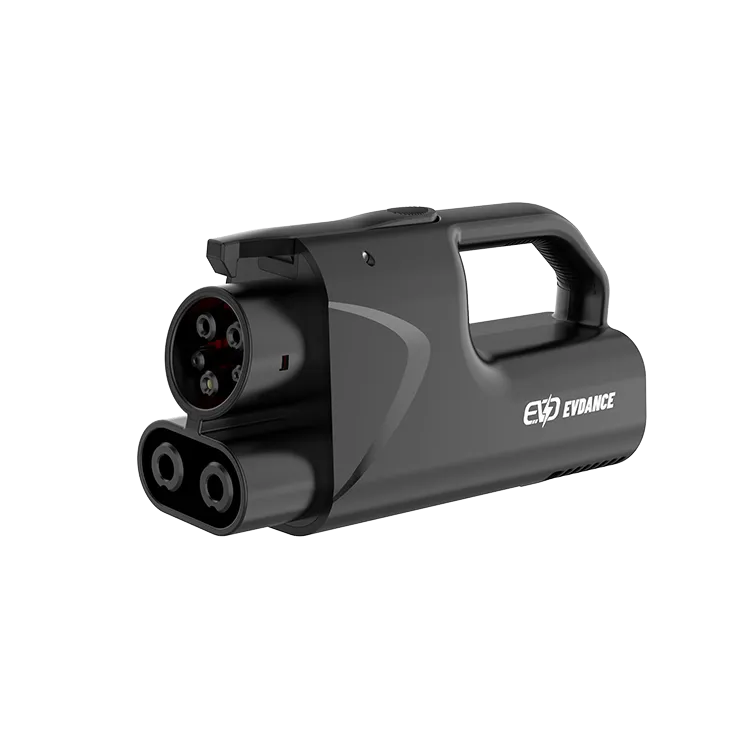
The JT02 NACS-to-J1772 adapter is rated for AC charging up to 80 A — above the 32 to 48 A of typical home equipment, so it will not be the slow link at home. For DC fast charging, the JT08 NACS-to-CCS1 DC adapter is rated up to 500 A and 1000 V, for use only where the automaker approves, and the JT09 NACS-to-CCS1 DC adapter with handle is rated up to 500 A.
Frequently Asked Questions
Does an adapter use up some of the power?
Not in any way you can measure. A sound adapter passes the charger’s output through; the charger and the car set the speed. A hot adapter is a wear warning — stop using it.
Will a better adapter make my home charging faster?
No. If your charger delivers 7.7 kW and your car accepts 7.7 kW, a higher-rated adapter changes nothing. More speed means a higher-rated charger on a circuit that supports it, with a breaker sized at 125% of its current under the National Electrical Code.
Can I use my AC adapter at a DC fast charger to slow-charge instead?
No. AC and DC adapters serve different current paths, and a session will not start through the wrong type. The connector families are compared in Type 2 vs J1772 vs NACS.
Related Reading
- Are EV Charging Adapters Safe?
- Is the Tesla Charger NACS? NACS, J3400 and Adapters Explained
- How Many kW Is a Level 2 Charger?
- Type 2 vs J1772 vs NACS: Which EV Charger Connector Does Your Market Need?

