
First, the honest limit behind the “how do I lock it” question: no adapter in this range has a lock to fit or switch on — no EVDANCE listing states a lock, latch or anti-theft feature. If yours has been taken, the useful news is what a passive adapter is not: it carries no account, no identity and no payment details, so there is nothing to cancel and no way for a thief to reach your charging accounts through it. What remains is a short checklist — and a careful replacement.
Key Takeaways
- No lock is stated for adapters in this range — and a stolen passive adapter holds no account, identity or payment details.
- There is nothing to track, disable or cancel; the loss is the object’s value, not your security.
- Run the short checklist: accounts scan, host report while the trail is warm, police record, inlet inspection.
- Replace it like a first purchase — direction, stated ratings, and for DC both approval conditions settled before paying.
What the Thief Actually Has
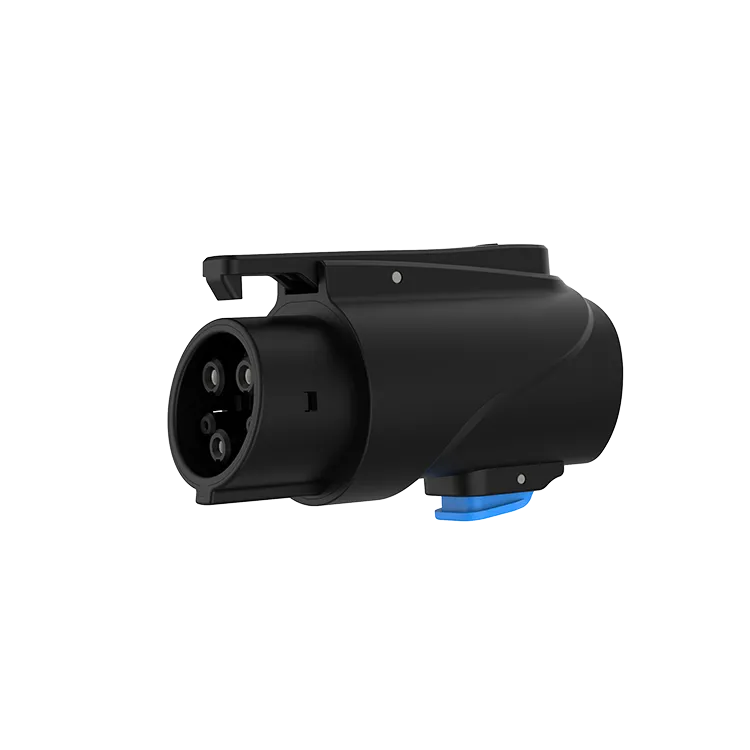
A passive adapter is contacts and housing. In anyone’s hands it does one thing: it lets a compatible car connect to a compatible charger. That bluntness cuts both ways.
- It cannot be tracked or disabled. No tracker, radio or account pairing is stated for adapters of this kind, so there is no “find my adapter” step and no remote kill. Do not spend the first hour looking for one.
- It cannot spend your money. Charging is billed through the car, the network account or the payment card you present at the station — never through the adapter. Your accounts sit in systems the adapter never touches.
- It works for the thief. Because nothing ties it to you, a stolen adapter is simply usable by whoever holds it. That is the whole loss: the object’s value, not your security.
The Checks Worth Running
| Check | Why | What you will find |
|---|---|---|
| Your charging network accounts | Peace of mind, and to confirm sessions you do not recognise | Sessions are tied to your account and car, not to the adapter — an unfamiliar session is a separate problem, not this one |
| The session it was taken from | If it vanished mid-visit, the host or network may hold camera footage or a found-property log | Worth one report to the site host or network while the trail is warm |
| A police or insurer report | Creates the record a claim or a recovery would need | Whether an adapter is covered is a question for your own policy’s wording — check it, do not assume it |
| Your car’s inlet | A taken adapter sometimes means a forced connector | Look for damage before the next session; a bent or marked inlet is a repair conversation, not a charging one |
Replacing It: Read the Listing Like the First Time
A replacement is a fresh purchase, and the checks are the original ones — hurried re-buying is how the wrong adapter arrives. Confirm the direction first: a NACS-to-J1772 adapter serves AC destination charging; a NACS-to-CCS1 adapter serves DC fast charging. Then the stated current class against your car’s needs, and the stated IP rating. For a DC adapter, settle the two conditions before you pay, not after: your vehicle maker’s approval of third-party DC adapters for your exact car, from the maker’s current document, and the stations you plan to use being open to your car.
The EVDANCE JT02 (NACS-to-J1772 AC, up to 80 A, silver-plated copper contacts, IP65) covers the AC case. For DC, the EVDANCE JT08 (up to 500 A / 1000 V, IP66) and the EVDANCE JT09 with handle (up to 500 A, IP66) are the stated options — used only where your vehicle maker approves third-party DC adapter use for your car and the station is open to it. None of the three states a lock or tracker: what protects the replacement is the routine — off at the session’s end, into its fixed place in the car.

Frequently Asked Questions
Can a stolen adapter be tracked or switched off?
No. Adapters of this kind state no tracker and hold no account connection, so there is nothing to track and nothing to disable. Report the loss, check the inlet, and replace it carefully.
Is my charging account or payment card at risk?
Not through the adapter. Billing lives with the network account and the car, in systems the adapter never touches. Still, scan your recent sessions once — if anything is unfamiliar, treat it as an account issue in its own right.
Does insurance cover a stolen charging adapter?
That depends on your policy’s wording for accessories and items away from home. A prompt police report is the record most claims would ask for; whether it pays is the insurer’s call.
Related Reading
- Can EV Charging Cables Be Stolen? How to Lock and Protect Yours
- Are EV Charging Adapters Safe?
- What Is J1772? The North American EV Plug Explained
- Can I Use a Tesla Charger for Other Cars?

