
Any car with a J1772 inlet can use the JT02 adapter at a Tesla AC charger — that pairing is exactly what the adapter is built for. Three conditions decide it on the day: the Tesla unit must be an AC unit, the site must allow your car to charge there, and your car’s own onboard charger sets the speed. Tesla’s own cars never need the adapter, because their inlet is NACS already.
Key Takeaways
- Any J1772-inlet car — EV or plug-in hybrid — can use the JT02 at a Tesla AC charger.
- The unit must be AC, the site must allow your car, and your car’s onboard charger sets the speed.
- Tesla and NACS-inlet cars never need it; they plug in directly.
- The adapter’s 80 A ceiling sits above the session; it enables the connection, not a faster charge.
The Car Side: One Requirement
The only requirement on the car is a J1772 inlet — the standard AC charge port fitted to most non-Tesla EVs and plug-in hybrids sold in North America. Battery-electric cars and plug-in hybrids both qualify. A plug-in hybrid charges at the lower rate its smaller onboard charger accepts; the adapter does not change that, and the session works the same way. The general question is covered in our guide to using a Tesla charger for other cars; the JT02 is the specific tool for the pairing.
The Three Conditions on the Day
| Condition | What to check | Why it decides |
|---|---|---|
| An AC unit | The charger is a Tesla Wall Connector or a destination charger — a Level 2 AC unit. | The JT02 is an AC adapter. A Supercharger is a DC fast charger and is a different arrangement entirely. |
| Permission to charge | The host or the network allows non-Tesla cars at that unit; some are reserved for guests or set for one brand. | The charger belongs to the site. Whether your car may use it is the host’s and Tesla’s current arrangement — check before you rely on it. |
| Your car’s acceptance | Your onboard charger’s rating, against what the unit offers. | A Wall Connector can offer up to 48 A / 11.5 kW. A car that accepts less charges at its own rate — the car, not the adapter, sets it. |
Meet all three and the session is ordinary Level 2 charging, inside the U.S. DOT’s typical 7–19 kW band. Miss the first and no adapter fixes it; miss the second and the polite answer is to charge elsewhere.
Who Does Not Need the JT02
- Tesla cars. Their inlet is NACS, so they plug into Tesla AC chargers directly — no adapter of any kind.
- Cars with a NACS inlet. Any car built with the NACS port uses the charger natively, the same way.
- J1772 cars at J1772 chargers. No shape difference, no adapter. The JT02 only earns its place where the plug is NACS and the car is not.
The mirror problem — a NACS car at a J1772 charger — is the opposite direction and a different part, as whether a Tesla can use J1772 chargers explains.
The JT02 in This Picture
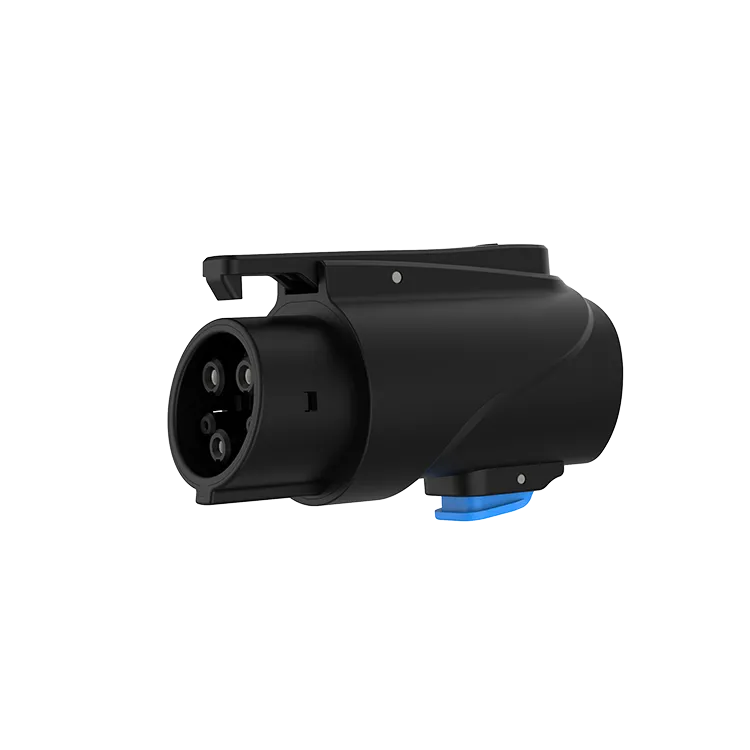
The EVDANCE JT02 is rated up to 80 A at AC 250 V and sealed to IP65, so its ceiling sits above any Tesla AC unit’s output and above what a car’s onboard charger accepts. Kept in the car, it turns a household’s Tesla Wall Connector into a charger for the family’s J1772 car as well, and it does the same at destination chargers that allow your car. It adds no speed — it simply makes the connection possible, at the rate your car already supports.

Frequently Asked Questions
Can a plug-in hybrid use the JT02 at a Tesla charger?
Yes. Plug-in hybrids with a J1772 inlet use the same adapter at Tesla AC chargers, charging at the rate their onboard charger accepts — lower than a full EV’s, but the session works normally.
Will my car charge at the full 48 A a Wall Connector offers?
Only if your car’s onboard charger accepts 48 A. Many cars accept less, and they charge at their own limit. The adapter never sets the rate; the car does.
Does Tesla allow other brands on its AC chargers?
It depends on the unit and the site — some destination chargers are open to any guest, others are restricted. Tesla’s and the host’s current terms decide, so check them rather than assuming.
Related Reading
- Can I Use a Tesla Charger for Other Cars?
- What Is J1772? The North American EV Plug Explained
- Are EV Charging Adapters Safe?
- Is the Tesla Wall Connector Level 2? How Many kW Does It Deliver?

