
The chargers that suit Kuwait are decided by how your sites use them: dwell time and sessions per point set the AC/DC split; serviceability — spares, wear parts, the fault route — decides which models you can support; and grid voltage, phases and connectors are written confirmations closed per model before you order. As of October 2026 no Kuwait supply figure is stated here: a guessed figure becomes unusable stock.
Key Takeaways
- Use patterns decide first: dwell time and sessions per day set the AC/DC split.
- Serviceability is a selection criterion — spares and swap-versus-repair are agreed before ordering.
- Grid voltage, phases, connector family and conformity are written confirmations per model, as of October 2026.
- Compact DC (20–30 kW) is the turnaround tool; corridor-class DC is a different purchase.
Start From Use Patterns, Not From the Catalogue
Each pattern is a different job. A fleet vehicle back at base overnight needs one full session, not speed; a staff car parked all day needs the same. A visitor’s car stopped for an hour needs energy quickly or not at all. The U.S. Department of Transportation’s bands frame the split: Level 2 runs at 7–19 kW and fits long dwells; DC serves short ones, with compact DC of about 20–30 kW between the two. Count your patterns first; the shortlist follows.
Five Questions That Decide the Shortlist
| Use pattern | Dwell and sessions | Charger class that fits | Service check before you order |
|---|---|---|---|
| Return-to-base fleet parking | Overnight, one session per vehicle | Level 2 AC wallbox or station | A swap unit on site, so one failure never strands a vehicle |
| Workplace and staff parking | All-day, one session per car | Level 2 AC, access-managed where bays are shared | How access control and session records work on that model |
| Destination stops | One to three hours, several sessions a day | Higher-power AC or compact DC around 20–30 kW | What replacing the cable assembly involves |
| Turnaround fleets | Short, unscheduled stops | Compact DC; corridor-class DC only where routes demand it | A written fault-response route and locally held spares |
| Units shared between sites | Moved as projects change | Portable chargers with adjustable current | Plug and connector checks in your receiving routine |
Serviceability Is a Selection Criterion, Not an Afterthought
Two chargers with identical ratings can differ completely in year two. Before a model makes the shortlist, ask:
- Wear parts: cables, connectors and contactors take the daily punishment. Ask which are replaceable on that model, and what fitting one involves.
- The spares list: agree it at order stage, not after the first fault. Our walkthrough of spare parts and the RMA process for distributors shows the paperwork side.
- Swap versus repair: swap-first needs spare units; repair-first needs parts, manuals and a technician route. Pick the support shape you can run.
- Local stock: decide which parts sit in Kuwait with you and which travel from the factory.

The Three Confirmations That Close the Choice
The title asks about grid voltage, phases and connectors; each is closed the same way — in writing:
- Supply window: your sites’ supply figures, confirmed by the local utility or installation authority; order only models whose rated input window covers them.
- Connector family: a survey of the inlets on the vehicles your sites serve.
- Conformity file: the test evidence the national standards and conformity body accepts for the exact model, as of October 2026.
EVDANCE Examples, Tested Against the Questions
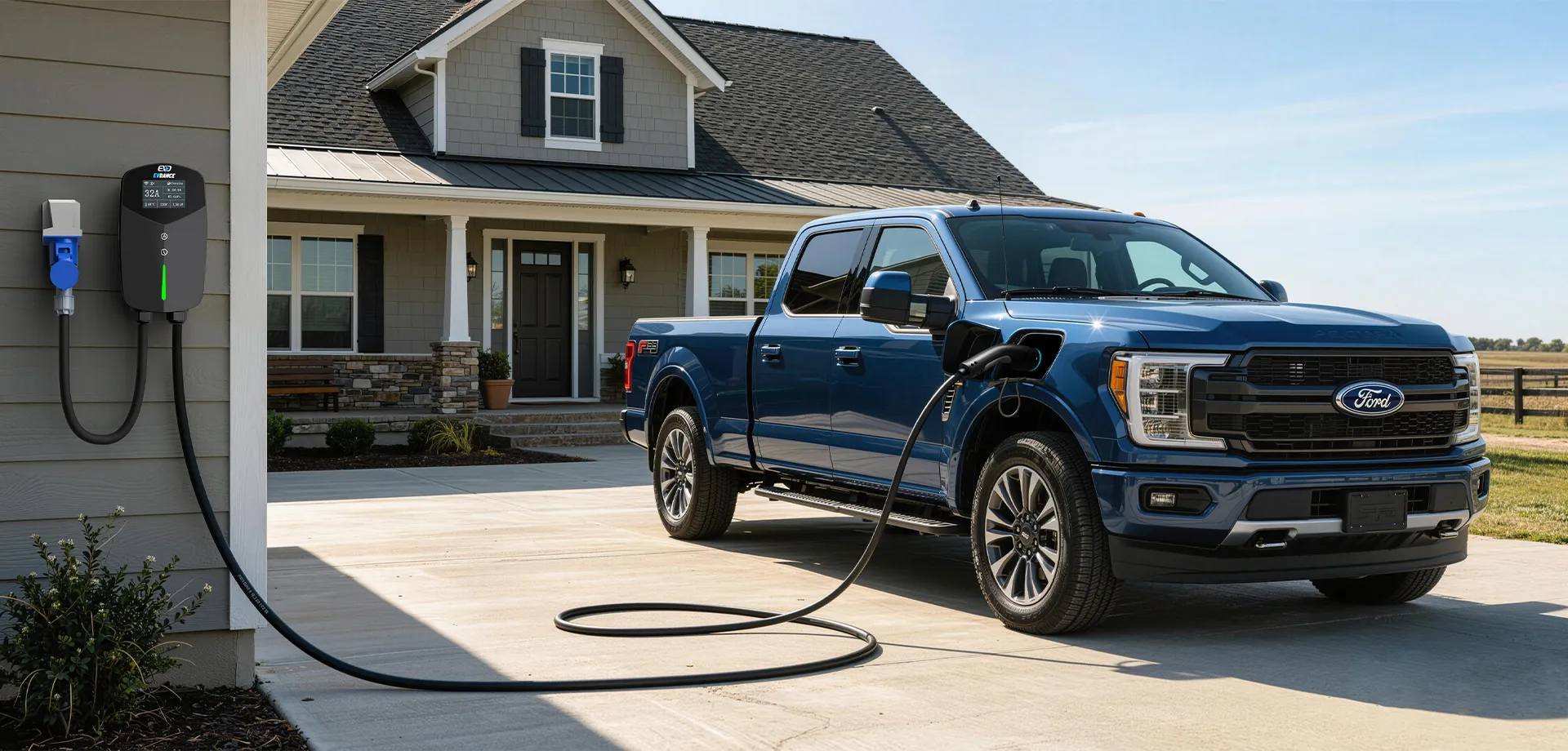
Three models show the questions biting. The EV-ACS4005T is a 40 A NACS portable, 9.6 kW with 16/24/32/40 A adjustable settings and IP66 — the shared-between-sites candidate. The EV-AC03201T is a dual-connector Type 2 AC station, up to 43 kW shared with OCPP 1.6J and RFID at IP54 — the managed-bay answer. The EV-RHDC30K-L is a compact DC charger of 22 kW with OCPP 1.6J, IP54 — the turnaround tool. EVDANCE is a Shenzhen manufacturer founded in 2011, exports to more than 30 countries and offers a 3-year standard warranty; importers start from the distributor program and send their use-pattern list via the contact page.
Frequently Asked Questions
What grid voltage and phases do chargers in Kuwait need to match?
Get your sites’ supply figures confirmed in writing by the local utility or installation authority, and order only models whose rated input window covers them. No Kuwait figure is stated here on purpose: the nameplate window is a per-model confirmation, closed before the order.
AC or DC for a fleet depot in Kuwait?
Dwell time decides. Vehicles that stay overnight are AC work: Level 2 gives a full session by morning. Vehicles that turn around during the day justify compact DC of about 20–30 kW. Corridor-class DC belongs on routes, which most depots are not.
What spares should a Kuwait buyer hold from day one?
Agree the list at order stage: wear parts for your models — cables, connectors, contactors — plus a swap unit for any site where a down charger strands a vehicle. Hold fast movers locally; write the fault route before the first installation.
Related Reading
- Hot-Climate EV Charging: Protecting Chargers From Desert Heat and Sun
- EV Charger Spare Parts and RMA Process for Distributors

